If he had succeeded, with mere politicians in his cabinet, a Congress against him, and only a partially developed anti-slavery sentiment behind him, the cause of freedom would have been in fearful peril.
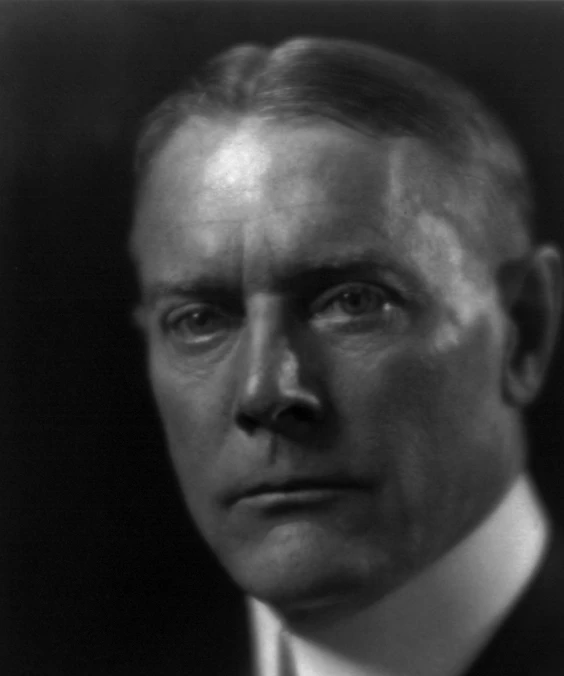
George Julian
The Public Record
George Washington Julian was a politician, lawyer, and writer from Indiana who served in the United States House of Representatives during the 19th century. A leading opponent of slavery, Julian was the Free Soil Party's candidate for vice president in the 1852 election and was a prominent Radical Republican during the American Civil War and the Reconstruction era.
gutenberg.org
The revolution so hopefully begun might have been arrested by half-way measures, promoting the slumber rather than the agitation of the truth, while the irritating nostrums of Buchanan Democracy, so necessary to display the abominations of…
The moral power of the canvass for Fremont was itself a great gain, notwithstanding the cowardice of some of its leaders.
The Republican movement could not now go backward, and with a probation of four years to prepare for the next conflict, unembarrassed by the responsibilities of power, and free to profit by the blunders and misdeeds of its foe, it was…
This showed a marvelous anti-slavery progress, considering the age of the movement, the elements it forced into combination, and the difficulties under which it struggled into life; and no one could misinterpret its significance.
The Republicans, however, were sorely disappointed by their defeat; but this second great victory of slavery did not at all check the progress of the anti-slavery cause.
It had constantly gathered strength from the audacity and recklessness of slave-holding fanaticism, and it continued to do so.
It created a profound impression throughout the free States, and became a powerful weapon in the hands of Republicans.
They characterized it as the distilled diabolism of two hundred years of slavery, stealthily aiming at the overthrow of our Republican institutions, while seeking to hide its nakedness under the fig-leaves of judicial fairness and dignity.
They branded it as the desperate attempt of slave-breeding Democracy to crown itself king, by debauching the Federal judiciary and waging war against the advance of civilization.
It was thoroughly cold-blooded in its letter and spirit, and no Spanish Inquisitor ever showed less sympathy for his victim than did the Chief Justice for the slave.
It had been procured for the purpose of fastening slavery upon all the Territories, and it had, of course, a special meaning when applied to the desperate struggle then in progress to make Kansas a slave State.
The conduct of the Administration during this year, in its treatment of the free State men of that Territory, forms one of the blackest pages in the history of slavery.
The whole power of the Administration, acting as the hired man of slavery, was ruthlessly employed for the purpose of spreading the curse over Kansas, and establishing it there as an irreversible fact; and all the departments of the…
Everybody knew the Lecompton constitution was the work of outside ruffians, and not of the people of the Territory, whose Legislature in February, 1858, solemnly protested against their admission under that Constitution, and whose protest…
Such maddened extremists as Hammond and Keitt of South Carolina, and such blatant doughfaces as Petit of Indiana, became capital missionaries in the cause of freedom.
Kansas had not been forced into the Union as a slave State, but she was helpless at the feet of the Executive.
It was a proposition of gigantic bribery, after bluster and bullying had been exhausted.
It was, in fact, both a bribe and a menace, and measured at once the political morality of the men who favored it, and the extremity to which the slave-holders were driven in the prosecution of their desperate enterprise.
They had suffered too much and too long in the battle for freedom to make merchandise of their convictions and sacrifice the future of a great commonwealth.
They spurned the bribe, and took the chances of triumph through an indefinitely prolonged conflict, while recruits to the ranks of freedom were naturally falling into line throughout the Northern States.
On the trial he was shown to have been free by the act of his master in sending him into a free State; but under cover of an infamous law, and by the help of truculent officials, he was remanded into slavery.
It was an event of very great significance, both North and South, and gave great comfort to anti-slavery men of all shades of opinion; but it brought with it, at the same time, a serious peril to the Republican party.
In the spring of this year the Republicans of Indiana, in their State convention, not only surrendered the policy of Congressional prohibition, and adopted the principle of popular sovereignty, but made opposition to the Lecompton…
Morton and his Whig and Know-Nothing associates, Republicanism simply meant opposition to the latest outrage of slavery, and acquiescence in all preceding ones; but this shameful surrender of the cause to its enemies was deservedly…
Politicians like George Julian