Jun 19, 2019
I think everyone said we need a national standard. We don't want to destroy Federal--there's the interstate commerce clause.
The Public Record
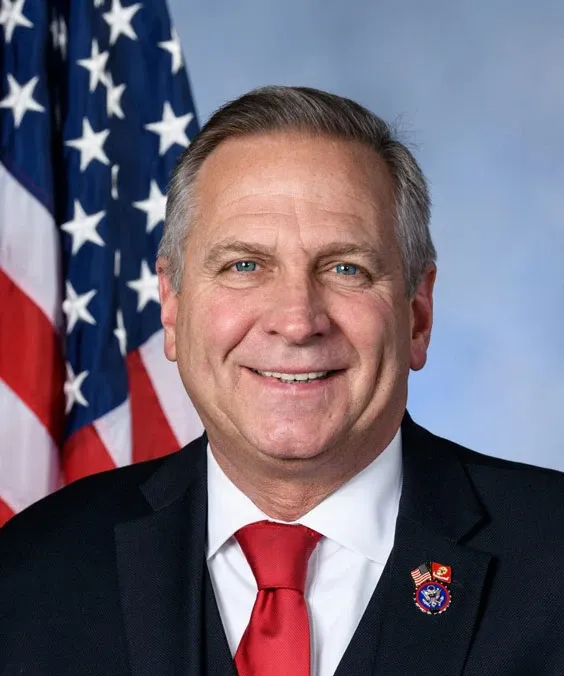
John Shimkus is a former U.S. Representative from Illinois, serving in the House from January 7, 1997, until January 3, 2021. A member of the Republican Party, he represented Illinois's 15th congressional district. During his tenure, Shimkus was known for his work on issues related to energy, environment, and agriculture, often advocating for policies that supported these sectors. He served on several committees, including the Energy and Commerce Committee, where he focused on energy policy and environmental regulations.
I think everyone said we need a national standard. We don't want to destroy Federal--there's the interstate commerce clause.
I, for one, have been a believer that the best way to lift fuel economy across the board without State mandates is by setting a fuel octane standard for gasoline.
We must be clear eyed about the impacts on all Americans of the policy we pass because that's what Article I of the constitution requires we do.
We should not have a fractured marketplace driven by policies that cater to urban customers at the expense of customer need in rural areas.
While Congress is not spending ratepayer money on the program they paid for, it is spending taxpayers money for its failure to move forward.
When Congress chooses not to spend money on the nuclear waste program, it is basically keeping ratepayer money for other purposes.
I trust the work done by the world-class scientists and engineers who produced these reports. I believe their work can stand up to the scrutiny of the skeptics if put to the test.
Together, these represent the Federal Government's scientific and technical case for the permanent geological repository we are required by law to build and operate.
Those skeptics, some of whom we'll hear from today, don't believe this science.
Shortcuts lead to dead ends, and I am concerned that the proposed measure that focused solely on interim storage without integrating it into a permanent system for disposal may sound good and expedient, but they will not work, and they may…
This bipartisan legislation, introduced by Reps Diana DeGette and John Shimkus, would allow physical therapists to participate in the National Health Service Corps Loan Repayment program.
I think the only thing that gives me pause on this parts of legislation is this is authorization. Then the question is appropriation.
And, you know, nuclear being carbon-fee emissions, if we want to meet any type of objectives and keep rates somewhat acceptable, we will still have to have base load major generation.
So I want to thank him for that, and I want to encourage my colleagues on the committee to look at that bill and ask us questions, and then consider cosponsoring it, as the chairman is at least supportive of having a hearing and discussing…
I want to really highlight Jerry McNerney for dropping the Nuclear Waste Policy Act Amendment of 2019.
I would reserve the balance of my time unless my colleague yielded back. The Acting CHAIR. The gentleman has the only time remaining.
I believe I have the right to close. The Acting CHAIR. The gentleman from Vermont is recognized.
I claim the time in opposition. The Acting CHAIR (Mr. Cox of California). The gentleman from Illinois is recognized for 5 minutes.
The chairman of the full committee is correct. We appreciate his help and support in working through these technical corrections. We don't oppose them, and with that, I yield back the balance of my time.
I claim the time in opposition, although I do not oppose this amendment. The Acting CHAIR. Without objection, the gentleman from Illinois is recognized for 5 minutes. There was no objection.
I will not object. I want to--hopefully we are going to be careful on receiving testimony from people we didn't ask to testify.
Politicians like John Shimkus