May 14, 2019
If you were asked to regulate a chemical that was safe, would you want to do that?
The Public Record
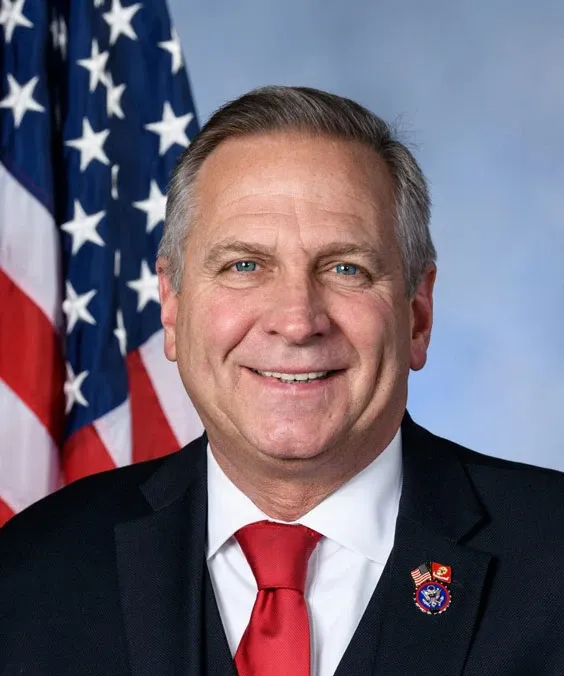
John Shimkus is a former U.S. Representative from Illinois, serving in the House from January 7, 1997, until January 3, 2021. A member of the Republican Party, he represented Illinois's 15th congressional district. During his tenure, Shimkus was known for his work on issues related to energy, environment, and agriculture, often advocating for policies that supported these sectors. He served on several committees, including the Energy and Commerce Committee, where he focused on energy policy and environmental regulations.
If you were asked to regulate a chemical that was safe, would you want to do that?
This is not a no on these bills, and this is not a delay tactic. This is, just give me a little more time appeal.
I think we have got to be very careful as with the hearing we last week of by legislative fiat banning things which we may or may not know are harmful.
I appreciate that we are meeting to learn more about the bills introduced in this Congress to tackle various forms of contamination linked to highly fluorinated chemicals known as PFAS.
Because of the nature of this place, and unlike EPA, we are much less likely to have the time to consider or otherwise be able to know all the impacts a ban would have directly or indirectly on all Americans.
Let me say that again, because EPA cannot go into a chemical review with a predetermined outcome if it wants to avoid litigation.
I guess I am trying to say that I am a bit frustrated as to why we are having a legislative hearing on banning asbestos before we have had an oversight hearing to demonstrate that the EPA is failing on the technical aspects of the law in…
Preventing asbestos-related diseases is one of the main reasons I and others came together to enact reform to the Toxic Substances Control Act.
We believe that the direct economic impacts would be a total of direct, indirect, and payroll-induced effects of 155,000 jobs, $9.7 billion in payroll, and $63 billion in United States economic output.
When I have gone door to door to visit my constituents, I see them in their oxygen machines laboring to live.
The issue of asbestos use in America and its impact on lung cancer, other illnesses, and death is one of the more challenging and gut-wrenching I have found in my time in Congress.
I claim the time in opposition. The Acting CHAIR. The gentleman from southern Illinois is recognized for 5 minutes.
I demand a recorded vote. The Acting CHAIR. Pursuant to clause 6 of rule XVIII, further proceedings on the amendment offered by the gentlewoman from Washington will be postponed. Amendment No. 25 Offered by Mr. Neguse The Acting CHAIR. It…
I also thank Congresswoman Gonzalez-Colon and, actually, Congresswoman Plaskett. I was able to visit the Virgin Islands and Puerto Rico during the last hurricane, and it was devastating. I appreciate the hospitality shown in difficult…
I will close after my colleague yields back her time. I reserve the balance of my time
I will close after the gentlewoman yields back. I reserve the balance of my time.
Chairman Pallone was most angry about the donut hole provisions which we placed in there for budgetary--to make the numbers work.
We wrestled with how to get Medicare. In fact, a lot of conservative Republicans got beat up quite a bit on this because we expanded in essence an entitlement.
Speaker Pelosi often says, 'show me your budget, show me your values,' and I think that's true.
Speaker Pelosi often says, 'show me your budget, and I will show you our values,' and I think that is true.
Politicians like John Shimkus