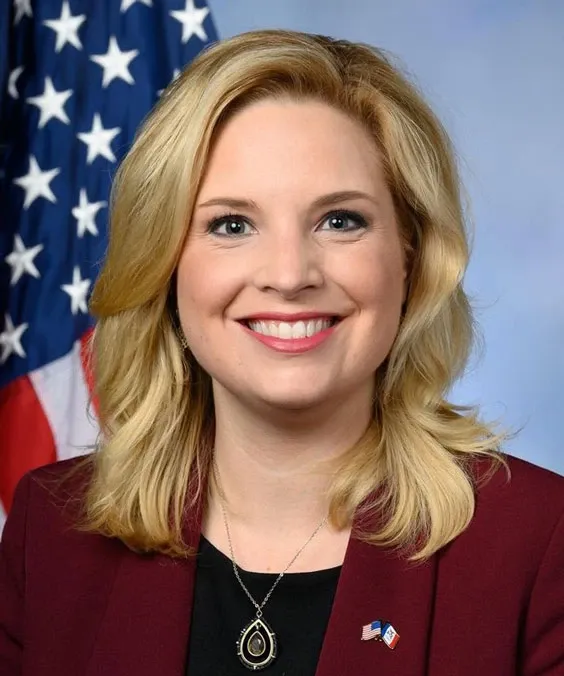
Randy Feenstra
The Public Record
Randy Lee Feenstra is a Republican member of the United States House of Representatives, representing Iowa's 4th congressional district since January 2021. Born in 1973, Feenstra has focused on issues such as agriculture, healthcare, and economic development during his time in office. He succeeded former Representative Steve King, and his election marked a significant shift in the district's political landscape. Feenstra has been an advocate for conservative policies and has expressed support for former President Donald Trump's initiatives.
Apr 26, 2022
I will contest that there is a control on the markets through line speeds and the amount being slaughtered that can manipulate the markets.
Apr 26, 2022
Here you have the big four packers that control the large packer capacity, up to maybe 80, 85 percent.
Apr 26, 2022
If some packers are allowed to not participate in the cash markets, would they not be able to manipulate the regional supply of cattle by simply shifting their captive supply from one region to the next?
Apr 26, 2022
I am a supporter of my Senate colleagues, Senator Grassley and Senator Fischer's Cattle Price Discovery and Transparency Act (S. 4030), and I intend to lead this bill with Congresswoman Axne to get it to the House Floor.
Apr 26, 2022
It is clear that the cattle market is insufficient because there is no one that has access to the same information.
Apr 26, 2022
I want to be very clear. Efficiency is not an excuse for exploitation, and what is happening right now is the exploitation of smaller independent producers for the benefit of the big four.
Apr 26, 2022
Fairness and transparency creates a sustainable agriculture supply chain, which is critical to our producers.
Apr 26, 2022
This government and this Administration are doing more to harm our producers and by extension the industry
Apr 5, 2022
One of the great aspects of SBIR and STTR programs are the ability to spark innovation in middle America not just on the coast.
Apr 5, 2022
If America wants to maintain its competitive edge in the technologies of the future, we must make sure federal investments in R&D are made across the country, not just in Silicon Valley.
Apr 5, 2022
With the programs set to expire at the end of September, we have to--work to do to ensure that we can continue to make these investments in small businesses that can propel American innovation moving forward.
Apr 5, 2022
SBIR and STTR are the Federal Government's largest source of early stage technology development and commercializing funding for small businesses.
Apr 5, 2022
Thank you, Chairman Stevens, and thank you for our witnesses for joining us today to share your expertise--expert testimony on Small Business Innovation and Small Business Technology Transfer programs.
Mar 28, 2022
But in essence it is $4 trillion then because you are putting in this line item.
Mar 28, 2022
I mean here is American made Iowa, Midwest biofuels, and crickets, nothing, zero in the budget.
Mar 28, 2022
And frankly that is because of the Trump tax cuts that happened. I think that is a fair statement.
Mar 16, 2022
Standards sometimes fly under the radar. But they are foundational to U.S. industry and manufacturing.
Mar 16, 2022
Despite the strong bipartisan support of these efforts, competitiveness legislation is currently stalled because Democratic leadership in the House and Senate has piled on partisan provisions.
Mar 16, 2022
We cannot allow China to dominate the international standards for technology of tomorrow.
Feb 14, 2022
I think this is a multiagency, you know, opportunity to work together to support, you know, the universities to be able to help more students across the country, yes.
Politicians like Randy Feenstra