Tom McClintock
The Public Record
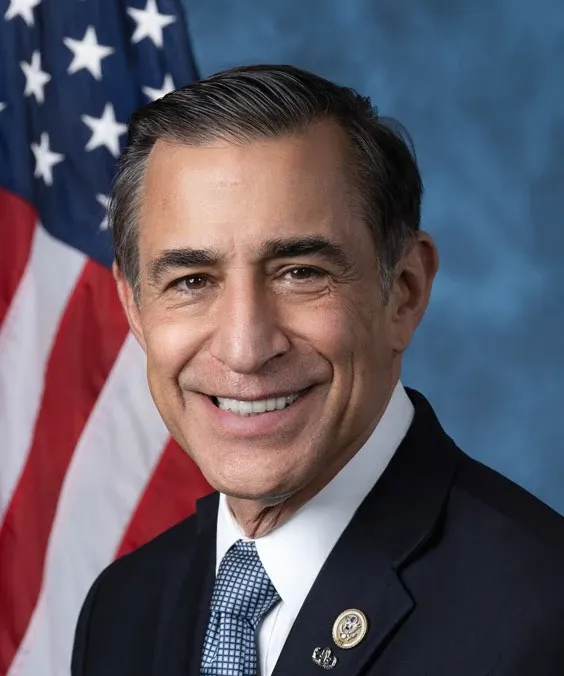
Thomas Miller McClintock is an American politician serving as the U.S. Representative for California's 5th congressional district since 2009. A member of the Republican Party, he has been an advocate for limited government and fiscal conservatism throughout his political career. McClintock has focused on issues such as tax reform, environmental policy, and government spending. He previously served in the California State Assembly and as a member of the California State Senate, where he gained recognition for his commitment to conservative principles.
Feb 14, 2018
H.R. 4609... authorize the U.S. Forest Service to convey approximately 3.61 acres of Forest Service land...
Feb 14, 2018
H.R. 4429... address conflicts between cormorants' natural feeding habits and challenges they pose...
Feb 14, 2018
In furtherance of this Subcommittee's core objectives to restore sound management and public access to public lands...
Feb 13, 2018
If we start approaching trillion-dollar deficits, things will start to get very unstable very quickly.
Feb 13, 2018
For 8 years, the Obama administration literally doubled the entire debt of the United States and there was not a single protest from the other side.
Feb 13, 2018
This budget proposal has already achieved a miracle. It has made the Democrats suddenly very concerned about the debt.
Jan 8, 2018
The essence of the legislative process, which is, once again, why the Constitution gives Congress authority over these matters, not the President, so that these voices can be heard.
Jan 8, 2018
It should be done legislatively. Rather than just a stroke of a pen and somebody's arbitrary decision making.
Jan 8, 2018
And they have every right to demand that Congress reassert its role over management of the lands on their behalf.
Jan 8, 2018
The Antiquities Act of 1906 delegated limited authority to the President to designate national monuments.
Jan 8, 2018
This bill seeks to right a wrong and to go about monument designation the constitutional way.
Jan 8, 2018
The Constitution gives sole jurisdiction over the public lands to the Congress.
Jan 8, 2018
The over-arching objectives of this Subcommittee bear repeating: to restore public access to the public lands, to restore good management to the public lands, and to restore the Federal Government as a good neighbor to those communities…
Jan 8, 2018
Today, the Subcommittee on Federal Lands meets to consider H.R. 4532, the Shash Jaa National Monument and Indian Creek National Monument Act, by Congressman John Curtis and co-sponsored by the entire Utah congressional delegation.
Dec 13, 2017
I wonder when the Constitution grants to Congress the sole prerogative over the management of the public lands for the Congress then to cede such authority to the executive, I think is questionable constitutionally.
Dec 13, 2017
But we are also opening up vast acreage that has been set off limits for the enjoyment of the American people, and for the prosperity of the regional economy.
Dec 13, 2017
Perhaps that is why our Constitution gives to Congress, and not to the President, authority over the public lands, so that decisions like this that affect the livelihoods of families across the West would be done in the open.
Dec 13, 2017
I wish my colleagues from other states where the Federal Government holds maybe 1 percent of the land area would consider what would happen to their communities if the Federal Government suddenly took over 93 percent of the land area.
Dec 13, 2017
In 1996, President Bill Clinton, in a breathtaking abuse of this law, unilaterally declared 1.7 million acres of Bureau of Land Management (BLM) lands in southern Utah as the Grand Staircase-Escalante National Monument without any…
Dec 13, 2017
The Antiquities Act of 1906 provides the President with the authority to designate national monuments on Federal lands containing 'historic landmarks, historic and prehistoric structures, or other objects of historic or scientific…
Dec 13, 2017
This bill seeks to right this wrong and to go about monument designation the constitutional way: through open hearings, debate, and congressional action.
Dec 13, 2017
And they have every right to demand that Congress reassert its roll over management of the public lands on their behalf.
Politicians like Tom McClintock