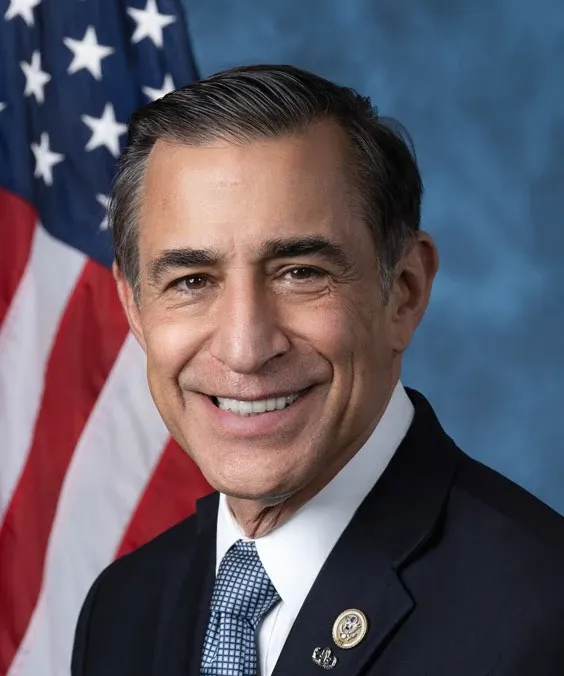
Tom McClintock
The Public Record
Thomas Miller McClintock is an American politician serving as the U.S. Representative for California's 5th congressional district since 2009. A member of the Republican Party, he has been an advocate for limited government and fiscal conservatism throughout his political career. McClintock has focused on issues such as tax reform, environmental policy, and government spending. He previously served in the California State Assembly and as a member of the California State Senate, where he gained recognition for his commitment to conservative principles.
Jun 6, 2018
The ball is in the Forest Service's court--Congress has provided budget authority and management options.
Jun 6, 2018
The sooner these steps are taken and the more aggressively they are implemented, the quicker we will turn the tide on the self-induced environmental malfeasance.
Jun 6, 2018
I cannot thank her enough for that conspicuous commitment and for her no-nonsense approach to our forest issues.
Jun 6, 2018
I have been looking forward to this hearing, because it cuts to the core of the issues confronting our forests and the U.S. Forest Service under its new Interim Chief, Vicki Christiansen.
Jun 6, 2018
The Forest Service once generated funds for the Federal Treasury through the sale of excess timber.
Jun 6, 2018
I have stated many times before that we are simply loving our trees to death.
Jun 6, 2018
Active forest management produces healthy forests, with the byproduct of revenues generated for the Treasury.
May 21, 2018
I would like to thank our witnesses for appearing before the Subcommittee today. I look forward to hearing their testimony.
May 21, 2018
H.R. 5597 reflects a well-balanced compromise that has been achieved by Congressman Stewart...
May 21, 2018
The completion of the Transcontinental Railroad...literally transformed America.
May 21, 2018
The Golden Spike 150th Anniversary Act will recognize the Golden Spike National Historic Site...
May 21, 2018
And I would like to thank the Chairman and Ranking Member, Chairman Bishop, the Full Committee members, as well as members of the Subcommittee, for allowing me the opportunity to speak to you regarding my bill.
May 21, 2018
Do they have full access to the benefit of these programs that they are paying for? The answer was no.
Apr 24, 2018
Well, it used to be we could thin out a forest, sell that excess timber, and the foresters would come and identify the timber, and we would actually generate money for the Treasury that could then be used for other forest management…
Apr 11, 2018
We are already paying, both Republican and our governmental debt, about $475 billion just to rent the money we have already spent.
Apr 11, 2018
My greatest fear for our country is that our spending-driven debt and our annual deficits are setting the stage for a debt spiral.
Mar 19, 2018
I think the numbers that we heard from CAP are misleading when they are talking about $1.9 billion in critical systems.
Mar 19, 2018
The Fund draws from 30 years of mineral revenues (FY 2018-FY 2047) not already allocated by law.
Mar 19, 2018
H.R. 2584, the National Park Service Legacy Act, by Congressman Hurd, would provide direct financing for the high-priority deferred maintenance needs of the National Park Service.
Mar 19, 2018
We took these lands into trust for the American people's 'use, resort and recreation.'
Mar 19, 2018
H.R. 5210, introduced by Congressman Simpson of Idaho would establish the National Park Restoration Fund.
Mar 19, 2018
We took these lands into trust for the American public's use, resort, and recreation. This responsibility requires active management, not benign neglect.
Politicians like Tom McClintock