Mar 17, 2015
It's clear that Brownfields cleanup and redevelopment are very important to our community and to our economy.
The Public Record
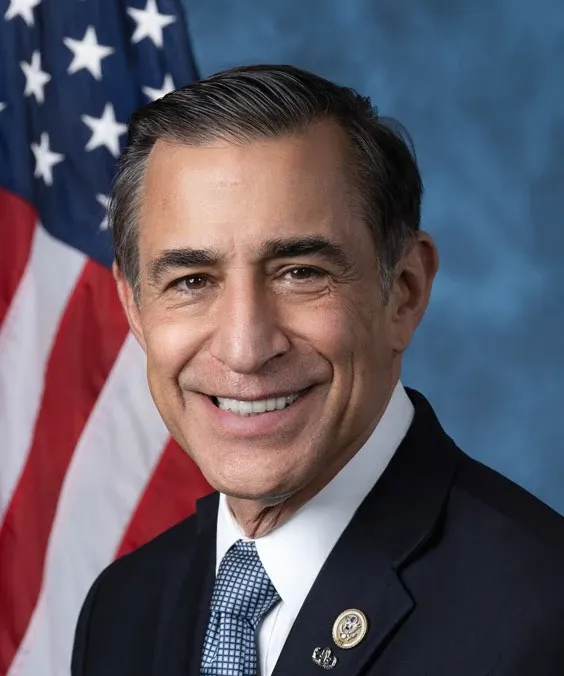
Duncan Hunter is a former Republican U.S. Representative from California, serving from 2009 to 2019. He represented California's 50th congressional district and was known for his strong support of military and veteran issues, as well as his advocacy for conservative fiscal policies. During his tenure, Hunter served on the House Armed Services Committee, where he focused on defense-related legislation. He was also involved in various initiatives related to border security and immigration reform.
It's clear that Brownfields cleanup and redevelopment are very important to our community and to our economy.
I'm aware that almost every Army Special Operations unit under your command is requesting a commercially available product to fill capability gaps in their intelligence requirements.
Considering a lot of the stuff that you just mentioned is regulatory in nature, and could be done by a regulatory agency versus a Presidentially appointed Commission...
Whoever is saying that this is the cost of our woes for high gas prices is misinforming the American people.
I think since I have had this position chairing this subcommittee, 4 years in a row the President has sent us a budget request that guts your acquisition.
I think the game is the administration does this, and it is up to Congress, then, to come in and say, 'Oh, we all love the Coast Guard, we are going to plus them up to what they need to be.' I think it is a dumb game.
You could always institute the rules that the Marine Corps had about 60 years ago, which--you can't get married until--in 7 years, or go on two floats or go to war once, or something like that.
Your statement and your comments continue to prove that the Jones Act is critical to our economy, and is an important part of our national security.
It is irresponsible to subject the Coast Guard to a partial shutdown and ask active-duty coastguardsmen and coastguardswomen to work without pay.
We should require that all LNG exported from the United States be on American ships, so that these three elements of national security are enhanced.
What would you do right now, if the budget that is reflected right now is the actual budget, going forward into 2016?
We think that would be a horrible, horrible thing for America's industrial base and our ability to fight wars.
I still find that number, 80-percent reduction in forces around the world, military forces since 1990, extremely interesting.
I mean this was just--this was mainly Army and Air Force, but it was just very interesting.
The President sent Congress a budget that would increase spending by nearly $75 billion over the fiscal year 2016 spending cap.
With all the stuff that is going on, all the budget cuts, and I guess you could say the kind of spurning by your own leadership within the administration and OMB and the Department of Homeland Security, they don't think much of the Coast…
This bill would not have happened without the leadership of Mr. Rahall and the full committee chairman, Bill Shuster from Pennsylvania. They did a lot of work on this bill. I am honored to yield such time as he may consume to the gentleman…
Again, I want to thank the gentleman from West Virginia and my colleague from California (Mr. Garamendi) and the great staffs that spent time on this and, of course, the great Howard Coble, who said in one of his elections probably about…
There are a few people I want to thank, too. I want to thank John and Jeff, who are here in this room, for the work that they have put into this. I want to thank Victoria Middleton, who is my chief of staff. This will be her last year…
I think this builds a little bit on Ms. Hanabusa's question, as well, because the question is, you know, can the services accept innovation?
Politicians like Duncan Hunter