Dec 10, 2014
I mean what we have got is not a bridge to tomorrow but a protection of the status quo.
The Public Record
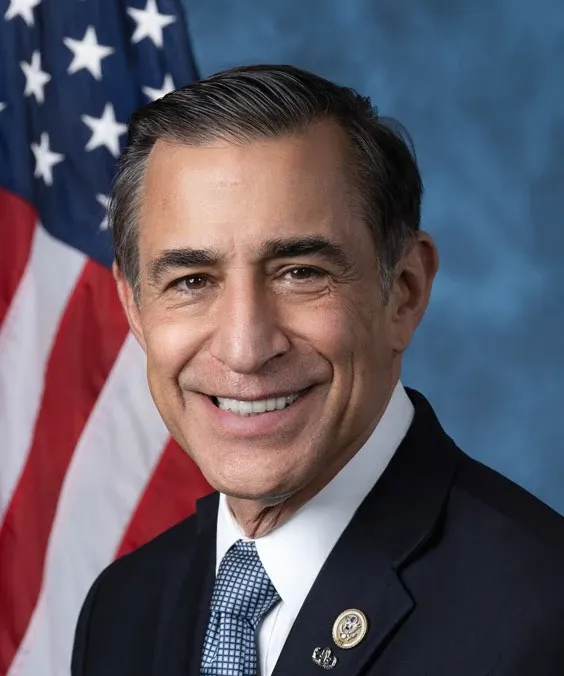
Dana Rohrabacher is a former U.S. Representative for California's 48th congressional district, serving from 1989 to 2019. A member of the Republican Party, he is known for his libertarian views and strong support for the tech industry. During his time in Congress, Rohrabacher was an advocate for various issues, including technology innovation and foreign policy matters, particularly regarding Taiwan and its democratic governance. He often emphasized the importance of individual liberties and limited government intervention.
I mean what we have got is not a bridge to tomorrow but a protection of the status quo.
I have served in the House of Representatives now for 26 years, and I have met good people and bad people, and I have met people I agree with and whom I like and people I disagree with and I like. We are reflective of the American people…
We made a wrong decision when we went down this road and I think that unfortunately the American people and the people of the world are going to pay for it.
We are not going to have that because we are going to have a big, huge rocket that we can be so proud of.
We are not going to be building a way and a technology developing a way, Mr. Chairman, to clear space debris.
They are not interesting; they are insufficient, insufficient to reach your goals.
We said there would be funding problems; I had no idea the funding problems would come on so quickly.
Right where Florida is they stop drilling, and now the Cubans basically--you know, the pool of oil doesn't just, like, oh, it is Cuba--we got to stop, and they are going to basically stick a straw in there and they are going to take…
There is no disagreement about whether there is climate change. The only disagreement is whether mankind is causing it.
Either you are there as a part of it or you are left out, and I learned those things that are being emphasized in this hearing as well.
Let us do it the right way and let us do it in a way that complements and minimizes the effect on the environment.
If the Law of the Sea Treaty verification would in some way put us under an obligation to let the United Nations solve disputes, I think that is rather--something I would not be supportive of.
Of course, in this particular case it is a particular pie... maybe China would like the United Nations to settle that because they have a tendency to bribe countries in the United Nations.
But if someone comes up and they are challenging your authority and your rights... we would then be letting the United Nations settle that dispute?
Do we at that point rely on the United Nations in order to settle disputes then within that context?
We need to raise its profile, and I know I am over time but I will finish up here by saying in the absence of clear statements of policy, backed by high-level attention and resources from the United States, there is a danger over the long…
I am pro-development. I think this should be done hand in hand with development.
I think we should create marine preserves in the Arctic. I think we should work through the Arctic Council to help protect the high seas.
We need a deep-water port. We need road, rail and other intermodal infrastructure. We need pipelines. We need airports, et cetera.
I just--I just--you know, I get so concerned that I have seen these meetings--and I know the time is up--council meetings and everything else and we will talk and we will talk and we will talk.
I probably should be asserting a little chairmanship authority here, although the conversation is getting kind of hot.
It is in the interest of the United States to develop a plan that will define authority.
Politicians like Dana Rohrabacher