Nov 16, 2020
When we add to that consideration the consequences of burning that oil, and the contributions it makes to climate change, and all of the devastating impacts that has on the ocean and on people, it seems a no-brainer that we shift as…
The Public Record
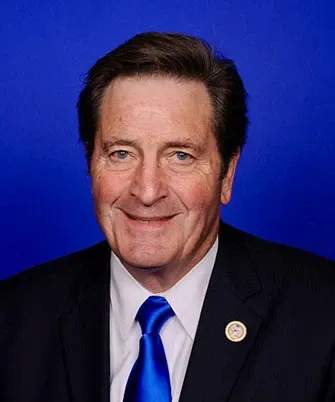
Alan S. Lowenthal is a Democratic politician from California, born on March 24, 1941. He served as a member of the U.S. House of Representatives from 2013 to 2023, representing California's 47th congressional district. During his tenure, Lowenthal focused on issues such as education, healthcare, and environmental protection, advocating for policies that support working families and promote sustainable practices. He has a background in academia and local government, having previously served in the California State Assembly and as a Long Beach city council member.
When we add to that consideration the consequences of burning that oil, and the contributions it makes to climate change, and all of the devastating impacts that has on the ocean and on people, it seems a no-brainer that we shift as…
The bills the Committee is hearing today will drive climate solutions, restore our oceans, foster innovation, and help us realize the potential of a sustainable ocean economy.
We are leading the way at the Port of Los Angeles, where I happen to represent, where a new public-private ocean institute called AltaSea is creating a world class, ocean-based, 35-acre campus where scientists, entrepreneurs, and educators…
We had established a program from the Santa Barbara Channel down to the Ports of LA Long Beach, a voluntary program called the Blue Whales, Blue Skies program.
Thank you, Chair. And first I want to apologize for running back because I know other Members have done this also running back and forth and voting.
Thank you for the question. Dominion Energy always told us... that the gas was needed, would bring jobs and would be inevitable.
I do know that, Ms. Patterson, that you have another appointment and you need to depart in 1 minute from this hearing.
Just as white Americans can no longer ignore the systemic inequalities in policing, in public health, and in the criminal justice system, we cannot ignore the racism ingrained in the systems that keep our lights on, our cars moving, our…
For too long, companies paid little public price for this decision making, which was based on both systemic racism and unconscious bias.
I'm proud of the work done by this Committee to address environmental justice, led by our full Committee Chair Raul Grijalva and our Subcommittee colleague Representative McEachin.
Thanks in large part to brave activists who are willing to put their bodies on the line in order to highlight racial injustices, there has been an enormous public awakening.
They look to site projects where they will face the least amount of political and public resistance, which, unfortunately, is often in poor, underserved, and under-represented communities.
Fossil fuel companies know the toll that their infrastructure takes on public health and environment.
It is an undeniable fact that in our country, it is often the very wealthy and politically connected who have an outsized voice in the public decision-making process.
When a privileged community decides it doesn't want something in its backyard, quite often, it is the backyards of the less powerful, less connected, and less wealthy that end up bearing the burden.
I hope in the future that we take back that message, that such important reform should be debated and discussed fully.
I ultimately ended up voting for the bill, against my local labor unions, and it was very painful.
It is going to take a long time for a person like me and, I would think, others, to regain trust.
I have pressed Congress and the administration to take steps to aid ports like opening up municipal lending facilities to port authorities.
We are advocating here that our nation's ports must be included in any future packages.
We start this letter by offering our sincere thanks to you and your staff for all the work that you have done to help the American people during this emergency.
We rely, in our district, as does the country, on free and open trade in the Indo-Pacific.
My constituents also have a very strong interest in checking China's influence in the south, especially in their dominance in the South China Sea.
Politicians like Alan Lowenthal