Feb 5, 2020
Thank you, the chair, for holding this very important hearing, the first time in decades that we have really listened to the transportation needs on Federal lands, on Tribal lands, and U.S. Territories.
The Public Record
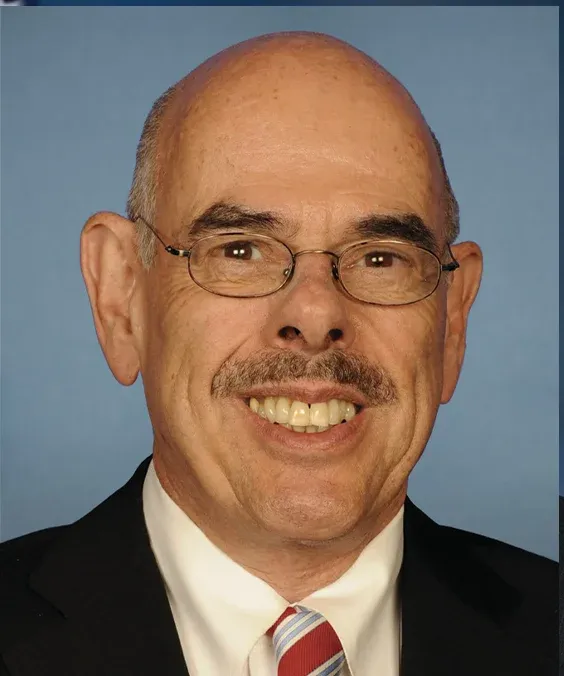
Alan S. Lowenthal is a Democratic politician from California, born on March 24, 1941. He served as a member of the U.S. House of Representatives from 2013 to 2023, representing California's 47th congressional district. During his tenure, Lowenthal focused on issues such as education, healthcare, and environmental protection, advocating for policies that support working families and promote sustainable practices. He has a background in academia and local government, having previously served in the California State Assembly and as a Long Beach city council member.
Thank you, the chair, for holding this very important hearing, the first time in decades that we have really listened to the transportation needs on Federal lands, on Tribal lands, and U.S. Territories.
I think you have raised an important issue. We do not deal with that in this bill at all.
I think it is important that we support these laws such as the Energy Transition Act in New Mexico...
TEPA does not mandate a change in the types of energy developed, but rather gives the American people the data they need to make informed decisions.
As owners and caretakers of our Nation's resources, we should all strive for greater transparency and accountability from our Federal Government.
That's why we need the Transparency in Energy Production Act, and it's not just about methane. It's about transparency across the board.
Methane, the main component of natural gas, is a powerful greenhouse gas--much worse for our climate than carbon dioxide.
The oil and gas industry has, for years now, touted natural gas as the solution to climate change.
My bill, on its face, is simply about transparency. It is about making sure that companies operating on America's public lands tell the public the basic information about how they run their operations.
That is why we need the Transparency in Energy Production Act, and it is not just about methane.
But it is actually more than that. The bill is about protecting public health, safeguarding the environment, and trying to keep the devastating impacts of climate change in check.
We have driven substantial reductions in localized diesel emissions through investment in dockside power.
I think that the rollout of shore charging and shoreside power systems is vital to be moving in this direction.
I think the Corps has really stepped up and said they are going to look at that.
I am pleased that we are beginning our work on the 2020 in one of the most critical things that we do, the Water Resources Development Act.
The facts in this case are as simple as they are tragic. Witness after witness attested to these facts. No one has credibly refuted them. President Trump tried to coerce Ukraine to interfere in the 2020 elections. He used the power of his…
That fills me with hope. Mr. Speaker, this resolution affirms the principles that have guided our foreign policy under Democratic and Republican administrations. We know that a two-state solution is the only path to a just peace. Mr…
I appreciate in your testimony and that of other witnesses... the need to remove barriers like the cap on nonhighway projects under the Federal freight program.
I personally strongly support the INFRA program and agree with you that a competitive grant program is better positioned to fund large-scale infrastructure projects that improve freight movement.
We would strongly recommend that you actually tell the Corps in law what they have to account for, and things that they can't account for.
I would also highlight a couple of things. One, there is a robust knowledge base out there on how to value ecosystem services.
I have been really fascinated by following the discussion on the use of natural infrastructure by the Corps.
We worked with this Committee and these members because OMSA understood that if changes to the Jones Act are necessary, Congress should enact them.
Politicians like Alan Lowenthal