Taking for my basis that I had an incurable evil to deal with, I cast about how I should make it as small an evil as possible, and draw out of it some collateral good.
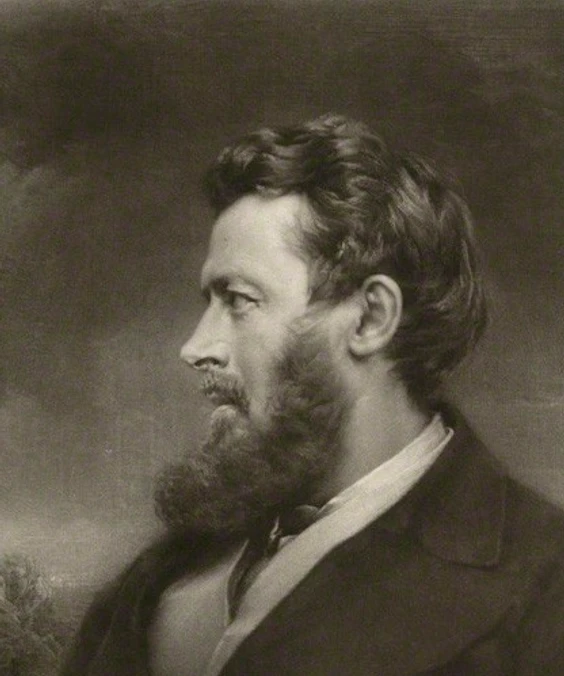
Edmund Burke
The Public Record
Edmund Burke was an Anglo-Irish writer, philosopher, and politician who is widely credited as the founder of the cultural and political philosophy of conservatism. Regarded as one of the most influential conservative thinkers and political writers of the 18th century, Burke spent the majority of his career in Great Britain and was elected as a member of Parliament (MP) from 1766 to 1794 in the House of Commons of Great Britain with the Whig Party. His writings played a significant role in influencing public views and opinions in both Great Britain and France following the French Revolution in 1789, and he remains a major figure in modern conservative circles.
gutenberg.org
But it is much to be feared that a trade continued and discouraged, and with a sentence of death passed upon it, will perpetuate much ill blood between those who struggle for the abolition and those who contend for an effectual continuance.
To make the abolition gradual, the regulations must operate as a strong discouragement.
The idea of the House seems to me, if I rightly comprehend it, that the two things are to be combined: that is to say, that the trade is gradually to decline, and to cease entirely at a determinate period.
A remote, and a gradual abolition, though they may be connected, are not the same thing.
The people like short methods; the consequences of which they sometimes have reason to repent of.
What has been lately done has been done by a popular spirit, which seldom calls for, and indeed very rarely relishes, a system made up of a great variety of parts, and which is to operate its effect in a great length of time.
If the African trade could be considered with regard to itself only, and as a single object, I should think the utter abolition to be on the whole more advisable than any scheme of regulation an reform.
On the whole, every circumstance of mercy, and of comparative justice, does, in my opinion, plead in favor of such low, untaught, or ill-taught wretches.
We may, too, recollect that between capital punishment and total impunity there are many stages.
The appetite of justice is easily satisfied, and it is best nourished with the least possible blood.
All our loose ideas of justice, as it affects any individual, have in them something of comparison to the situation of others; and no systematic reasoning can wholly free us from such impressions.
I would not go so far as to adopt the maxim, Quicquid multis peccatur inultum; but certainly offences committed by vast multitudes are somewhat palliated in the individuals, who, when so many escape, are always looked upon rather as…
The license, and complete impunity too, of the publications which from the beginning instigated the people to such actions, and in the midst of trials and executions still continues, does in a great degree render these creatures an object…
The absolute and entire impunity attending the same offence in Edinburgh, which was over and over again urged as an example and encouragement to these unfortunate people, might be a means of deluding them.
I would not plead the ignorance of the law in any, even the most ignorant, as a justification; but I am sure, that, when the question is of mercy, it is a very great and powerful argument.
The preachers of mischief remain safe, and are wicked enough not to feel for their deluded disciples,--no, not at all.
I pray that it may be recollected that the chief delinquents have hitherto escaped, and very many of those who are fallen into the hands of justice are a poor, thoughtless set of creatures, very little aware of the nature of their offence.
For my own part, I think the fire is not extinguished,--on the contrary, it seems to require the attention of government more than ever; but, as a part of any methodical plan for extinguishing this flame, it really seems necessary that the…
But though we ought to protect against violence the bigotry of others, and to correct our own too, if we have any left, we ought to reflect, that an offence which in its cause is national ought not in its effects to be vindicated on…
So far from it, I am clearly of opinion that on the late occasion the Catholics ought to have been taken, more avowedly than they were, under the protection of government, as the Dissenters had been on a similar occasion.
This delusion furnishes no reason for suffering that abominable spirit to be kept alive by inflammatory libels or seditious assemblies, or for government's yielding to it, in the smallest degree, any point of justice, equity, or sound…
We ought to recollect the poison which, under the name of antidotes against Popery, and such like mountebank titles, has been circulated from our pulpits and from our presses, from the heads of the Church of England and the heads of the…
The sense of justice in men is overloaded and fatigued with a long series of executions, or with such a carnage at once as rather resembles a massacre than a sober execution of the laws.
Men who see their lives respected and thought of value by others come to respect that gift of God themselves.
Politicians like Edmund Burke