On the contrary, a forced and fictitious agreement (which every universal agreement must be) is not becoming the cause of freedom.
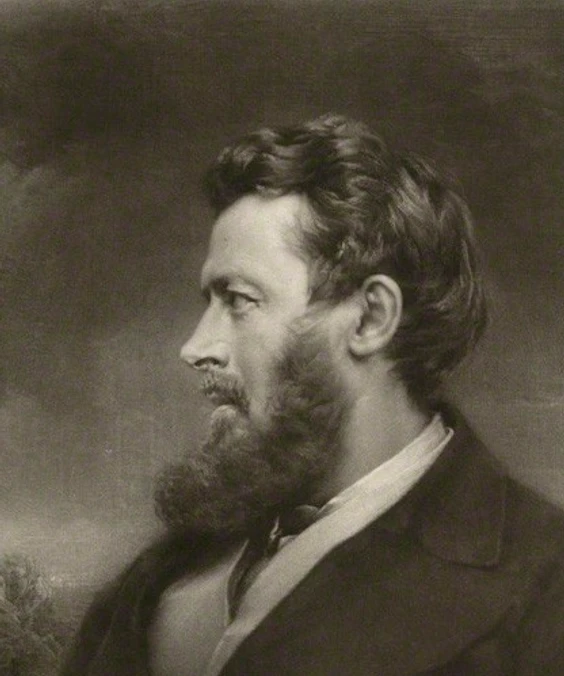
Edmund Burke
The Public Record
Edmund Burke was an Anglo-Irish writer, philosopher, and politician who is widely credited as the founder of the cultural and political philosophy of conservatism. Regarded as one of the most influential conservative thinkers and political writers of the 18th century, Burke spent the majority of his career in Great Britain and was elected as a member of Parliament (MP) from 1766 to 1794 in the House of Commons of Great Britain with the Whig Party. His writings played a significant role in influencing public views and opinions in both Great Britain and France following the French Revolution in 1789, and he remains a major figure in modern conservative circles.
gutenberg.org
I do not know that an amicable variety of sentiment, conducted with mutual good-will, has any sort of resemblance to discord, or that it can give any advantage whatsoever to the enemies of our common cause.
Assemblies that are met, and with a resolution to be all of a mind, are assemblies that can have no opinion at all of their own.
Sure I am, that no precipitate resolution on a great change in the fundamental constitution of any country can ever be called the real sense of the people.
The people may be deceived in their choice of an object; but I can scarcely conceive any choice they can make to be so very mischievous as the existence of any human force capable of resisting it.
It would be dreadful indeed, if there was any power in the nation capable of resisting its unanimous desire, or even the desire of any very great and decided majority of the people.
I most heartily wish that the deliberate sense of the kingdom on this great subject should be known.
I do not by any means reject the propositions; much less do I condemn the gentlemen who, with equal good intentions, with much better abilities, and with infinitely greater personal weight and consideration than mine, are of opinion that…
There are many things in reformation which would be proper to be done, if other things can be done along with them, but which, if they cannot be so accompanied, ought not to be done at all.
For that which taken singly and by itself may appear to be wrong, when considered with relation to other things, may be perfectly right,--or at least such as ought to be patiently endured, as the means of preventing something that is worse.
To enable us to correct the Constitution, the whole Constitution must be viewed together; and it must be compared with the actual state of the people, and the circumstances of the time.
I will not deny that our Constitution may have faults, and that those faults, when found, ought to be corrected; but, on the whole, that Constitution has been our own pride, and an object of admiration to all other nations.
But, as an honest man, I cannot possibly give my rote for it, until I have considered it more fully.
It is impossible for you to have a subject before you of more importance, and that requires a more cool and more mature consideration, both on its own account, and for the credit of our sobriety of mind, who are to resolve upon it.
It is easy enough to say what shall be done: to cause it to be done,--hic labor, hoc opus.
What I propose, however, is but a beginning of a course of measures which an experience of the effects of the evil and the reform will enable the legislature hereafter to supply and correct.
The minds of men, being crippled with that restraint, can do nothing for themselves: everything must be done for them.
When a state of slavery is that upon which we are to work, the very means which lead to liberty must partake of compulsion.
Whenever, in my proposed reformation, we take our point of departure from a state of slavery, we must precede the donation of freedom by disposing the minds of the objects to a disposition to receive it without danger to themselves or to…
I confess I trust infinitely more (according to the sound principles of those who ever have at any time meliorated the state of mankind) to the effect and influence of religion than to all the rest of the regulations put together.
It is not that my plan does not lead to the extinction of the slave trade, but it is through a very slow progress, the chief effect of which is to be operated in our own plantations, by rendering, in a length of time, all foreign supply…
If so, I am persuaded that it is better to allow the evil, in order to correct it, than, by endeavoring to forbid what we cannot be able wholly to prevent, to leave it under an illegal, and therefore an unreformed existence.
I am very apprehensive, that, so long as the slavery continues, some means for its supply will be found.
I therefore was, and I still am, of opinion that the whole work ought to be taken up together, and that a gradual abolition of slavery in the West Indies ought to go hand in hand with anything which, should be done with regard to its…
I conceived that the true origin of the trade was not in the place it was begun at, but at the place of its final destination.
Politicians like Edmund Burke