Jan 1, 1790
Let us add, if we please, but let us preserve what they have left; and standing on the firm ground of the British Constitution, let us be satisfied to admire, rather than attempt to follow in their desperate flights, the aëronauts of…
The Public Record
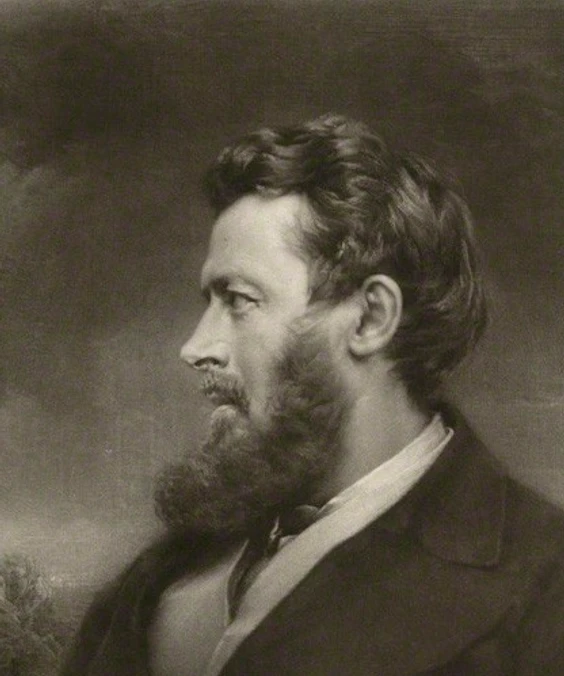
Edmund Burke was an Anglo-Irish writer, philosopher, and politician who is widely credited as the founder of the cultural and political philosophy of conservatism. Regarded as one of the most influential conservative thinkers and political writers of the 18th century, Burke spent the majority of his career in Great Britain and was elected as a member of Parliament (MP) from 1766 to 1794 in the House of Commons of Great Britain with the Whig Party. His writings played a significant role in influencing public views and opinions in both Great Britain and France following the French Revolution in 1789, and he remains a major figure in modern conservative circles.
★ Featured Quote
January 1, 1790
They come from one who has been no tool of power, no flatterer of greatness, and who in his last acts does not wish to belie the tenor of his life.
— Edmund Burke
Let us add, if we please, but let us preserve what they have left; and standing on the firm ground of the British Constitution, let us be satisfied to admire, rather than attempt to follow in their desperate flights, the aëronauts of…
Let us imitate their caution, if we wish to deserve their fortune or to retain their bequests.
Not being illuminated with the light of which the gentlemen of France tell us they have got so abundant a share, they acted under a strong impression of the ignorance and fallibility of mankind.
I would not exclude alteration neither; but even when I changed, it should be to preserve.
Our people will find employment enough for a truly patriotic, free, and independent spirit, in guarding what they possess from violation.
I think our happy situation owing to our Constitution,--but owing to the whole of it, and not to any part singly,--owing in a great measure to what we have left standing in our several reviews and reformations, as well as to what we have…
Whatever they are, I wish my countrymen rather to recommend to our neighbors the example of the British Constitution than to take models from them for the improvement of our own.
The improvements of the National Assembly are superficial, their errors fundamental.
If any of them should happen to propose a scheme of liberty soberly limited, and defined with proper qualifications, he will be immediately outbid by his competitors, who will produce something more splendidly popular.
They will become flatterers instead of legislators,--the instruments, not the guides of the people.
But when the leaders choose to make themselves bidders at an auction of popularity, their talents, in the construction of the state, will be of no service.
But to form a free government, that is, to temper together these opposite elements of liberty and restraint in one consistent work, requires much thought, deep reflection, a sagacious, powerful, and combining mind.
Those who know what virtuous liberty is cannot bear to see it disgraced by incapable heads, on account of their having high-sounding words in their mouths.
It is the greatest of all possible evils; for it is folly, vice, and madness, without tuition or restraint.
In some people I see great liberty, indeed; in many, if not in the most, an oppressive, degrading servitude.
He that does this is the cruel oppressor, the merciless enemy of the poor and wretched; at the same time that by his wicked speculations he exposes the fruits of successful industry and the accumulations of fortune to the plunder of the…
Of this consolation whoever deprives them deadens their industry, and strikes at the root of all acquisition as of all conservation.
The body of the people must not find the principles of natural subordination by art rooted out of their minds.
To keep a balance between the power of acquisition on the part of the subject and the demands he is to answer on the part of the state is the fundamental part of the skill of a true politician.
To tell the people that they are relieved by the dilapidation of their public estate is a cruel and insolent imposition.
Rome, under her emperors, united the evils of both systems; and this unnatural combination was one great cause of her ruin.
It is an evil inevitably attendant on the dominion of sovereign democratic republics.
Politicians like Edmund Burke