Jan 1, 1790
By suffering the several districts, and several of the individuals in each district, to judge of what part of the old revenue they might withhold, instead of better principles of equality, a new inequality was introduced of the most…
The Public Record
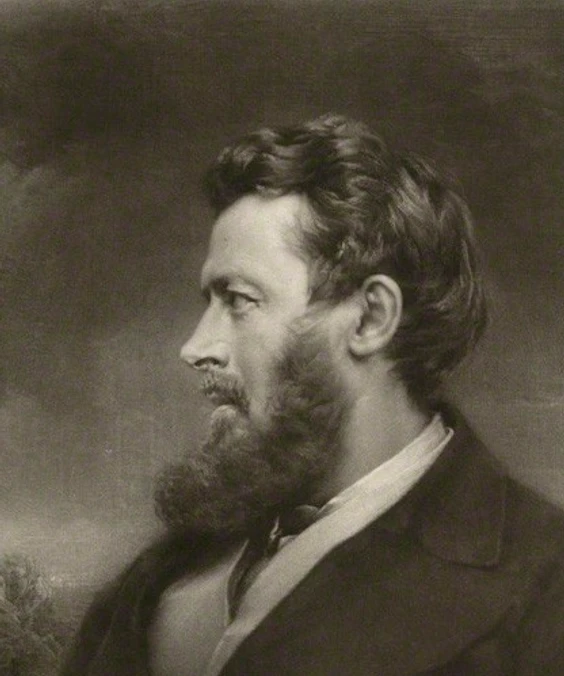
Edmund Burke was an Anglo-Irish writer, philosopher, and politician who is widely credited as the founder of the cultural and political philosophy of conservatism. Regarded as one of the most influential conservative thinkers and political writers of the 18th century, Burke spent the majority of his career in Great Britain and was elected as a member of Parliament (MP) from 1766 to 1794 in the House of Commons of Great Britain with the Whig Party. His writings played a significant role in influencing public views and opinions in both Great Britain and France following the French Revolution in 1789, and he remains a major figure in modern conservative circles.
By suffering the several districts, and several of the individuals in each district, to judge of what part of the old revenue they might withhold, instead of better principles of equality, a new inequality was introduced of the most…
Though their proud assumption might justify the severest tests, yet, in trying their abilities on their financial proceedings, I would only consider what is the plain, obvious duty of a common finance minister, and try them upon that, and…
Through the revenue alone the body politic can act in its true genius and character; and therefore it will display just as much of its collective virtue, and as much of that virtue which may characterize those who move it, and are, as it…
Public virtue, being of a nature magnificent and splendid, instituted for great things, and conversant about great concerns, requires abundant scope and room, and cannot spread and grow under confinement, and in circumstances straitened…
As all great qualities of the mind which operate in public, and are not merely suffering and passive, require force for their display, I had almost said for their unequivocal existence, the revenue, which is the spring of all power…
The dignity of every occupation wholly depends upon the quantity and the kind of virtue that may be exerted in it.
It was by this grand arrangement that France was to stand or fall; and this became, in my opinion very properly, the test by which the skill and patriotism of those who ruled in that Assembly would be tried.
If, however, considered in any relation to the crown, to the National Assembly, to the public tribunals, or to the other army, or considered in a view to any coherence or connection between its parts, it seems a monster, and can hardly…
The Assembly keep a school, where, systematically, and with unremitting perseverance, they teach principles and form regulations destructive to all spirit of subordination, civil and military,--and then they expect that they shall hold in…
Neither have they left any principle by which any of their municipalities can be bound to obedience,--or even conscientiously obliged not to separate from the whole, to become independent, or to connect itself with some other state.
They have left nothing but their own arbitrary pleasure to determine what property is to be protected and what subverted.
The only security which property enjoys in any one of its descriptions is from the interests of their rapacity with regard to some other.
The ground of some of these arguments is horrid and ridiculous to all rational ears; but to the politicians of metaphysics, who have opened schools for sophistry, and made establishments for anarchy, it is solid and conclusive.
You have forbidden us to treat them with any of the old formalities of respect; and now you send troops to sabre and to bayonet us into a submission to fear and force which you did not suffer us to yield to the mild authority of opinion.
We see the burghers of Paris, through their clubs, their mobs, and their national guards, directing you at their pleasure, and giving that as law to you, which, under your authority, is transmitted as law to us.
This we have never commissioned you to do; and it is one instance among many, indeed, of your assumption of undelegated power.
You have sent them to us with their arms reversed, their shields broken, their impresses defaced,--and so displumed, degraded, and metamorphosed, such unfeathered two-legged things, that we no longer know them.
You hold up, to chastise them, the second-hand authority of a king, who is only the instrument of destroying, without any power of protecting either the people or his own person.
When the peasants give you back that coin of sophistic reason on which you have set your image and superscription, you cry it down as base money, and tell them you will pay for the future with French guards and dragoons and hussars.
As they are prodigal of light with regard to grievances, so the people find them sparing in the extreme with regard to redress.
The leaders teach the people to abhor and reject all feodality as the barbarism of tyranny; and they tell them afterwards how much of that barbarous tyranny they are to bear with patience.
You lay down metaphysic propositions which infer universal consequences, and then you attempt to limit logic by despotism.
These are the fruits of metaphysic declarations wantonly made and shamefully retracted!
Politicians like Edmund Burke