Jan 1, 1790
That is, those persons are exempted from the power of the laws who ought to be the most entirely submitted to them.
The Public Record
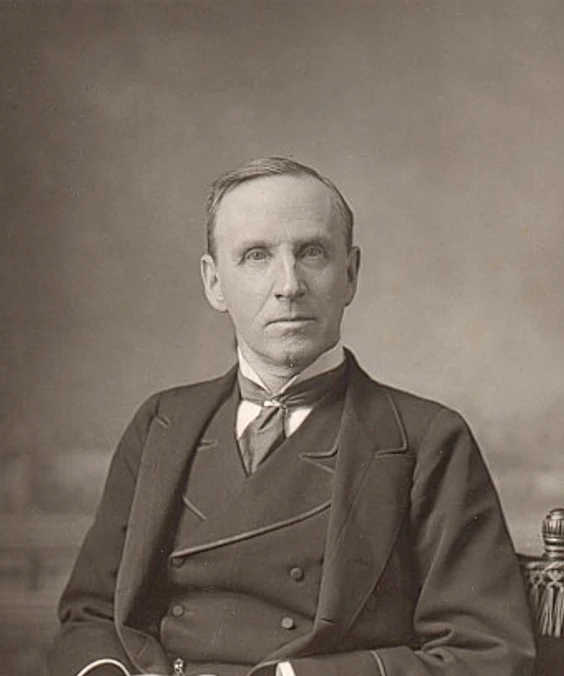
Edmund Burke was an Anglo-Irish writer, philosopher, and politician who is widely credited as the founder of the cultural and political philosophy of conservatism. Regarded as one of the most influential conservative thinkers and political writers of the 18th century, Burke spent the majority of his career in Great Britain and was elected as a member of Parliament (MP) from 1766 to 1794 in the House of Commons of Great Britain with the Whig Party. His writings played a significant role in influencing public views and opinions in both Great Britain and France following the French Revolution in 1789, and he remains a major figure in modern conservative circles.
That is, those persons are exempted from the power of the laws who ought to be the most entirely submitted to them.
That is, by their short laws, they will leave much to the discretion of the judge, whilst they have exploded the authority of all the learning which could make judicial discretion (a thing perilous at best) deserving the appellation of a…
This is not perhaps certain, nor can it be ascertained; but when they acquit, we know they have seen the persons whom they discharge, with perfect impunity to the actors, hanged at the door of their court.
They know not by what law they judge, nor under what authority they act, nor by what tenure they hold.
They become complete and most dangerous instruments in the hands of the governing power, which, in the midst of a cause, or on the prospect of it, may wholly change the rule of decision.
Instead of imitating your monarchy, and seating your judges on a bench of independence, your object is to reduce them to the most blind obedience.
The vice of the ancient democracies, and one cause of their ruin, was, that they ruled, as you do, by occasional decrees, psephismata.
Where they may the best answer the purposes of concealment, they answer to produce suspicion, and this is a still more mischievous cause of partiality.
All contrivances by ballot we know experimentally to be vain and childish to prevent a discovery of inclinations.
It will be impossible to keep the new tribunals clear of the worst spirit of faction.
In them it will be vain to look for any appearance of justice towards strangers, towards the obnoxious rich, towards the minority of routed parties, towards all those who in the election have supported unsuccessful candidates.
In that Constitution, elective, temporary, local judges, such as you have contrived, exercising their dependent functions in a narrow society, must be the worst of all tribunals.
Such an independent judicature was ten times more necessary when a democracy became the absolute power of the country.
It ought to make its judicature, as it were, something exterior to the state.
They were the great security to private property; which might be said (when personal liberty had no existence) to be, in fact, as well guarded in France as in any other country.
They had saved that sacred deposit of the country during the reigns of arbitrary princes and the struggles of arbitrary factions.
They composed permanent bodies politic, constituted to resist arbitrary innovation; and from that corporate constitution, and from most of their forms, they were well calculated to afford both certainty and stability to the laws.
In their puzzled situation, under two sovereigns, over neither of whom they have any influence, they must act in such a manner as (in effect, whatever they may intend) sometimes to betray the one, sometimes the other, and always to betray…
They are to execute, without power; they are to be responsible, without discretion; they are to deliberate, without choice.
For instance, among many others, it was in your power to leave to your king the right of peace and war.--What! to leave to the executive magistrate the most dangerous of all prerogatives?--I know none more dangerous; nor any one more…
You do, in spite of your grand theories, to which you would have heaven and earth to bend, you do know how to conform yourselves to the nature and circumstances of things.
In this futile scheme of polity, the state nurses in its bosom, for the present, a source of weakness, perplexity, counteraction, inefficiency, and decay; and it prepares the means of its final ruin.
That may be; but it is Nature; and whilst you pique Nature against you, you do unwisely to trust to duty.
Politicians like Edmund Burke