Jan 1, 1790
A state of contempt is not a state for a prince: better get rid of him at once.
The Public Record
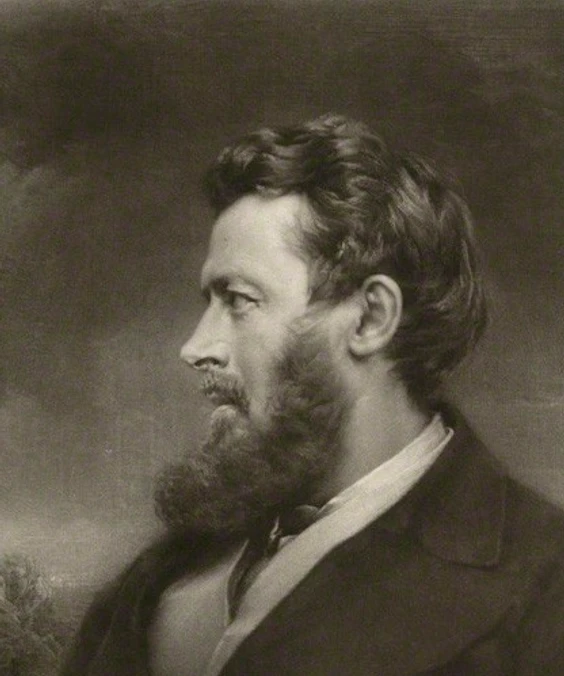
Edmund Burke was an Anglo-Irish writer, philosopher, and politician who is widely credited as the founder of the cultural and political philosophy of conservatism. Regarded as one of the most influential conservative thinkers and political writers of the 18th century, Burke spent the majority of his career in Great Britain and was elected as a member of Parliament (MP) from 1766 to 1794 in the House of Commons of Great Britain with the Whig Party. His writings played a significant role in influencing public views and opinions in both Great Britain and France following the French Revolution in 1789, and he remains a major figure in modern conservative circles.
A state of contempt is not a state for a prince: better get rid of him at once.
The elevation of mind to be derived from fear will never make a nation glorious.
A king circumstanced as the present, if he is totally stupefied by his misfortunes, so as to think it not the necessity, but the premium and privilege of life, to eat and sleep, without any regard to glory, can never be fit for the office.
If you expect such obedience, amongst your other innovations and regenerations, you ought to make a revolution in Nature, and provide a new constitution, for the human mind: otherwise your supreme government cannot harmonize with its…
I think it impossible that any king, when he has recovered his first terrors, can cordially infuse vivacity and vigor into measures which he knows to be dictated by those who, he must be persuaded, are in the highest degree ill affected to…
Kings, even such as are truly kings, may and ought to bear the freedom of subjects that are obnoxious to them.
A purposed neglect, or, what is worse, a literal, but perverse and malignant obedience, must be the ruin of the wisest counsels.
Executive magistracy ought to be constituted in such a manner that those who compose it should be disposed to love and to venerate those whom they are bound to obey.
Those who serve the king can be actuated by no natural motive but fear,--by a fear of everything except their master.
In France the king is no more the fountain of honor than he is the fountain of justice.
What sort of person is a king to command executory service, who has no means whatsoever to reward it:--not in a permanent office; not in a grant of land; no, not in a pension of fifty pounds a year; not in the vainest and most trivial…
It ought to be environed with dignity, authority, and consideration, and it ought to lead to glory.
It is not in Nature, that, situated as the king of the French now is, he can respect himself or can be respected by others.
It was not for nothing that the Assembly has been at such pains to remove the stigma from certain offices, when they were resolved to place the person who had lately been their king in a situation but one degree above the executioner, and…
It is impossible to place anything called royalty in a more degrading point of view.
When we look into the true nature of his authority, he appears to be nothing more than a chief of bumbailiffs, sergeants-at-mace, catchpoles, jailers, and hangmen.
Of this there are no traces in your Constitution; and in providing nothing of this kind, your Solons and Numas have, as much as in anything else, discovered a sovereign incapacity.
They will be roused by emulation and example to enterprises the boldest and the most absurd.
The present, by destroying and altering everything, will leave to their successors apparently nothing popular to do.
Their idea of their powers is always taken at the utmost stretch of legislative competency, and their examples for common cases from the exceptions of the most urgent necessity.
We see a body without fundamental laws, without established maxims, without respected rules of proceeding, which nothing can keep firm to any system whatsoever.
Politicians like Edmund Burke