This present equality can never be the foundation of statutes which create an artificial difference between men, as the laws before us do, in order to induce a consequential inequality in the distribution of justice.
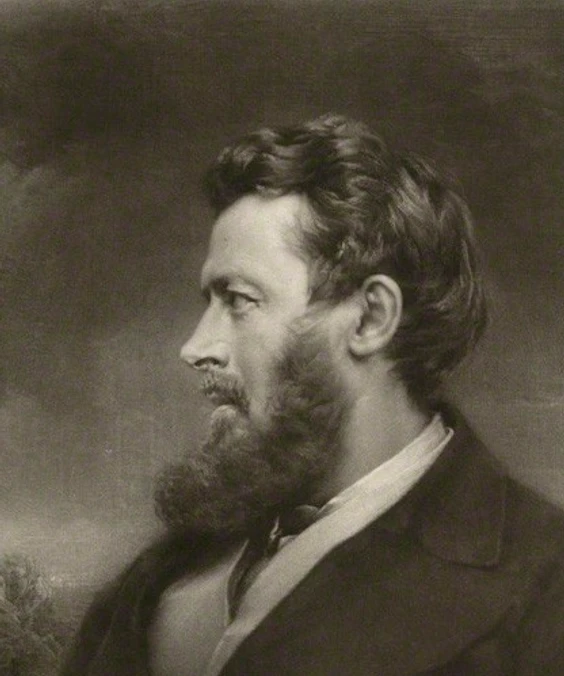
Edmund Burke
The Public Record
Edmund Burke was an Anglo-Irish writer, philosopher, and politician who is widely credited as the founder of the cultural and political philosophy of conservatism. Regarded as one of the most influential conservative thinkers and political writers of the 18th century, Burke spent the majority of his career in Great Britain and was elected as a member of Parliament (MP) from 1766 to 1794 in the House of Commons of Great Britain with the Whig Party. His writings played a significant role in influencing public views and opinions in both Great Britain and France following the French Revolution in 1789, and he remains a major figure in modern conservative circles.
gutenberg.org
All human laws are, properly speaking, only declaratory; they may alter the mode and application, but have no power over the substance of original justice.
With respect to the former, it grows out of the great rule of equality, which is grounded upon our common nature, and which Philo, with propriety and beauty, calls the mother of justice.
In reality there are two, and only two, foundations of law; and they are both of them conditions without which nothing can give it any force: I mean equity and utility.
They may, indeed, impeach the frame of that constitution, but can never touch this immovable principle.
No arguments of policy, reason of state, or preservation of the constitution can be pleaded in favor of such a practice.
But if we could suppose that such a ratification was made, not virtually, but actually, by the people, not representatively, but even collectively, still it would be null and void.
If, therefore, at least an implied human consent is necessary to the existence of a law, such a constitution cannot in propriety be a law at all.
No one can imagine, then, an exclusion of a great body of men, not from favors, privileges, and trusts, but from the common advantages of society, can ever be a thing intended for their good, or can ever be ratified by any implied consent…
But though the means, and indeed the nature, of a public advantage may not always be evident to the understanding of the subject, no one is so gross and stupid as not to distinguish between a benefit and an injury.
This they owe as an act of homage and just deference to a reason which the necessity of government has made superior to their own.
The people, indeed, are presumed to consent to whatever the legislature ordains for their benefit; and they are to acquiesce in it, though they do not clearly see into the propriety of the means by which they are conducted to that…
The happiness or misery of multitudes can never be a thing indifferent.
But where the principle is faulty, the erroneous part of the law is the beneficial, and justice only finds refuge in those holes and corners which had escaped the sagacity and inquisition of the legislator.
The true weakness and opprobrium of our best general constitutions is, that they cannot provide beneficially for every particular case, and thus fill, adequately to their intentions, the circle of universal justice.
The objection here is, as we observed, by no means on account of the imperfection of the law; it is on account of its erroneous principle: for if this be fundamentally wrong, the more perfect the law is made, the worse it becomes.
As no legislators can regard the minima of equity, a law may in some instances be a just subject of censure without being at all an object of repeal.
But provisions in time of trouble proper, and perhaps necessary, may become in time of profound peace a scheme of tyranny.
So that Papists are entirely excluded from an education in any of our authorized establishments for learning at home.
Popish schoolmasters of every species are proscribed by those acts, and it is made felony to teach even in a private family.
Those who are acquainted with the constitution of our universities need not be informed that none but those who conform to the Established Church can be at all admitted to study there, and that none can obtain degrees in them who do not…
They have gone beyond even this: for every barrister, six clerk, attorney, or solicitor, is obliged to take a solemn oath not to employ persons of that persuasion,--no, not as hackney clerks, at the miserable salary of seven shillings a…
For they are not only excluded from all offices in Church and State, which, though a just and necessary provision, is yet no small restraint in the acquisition, but they are interdicted from the army, and the law, in all its branches.
Thus you observe, first, that by the express words of the law all possibility of acquiring any species of valuable property, in any sort connected with land, is taken away; and, secondly, by the construction all security for money is also…
The minister is preparing to transfer the cognizance of the public accounts from those whom you and the Constitution have chosen to control them, to unknown persons, creatures of his own.
Politicians like Edmund Burke