That it should be a matter of public discretion in me to be silent on the affairs of Ireland is what on all accounts I bitterly lament.
Edmund Burke
The Public Record
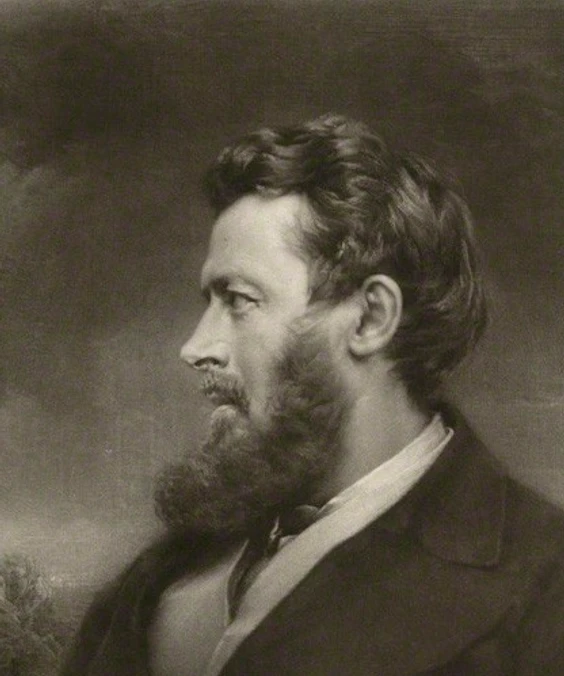
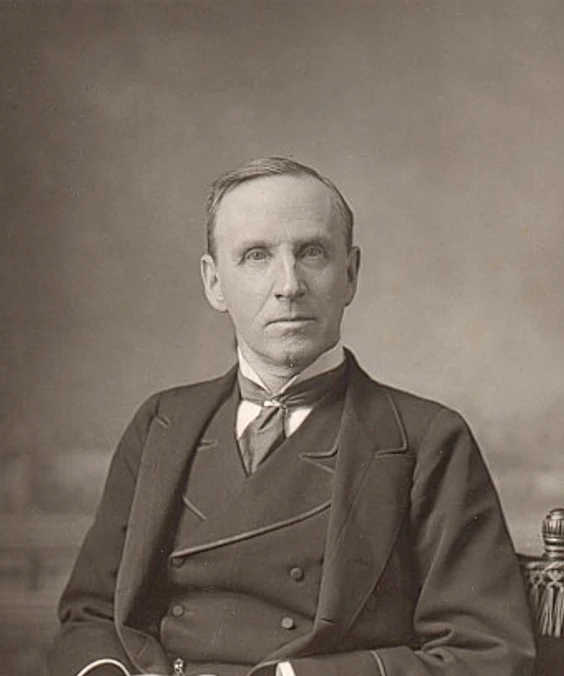
Edmund Burke was an Anglo-Irish writer, philosopher, and politician who is widely credited as the founder of the cultural and political philosophy of conservatism. Regarded as one of the most influential conservative thinkers and political writers of the 18th century, Burke spent the majority of his career in Great Britain and was elected as a member of Parliament (MP) from 1766 to 1794 in the House of Commons of Great Britain with the Whig Party. His writings played a significant role in influencing public views and opinions in both Great Britain and France following the French Revolution in 1789, and he remains a major figure in modern conservative circles.
gutenberg.org
Think or say what you will in Ireland, I shall ever think it a crime hardly to be expiated by his blood.
Now, it seems, you think yourselves affronted, because a few of us express some indignation at the minister who has thought fit to strip us stark naked, and expose the true state of our poxed and pestilential habit to the world!
But as to us, you declared to the world that you knew that the way of bringing us to reason was to apply yourselves to the true source of all our opinions and the only motive to all our conduct!
What do you think were the feelings of every man who looks upon Parliament in an higher light than that of a market-overt for legalizing a base traffic of votes and pensions, when he saw you employ such means of coercion to the crown, in…
You shortened the credit given to the crown to six months; you hung up the public credit of your kingdom by a thread; you refused to raise any taxes, whilst you confessed the public debt and public exigencies to be great and urgent beyond…
How are we to consider your armament without commission from the crown, when some of the first people in this kingdom have been refused arms, at the time they did not only not reject, but solicited the king's commissions?
It was not under the authority of law, most certainly, but it derived from an authority still higher; and as they say of faith, that it is not contrary to reason, but above it, so this army did not so much contradict the spirit of the law…
You raised an army new in its kind and adequate to its purposes.
What was done in Ireland during that period, in and out of Parliament, never will be forgotten.
I need not inform you, that everything they asserted of the steps taken in Ireland, as the result of our machinations, was utterly false and groundless.
The ministers, instead of attending to a duty that was so urgent on them, employed themselves, as usual, in endeavors to destroy the reputation of those who were bold enough to remind them of it.
And the sense of the members being influenced by nothing but what will naturally influence men unbought, their reason and their prejudices, these two principles had a fair conflict, and prejudice was obliged to give way to reason.
If I had acted with my dearest and most valued friends, if I had acted with the Marquis of Rockingham or the Duke of Richmond, in that situation, I could not have attended more to their honor, or endeavored more earnestly to give efficacy…
They are things not to my taste; and if they are looked upon as tests of friendship, I desire for one that I may be considered as an enemy.
But that to which I attached myself the most particularly was, to fix the principle of a free trade in all the ports of these islands, as founded in justice, and beneficial to the whole, but principally to this, the seat of the supreme…
I have done so, because I am ready to admit that to offend you without any cause would be as contrary to true policy as I am sure it must be to the inclinations of almost every one of us.
You never received any sort of injury from them, and you are grown to that degree of importance that the discourses in your Parliament will have a much greater effect on our immediate fortune than our conversation can have upon yours.
It is not perennial, and would prove but a poor shelter for your liberty, when this nation, having no interest in its own, could look upon yours with the eye of envy and disgust.
But if ours be unstrung, yours will be hung up on a peg, and both will be mute forever.
If liberty cannot maintain its ground in this kingdom, I am sure that it cannot have any long continuance in yours.
The possibility of the former is the only security for the existence of the latter.
In that case, if I know anything of this country, another constitutional opposition can never be formed in it; and if this be impossible, it will be at least as much so (if there can be degrees in impossibility) to have a constitutional…
That opposition is composed of the far greater part of the independent property and independent rank of the kingdom, of whatever is most untainted in character, and of whatever ability remains unextinguished in the people, and of all which…
These principles of the opposition are the only thing which preserves a single symptom of life in the nation.
Politicians like Edmund Burke