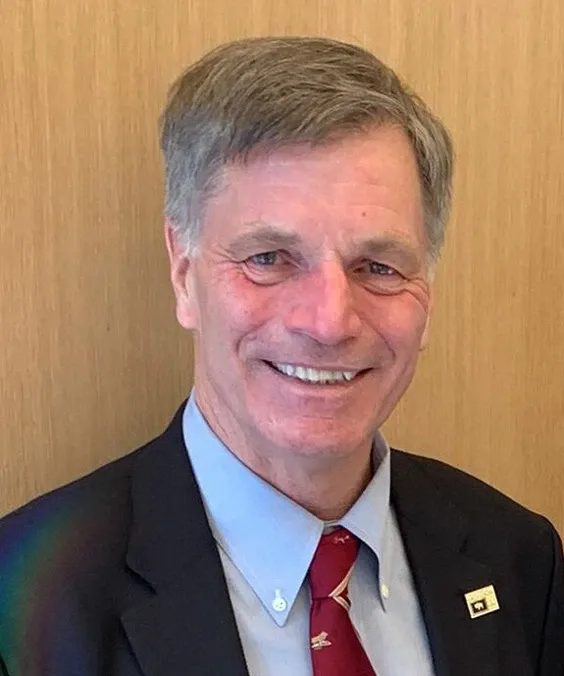
John Barrasso
The Public Record
John Anthony Barrasso is an American politician and physician serving as the senior United States senator from Wyoming since 2007. A member of the Republican Party, Barrasso has focused on issues such as healthcare, energy, and economic growth during his tenure in the Senate. He has been an advocate for reducing government regulations and promoting energy independence, reflecting the interests of his constituents in Wyoming, a state rich in natural resources.
Jul 22, 2014
I know, and these aren't just a couple of training events. I understand about 341 different events over the last two years with almost 5,000 participants attending.
Jul 22, 2014
In our Committee hearing back in July, I think it was July 23rd, we talked and you testified that the Assistance, Compliance, Enforcement initiative, the ACE initiative, would be a guiding principle in fulfilling your agency's regulatory…
Jul 21, 2014
Can you tell me how successful the Kyoto Protocol was in making countries that signed the treaty more energy independent and secure from countries or foreign entities that did not share their strategic interests?
Jul 21, 2014
I think it was an interesting discussion and then decision in Australia to repeal because of the specific impacts of it on the economy.
Jul 21, 2014
Accepting the connection can lead to the dangerous expansion of U.S. security concerns, inappropriately applied resources, and diversion of attention from more effective responses to known environmental problems.
Jul 21, 2014
So I say, why should we then spend billions of taxpayer dollars, defense dollars specifically, on climate change predictions about future conflicts due to drought and famine that the Department's own studies say that we cannot predict?
Jul 21, 2014
The threat assessment states that, 'There are increasing reports of Italian organized crime groups engaging in a so-called alternative or green energy market.'
Jul 21, 2014
So I ask you, Mr. Secretary: Are there serious unintended consequences to our national security if we go down this path, as Europe has done?
Jul 21, 2014
Increased LNG exports from the United States and its allies would shift rents away from traditional autocratic suppliers, including Russia.
Jul 21, 2014
Well, that is what I heard when I was in Latvia and Lithuania, that the concerns are that they were supposed to get to 2 percent, but they are unable to, and a lot of it has to do with the expenses that you have outlined.
Jul 21, 2014
Senator Inhofe had a statement that he would like to have included in the record.
Jul 21, 2014
A recent survey cited in the report found that primary causes of interstate conflict and civil war are political, not environmental.
Jul 21, 2014
There are serious implications for our national security, and you see them by the climate policies being implemented in places like Europe.
Jul 21, 2014
The administration's foreign policies have led to a more unstable and more dangerous world.
Jul 21, 2014
Taxpayer money would be better spent improving the security of U.S. embassies.
Jul 21, 2014
Secretary Kerry has called climate change the world's most fearsome weapon of mass destruction.
Jul 21, 2014
The United States is facing serious national security threats across the globe.
Jul 21, 2014
If the United States had adopted a cap-and-trade system, do you think it would have helped or hurt our strategic interests?
Jul 21, 2014
Efforts to link climate change to the deterioration of U.S. national security rely on improbable scenarios, imprecise and speculative methods, and scant empirical support.
Jul 21, 2014
The world is far from safe, far from save to preserve our national security.
Jul 15, 2014
The one person who foresaw many of the problems we are now encountering and tried to address them was Senator Barrasso of Wyoming.
Jul 15, 2014
The need to amend the Indian Land Consolidation Act to accommodate this new use in many of the same ways now proposed in the Daines and DeFazio bills.
Politicians like John Barrasso