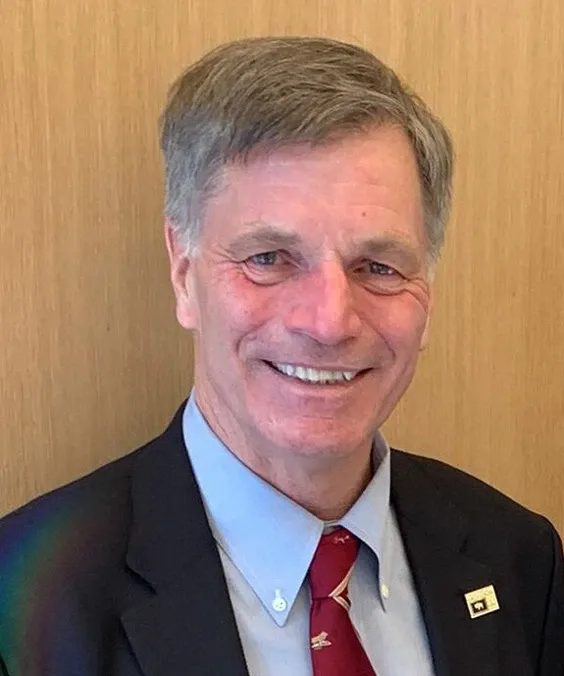
John Barrasso
The Public Record
John Anthony Barrasso is an American politician and physician serving as the senior United States senator from Wyoming since 2007. A member of the Republican Party, Barrasso has focused on issues such as healthcare, energy, and economic growth during his tenure in the Senate. He has been an advocate for reducing government regulations and promoting energy independence, reflecting the interests of his constituents in Wyoming, a state rich in natural resources.
May 2, 2017
My perception is that you have identified a number of ways that we can reduce bureaucracy.
May 2, 2017
So you think this is kind of a ready-made way to distribute the funds in terms of we should be considering this for any infrastructure, any comprehensive infrastructure bill?
May 2, 2017
Using the current predominantly formula-based FAST Act approach to distribution would ensure both rural and urban States participate in the initiative.
May 2, 2017
I have concerns with subjecting rural States to the same rules as more densely populated States.
May 2, 2017
Simplifying these processes will allow for construction companies to start hiring and for workers to begin building faster.
May 2, 2017
The largest hurdles to starting roadwork is getting the needed Government approvals.
May 2, 2017
Infrastructure is a shared bipartisan priority of all of the members of this Committee.
Apr 30, 2017
This puts the management of the gray wolf where it should have been all along, under the control of Wyoming, not Washington.
Apr 12, 2017
I support making the Department of State and USAID leaner, more efficient, and more effective.
Apr 7, 2017
If there is no further business to come before the Senate, I ask unanimous consent that it stand adjourned under the previous order. There being no objection, the Senate, at 12:41 p.m., adjourned until Monday, April 10, 2017, at 1:30 p.m…
Apr 4, 2017
I am pleased to accept these amendments, as revised, and move to adopt them en bloc.
Apr 4, 2017
For many of us who are from ocean and coastal States, that part of God's good earth has been rather overlooked compared to upland and freshwater in Congress.
Apr 4, 2017
Well, we will try to come up with legislation that we will name Troggs for our next Committee.
Apr 4, 2017
I wanted to express my appreciation to him. We announced bipartisan legislation on marine plastic debris that came from a hearing that he chaired in this Committee.
Mar 28, 2017
Mr. Frederick, in your written testimony you included some recommendations that you said could help improve things with regard to the cleanup of cold war legacy sites such as the Atlas Missile sites.
Mar 28, 2017
So, General, then I can count on you to make sure that this does not happen?
Mar 28, 2017
So, General, you would agree that Wyoming should be treated as a peer in this process, and its expertise should be given considerable weight as you make these decisions?
Mar 28, 2017
Mr. Frederick, do you believe that the Corps is doing what it is doing to help with some specific sites?
Mar 27, 2017
The other side of the coin is improving the ability to export raw materials and goods.
Mar 27, 2017
Nearly all of you on the panel today have suggested in one way or another that the United States should reduce our reliance on imported minerals for either economic or national security reasons.
Politicians like John Barrasso