Mar 5, 2012
I think this Nation certainly wants this Congress and all the agencies that are under our umbrella to exercise the political will that we need to to secure our borders--all of our borders.
The Public Record
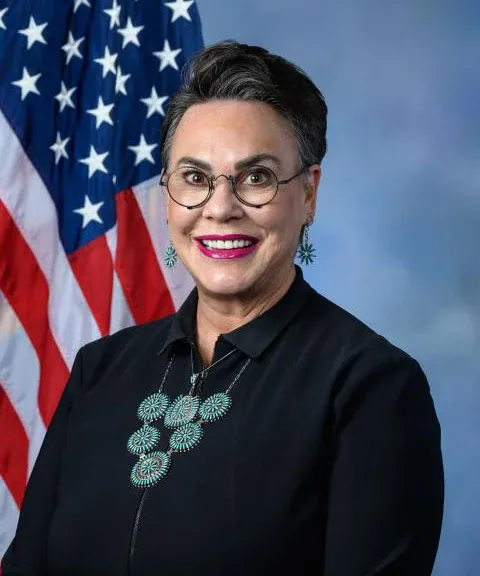
Carol Devine Miller is an American politician currently serving as the U.S. Representative for Wyoming's at-large congressional district, a position she has held since January 3, 2019. A member of the Republican Party, Miller has focused on issues pertinent to her constituents, including energy development and rural healthcare. She has been an advocate for policies that support Wyoming's economy and has worked on initiatives to enhance the state's infrastructure.
I think this Nation certainly wants this Congress and all the agencies that are under our umbrella to exercise the political will that we need to to secure our borders--all of our borders.
Clearly, more must be done to ensure the integrity of the visa system, including enhancements to Immigration and Customs Enforcement's ability to identify and promptly remove those who overstay their visa.
Entering the country and overstaying a visa has been the preferred method for terrorists to enter the country.
There is an important distinction to be made between those who cross the border, largely in search of a better life, and terrorists who abuse the visa process with the ultimate goal of destroying our way of life.
Since 9/11 our border security efforts have been focused on stopping illegal immigrants and illicit drugs from entering the country; chiefly our Southwest Border.
I think we missed the boat during the last BRAC, the Base Realignment and Closure Commission, when we could have looked at some military facilities inventory domestically here that could have been utilized by the DHS.
The first and foremost responsibility of the Federal Government is provide for the common defense.
It is our job, as Congress, to ask you how much does it cost for you to implement mandates that we are passing.
I was disappointed that the administration's National Strategy for Global Supply Chain Security did not address container scanning.
A successful terrorist attack on one of our ports... would have a devastating economic impact.
I am also concerned that DHS has not made any efforts towards improving container screening.
A disruption or attack at one of our Nation's largest ports could be catastrophic, and we need to make sure we 'push the borders out' by conducting as much of CBP's cargo inspection and screening work before potentially dangerous cargo…
Commerce is the life-blood of the Nation, and after September 11 we in Congress rightly recognized the importance of securing our Nation's ports and the cargo that transits from overseas to our stores on a daily basis.
We are all painfully aware of the economic transition that has occurred in our country.
The first and foremost responsibility of the Federal Government is to provide for the common defense.
Congress needs to be able to justify to the American people that our border is tangibly more secure as a result of that spending.
I have called this hearing today to examine how DHS can use off-the-shelf, innovative Department of Defense technology and hardware to address the needs of the men and women who are charged with securing our border.
My personal belief is it clearly is [administrative amnesty], and that in no way diminishes our respect for the brave men and women in the Border Patrol or in ICE and the work that you do all the time.
I have seen some numbers as high as, you know, $10 billion to $15 billion of additional cost that the States and local governments are absorbing because the Federal Government is really not doing the jobs that we should do as adequately as…
I believe that the American people--the majority of the American people--have demonstrated over and over that they have the political will to secure our borders.
It is for the agencies to tell the Congress what kind of resources are actually necessary.
I believe that that is the definition of what the administration is doing here in regards to administrative amnesty.
I don't think anybody disagrees with the concept, certainly, of removing criminal aliens from the United States.
Politicians like Carol Miller