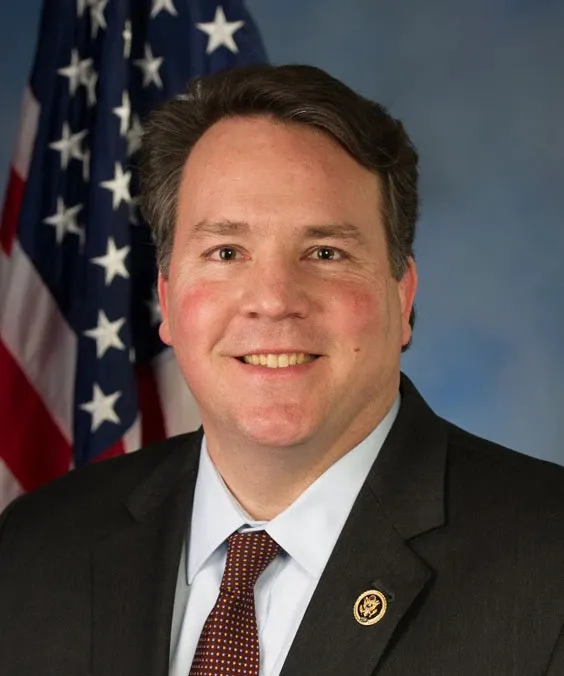
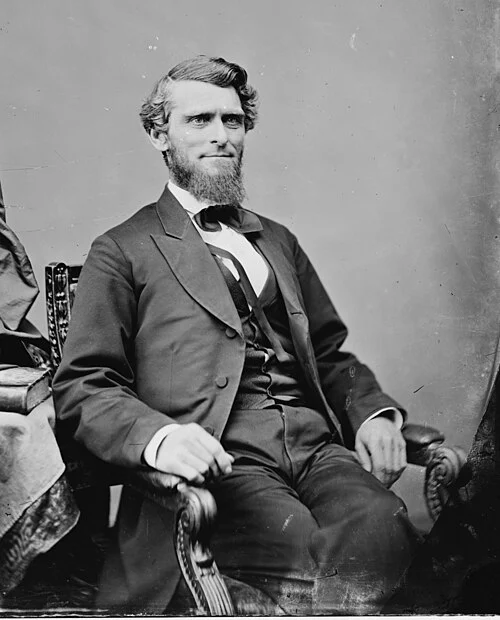
David McKinley
The Public Record
David Bennett McKinley is a former member of the U.S. House of Representatives, serving West Virginia's 1st congressional district from January 5, 2011, until January 3, 2023. A member of the Republican Party, McKinley focused on issues such as energy policy, infrastructure development, and healthcare during his time in office. He was known for advocating for the coal industry and promoting economic growth in West Virginia. McKinley also served on various committees, including the House Energy and Commerce Committee, where he played a role in shaping legislation related to energy and health care.
May 4, 2021
Thank you. And I just want to reinforce for everyone, you ought to read this United Nations report, because it really does document very clearly some of the problems that we are foisting on other nations, instead of doing it ourselves.
May 4, 2021
Isn't it time to be honest with the American people about the raw materials needed to make these batteries, where they come from, and the consequences of extracting these raw materials?
May 4, 2021
Look, this road to get 100 percent EVs and renewables is littered with environmental damage and human rights abuses.
May 4, 2021
But I could tell you, Mr. Chairman, maybe it is time they look in the mirror and ask themselves why are they denying these devastating environmental and human right abuses in order to obtain the critical minerals needed for batteries?
May 4, 2021
The last thing we want to do is take away people's mobility and livelihoods by limiting options of affordable and reliable vehicles.
May 4, 2021
The big question is how are we supposed to build these electric vehicles here at home?
May 4, 2021
I have real concerns that the CLEAN Future Act puts the cart before the horse by mandating electric vehicles.
May 3, 2021
Healthcare is a right for everyone, and access to prescription medication should not be reserved as a privilege only for the wealthy few.
May 3, 2021
Policies like referencing pricing and government price-settings will effectively turn our biopharma industry to a risk-averse, think-inside-the-box-rather-than-outside-the-box commodity industry.
May 3, 2021
We need a robust biopharma industry, and I think everyone agrees to that, investing in rare diseases.
May 3, 2021
I want to respond to my good friend, Representative Castor, with regard--she brought up the VA.
May 3, 2021
The status quo is not acceptable. Congress must act to ensure that the American people have access to and can afford the treatments that they need.
May 3, 2021
If I could, I want to ask a last question to Dr. Gupta because the United States, we are still--across the country still experiencing a wave of drug overdoses at a higher rate than we have ever seen before.
May 3, 2021
So we know the loser here is going to be the American public if we don't get a bill to the President's desk for signature.
May 3, 2021
H.R. 3, unfortunately, is an overreach, and unfortunately it gives me the impression, for those in the package, that Congress is seemingly willing to let American patients suffer.
May 3, 2021
But pursuing this highly partisan H.R. 3 is just an example of overreach, unfortunate overreach, that occurs too often in Washington, and it gets in the way.
Apr 28, 2021
They are retiring them because of the regulatory uncertainty, and the threats that are being posed to them.
Apr 28, 2021
I want to see in your budget, do you have enough money in there for research to be able to get us down to 80 percent by 2030?
Apr 28, 2021
Thank you again, Administrator Regan, not only for appearing before us, but also our conversation yesterday to get to know each other.
Apr 28, 2021
This is nothing but a politically driven agenda aimed at ending the use of coal and natural gas in this country.
Politicians like David McKinley