Dec 12, 2024
I appreciate your friendship over the years, Mr. Griffith. I will certainly miss my colleagues. I will come back and visit. It is not that far away. I appreciate you taking some time. I know you are getting home to your family. Mr…
The Public Record
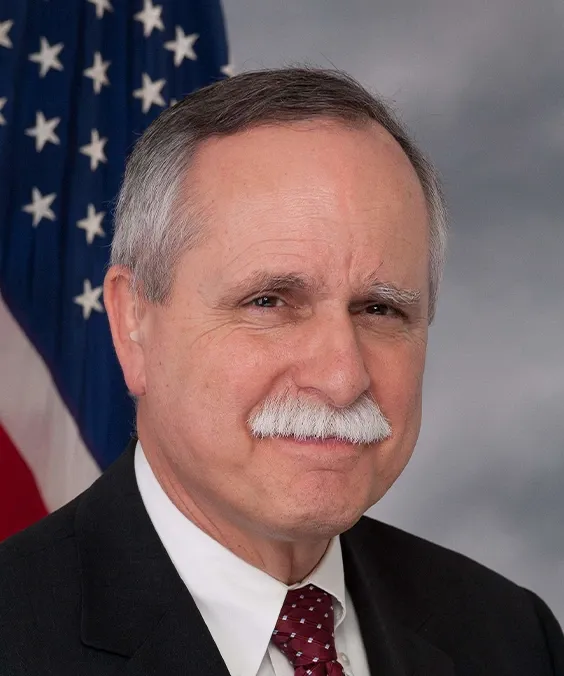
Alex Mooney is an American politician serving as the U.S. Representative for West Virginia's 2nd congressional district since 2015. A member of the Republican Party, he has focused on issues such as fiscal responsibility, job creation, and supporting the energy sector in his legislative efforts. Mooney previously served in the Maryland State Senate before moving to West Virginia, where he has continued to advocate for conservative policies. He was born on June 4, 1971.
★ Featured Quote
January 2, 2025
I am grateful for the House Ethics Committee's decision and dismissed allegations of misconduct as driven by politically motivated actors on the extreme left.
— Alex Mooney
I appreciate your friendship over the years, Mr. Griffith. I will certainly miss my colleagues. I will come back and visit. It is not that far away. I appreciate you taking some time. I know you are getting home to your family. Mr…
As a former avid rugby player at Dartmouth College and founding member of the Congressional Rugby Caucus, it is my honor to welcome the U.S. Men's Eagles to the House of Representatives. Tomorrow, the Men's Eagles host Scotland right here…
My good friend, Mr. Williams, often starts some of the discussions by asking whether you are a capitalist or a socialist.
I have an amendment at the desk. The Acting CHAIR. The Clerk will designate the amendment. The text of the amendment is as follows: At the end of the bill (before the short title), insert the following: Sec. __. None of the funds made…
I have an amendment at the desk. The Acting CHAIR. The Clerk will designate the amendment. The text of the amendment is as follows: At the end of the bill (before the short title), insert the following: Sec. __. None of the funds made…
I have an amendment at the desk. The Acting CHAIR. The Clerk will designate the amendment. The text of the amendment is as follows: At the end of the bill (before the short title), add the following: Sec. _. None of the funds made…
I introduced H.R. 804, the Chinese CBDC Prohibition Act of 2023. This bill prohibits U.S. money services businesses from engaging in transactions involving a central bank digital currency issued by China.
I would call upon the subcommittee to think deeply about passing some sort of bill about stablecoins.
Just this morning, before the hearing, I saw news that Russia is exploring legislation to formalize their ability to transact in crypto.
This is bad for jobs. It is bad for the strength of the dollar. It is bad for our status as a reserve currency.
If I am an issuer and I want to create a stablecoin, I technically don't know if I am going to be answering to a State regulator, a Federal banking regulator, the SEC, or the CFTC.
Let me be clear in my last 30 seconds. The SEC has no business enacting climate policy, which is exactly what you are doing.
But it sounds like you would agree the SEC doesn't have the legal authority to enact climate policy?
Would you agree that Congress is better suited than the SEC to enact climate policy?
Despite your assurances, I think it is clear this rule will be devastating to my State of West Virginia.
I never imagined I would say that, because American Presidents are not supposed to so brazenly weaponize the SEC to push through radical climate change policies.
The Securities and Exchange Commission is maybe the Agency that most directly threatens the livelihoods of West Virginians today.
The CFPB, in my opinion, has rightfully been criticized, based on our first discussion, about going outside their rulemaking, outside their authority.
Let us turn to some kind of a slush fund or a witch hunt organization under Director Chopra, and let us, frankly, hope that the Supreme Court does the right thing by concluding that their funding structure is unconstitutional.
The CFPB has a unique, and frankly, I believe, unconstitutional funding structure, taking funds from the Federal Reserve rather than through the annual appropriations process from Congress.
Last week, the House... passed my bill, the Expanding Access to Capital for Rural Job Creators Act.
Nearly 20 percent of the U.S. population lives in rural areas, and yet businesses in rural areas raised under 2 percent of the total capital over the last 3 years.
Politicians like Alex Mooney