Jul 17, 2012
What our focus is is to bring that information together, have it as a conduit for decisionmaking by the full committee.
The Public Record
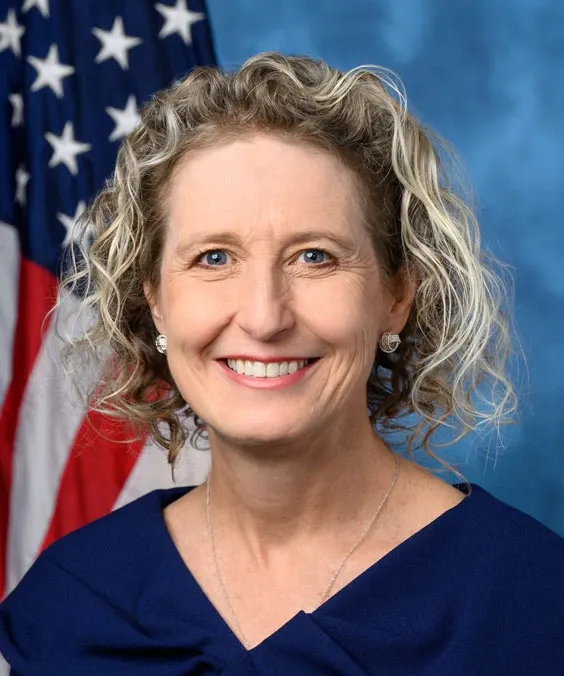
Rob Wittman is a U.S. Representative for Virginia's 1st congressional district, having served since January 9, 2007. A member of the Republican Party, Wittman has focused on issues such as military readiness, veterans' affairs, and environmental protection. He has been an advocate for the Chesapeake Bay and has worked on legislation aimed at improving the health of the bay and its surrounding ecosystems.
What our focus is is to bring that information together, have it as a conduit for decisionmaking by the full committee.
Ladies and gentlemen, I want to welcome you to the Subcommittee on Oversight and Investigations for the House Armed Services Committee.
I want to summarize some of the comments that you all have made. I think they are very telling.
I appreciate your comments to begin with, but I would like to recognize Representative Mike Coffman from Colorado for his tireless advocacy to make sure that this issue with Dawood Hospital would be addressed.
I have seen, particularly during my last trip in June, the great progress that has taken place since the surge has begun.
I want to take a moment to highlight the extraordinary efforts of our All-Volunteer Force serving in Afghanistan.
Today the Oversight and Investigations subcommittee convenes the second of a series of hearings related to the Afghan National Security Forces.
I want to call to order the House Armed Services Subcommittee on Oversight and Investigations.
My views on these issues have been informed by a recent trip to Afghanistan.
What factors will determine the size of ANSF after the U.S. and NATO transition primary security responsibility to the ANSF?
If conditions on the ground in Afghanistan do not improve as expected what will be the mechanism for revising the current sizing strategy?
What is the evidence that security situation in Afghanistan will be sufficiently improved by 2017 to allow the ANSF to be reduced by 120,000 troops?
I would like to thank the members of the committee and our witnesses today for your testimony.
With that I would like to yield 1\1/2\ minutes to the gentleman from Florida (Mr. West).
I think that is a good point to make sure there is closure there, not just the strategy itself, but how do you hope to accomplish that and maybe have a little longer-term perspective in how that comes to be.
I want to thank you all so much for taking the time out of what I know are busy schedules to help our committee better understand the implications of our 30-year plan for Navy force structure, our defense industrial base and, most…
Ladies and gentlemen I will call to order the Subcommittee on Oversight and Investigations of the House Armed Services Committee.
Based on the threat and the risks at sea and our desire to project power and answer the call to execute the core missions of the Navy, is this the fleet that we want, the fleet that we need, or the fleet we can afford?
Some up here like to argue that we have the smallest Navy since WWI. In reality we now have highly trained, all-volunteer crews that operate the most technologically advanced ships in the world.
Can we logically assume that 32 Flight IIA DDGs will be serving for 40 years?
Arleigh Burke class destroyers will start decommissioning in the mid-late 2020s.
Per this plan it seems that the Navy is being realistic in understanding that we have some pretty expensive ships being procured, especially once we get in to FY18-FY32.
Mr. Wittman. Mr. Stackley, do we know the estimated per-unit cost of the DDG-51 Flight III?
Politicians like Rob Wittman