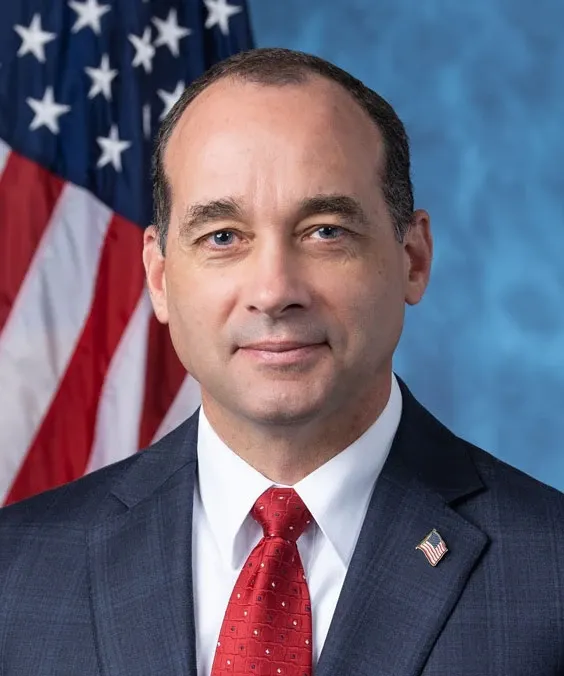
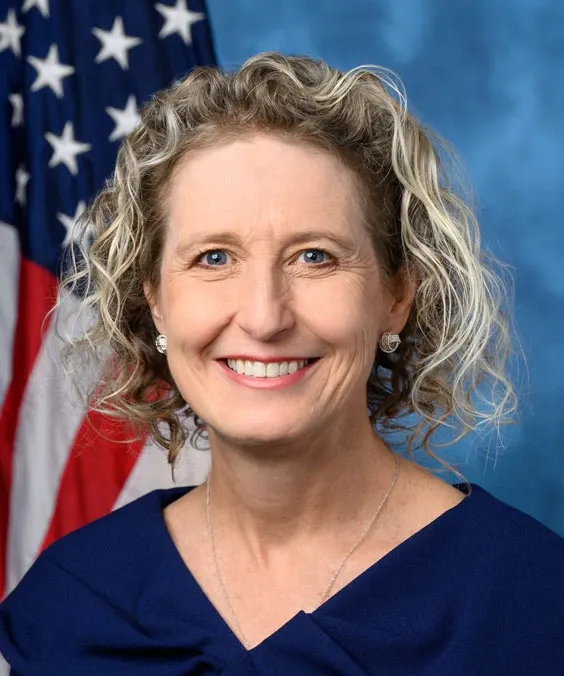
Rob Wittman
The Public Record
Rob Wittman is a U.S. Representative for Virginia's 1st congressional district, having served since January 9, 2007. A member of the Republican Party, Wittman has focused on issues such as military readiness, veterans' affairs, and environmental protection. He has been an advocate for the Chesapeake Bay and has worked on legislation aimed at improving the health of the bay and its surrounding ecosystems.
Mar 6, 2019
The place where we find ourselves with tanking capability is beyond the point of where we should be comfortable with that.
Mar 6, 2019
It makes sense to not put lots of money into old ships that right around the corner are going to have more and more severe problems in order to keep them at sea.
Mar 6, 2019
Congress has done what needs to be done in this effort and authorized the procurement of seven used vessels to begin replacing the Ready Reserve Force.
Mar 6, 2019
Since reviewing this portfolio last year, one thing is certain. Our aged Ready Reserve Force of 46 ships which averaged 43 years of age a year ago now averages 44 years of age.
Mar 6, 2019
I think a more practical solution would be to take a proven mature design from commercial market and begin building that in U.S. shipyards.
Mar 5, 2019
I am troubled by that, because if you look at the availability of those submarines, we have the number we have to be able to put at sea any one time the necessary number to deter.
Feb 25, 2019
We agree with the Secretary and the CNO that Sec. 8056 of Public Law 115-141 and other similar congressional directives that limit Navy's flexibility should be eliminated.
Feb 25, 2019
This Inouye amendment . . . is an artificial seam that inhibits [Navy] from establishing a single standard.
Feb 25, 2019
I remain committed to ensuring that we must not forget the lives lost on the USS John S. McCain and USS Fitzgerald.
Feb 6, 2019
The return on investment for $5 for every $1 invested by the Federal Government, I think is a very good return on investment.
Feb 6, 2019
With the benefit-to-cost ratio, a more than $5 return for every $1 invested in construction, the Norfolk Harbor deepening and widening presents a huge return on investment for the nation.
Feb 6, 2019
By deepening the 55 feet, the port is positioned to allow larger ships visiting the ships to arrive and depart fully loaded.
Feb 6, 2019
There has been some new construction on the Port facility down there and a heightening of the tunnels.
Sep 27, 2018
So as we do a priority across our budget, we have to look at all of the fleets that we operate, and the capability associated with that.
Sep 27, 2018
George Patton once said, "The more you sweat in peace, the less you bleed in war." Our most urgent responsibility is to ensure enough sweat is being shed to reduce this bleeding.
Sep 27, 2018
It is my fervent belief that the services must do everything possible to ensure the safety of flight.
Jul 25, 2018
I thank the gentlewoman from Arizona, and I would like to ask that she maybe elaborate a little bit more. I think the gentlewoman brings up a great point about the impact on the Air Force, with Luke Air Force Base being there in her…
Jun 27, 2018
I will be quick with my closing. The bottom line is we need these carriers. We need $26 billion in the shipbuilding budget to reach 355 ships. So the $21 billion is admirable, but the pathway to get where we need to be of 355 is still out…
Jun 27, 2018
May I inquire as to how much time I have remaining. The Acting CHAIR (Mr. Johnson of Louisiana). The gentleman from Virginia has 15 seconds remaining.
Jun 13, 2018
I think it is absolutely critical that this Committee insist that the money be spent to do an adequate mapping of our offshore resources.
Jun 13, 2018
The insistence of environmental pressure groups over many decades to keep information from informing public debate really needs to be recognized here.
Apr 11, 2018
If I can interject here. Actually, the three studies that were done, the MITRE study, the CSBA study, and the Navy study included in-depth analysis of all these unmanned platforms.
Apr 11, 2018
The 355-ship Navy is more than just a slogan. It is a requirement that was carefully considered by the Navy, enacted by Congress, and signed into law by the Commander in Chief.
Politicians like Rob Wittman