Our position in relation to the most powerful nations of the earth, and the present condition of Europe, admonish us to cherish this arm of our national defense with peculiar care.
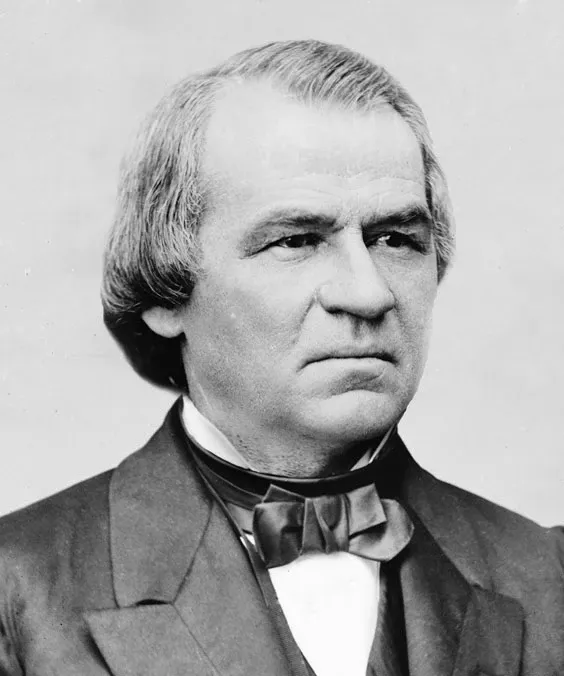
Andrew Jackson
The Public Record
Andrew Jackson was the seventh President of the United States, serving from 1829 to 1837. A member of the Democratic Party, he is known for his populist style of politics and for being a founding figure of the party. Jackson's presidency was marked by significant events such as the Indian Removal Act and the Nullification Crisis, which highlighted his strong stance on federal authority. Before his presidency, he served as a military governor of Florida and held positions in both the U.S. House of Representatives and the Senate.
gutenberg.org
I can not, therefore, in taking leave of the subject, too earnestly for my own feelings or the common good warn you against the blighting consequences of such a course.
To make this great question, which unhappily so much divides and excites the public mind, subservient to the short-sighted views of faction, must destroy all hope of settling it satisfactorily to the great body of the people and for the…
If this obviously just principle were honestly adhered to, the branches of industry which deserve protection would be saved from the prejudice excited against them when that protection forms part of a system by which portions of the…
The best as well as fairest mode of determining whether from any just considerations a particular interest ought to receive protection would be to submit the question singly for deliberation.
The present tariff taxes some of the comforts of life unnecessarily high; it undertakes to protect interests too local and minute to justify a general exaction, and it also attempts to force some kinds of manufactures for which the country…
While the chief object of duties should be revenue, they may be so adjusted as to encourage manufactures.
But on the whole it is questionable whether the reduction in the price of lands, produce, and manufactures has been greater than the appreciation of the standard of value.
The cause must therefore be deeper and more pervading than the tariff of the United States.
The probability is that neither opinion approaches the truth, and that both are induced by that influence of interests and prejudices to which I have referred.
It has exceeded the hopes of those who devised it, and become an object of admiration to the world.
If experience points out the necessity for an enlargement of these powers, let us apply for it to those for whose benefit it is to be exercised, and not under-mine the whole system by a resort to over-strained constructions.
That this was intended to be a government of limited and specific, and not general, powers must be admitted by all, and it is our duty to preserve for it the character intended by its framers.
If it fail here, all hope in regard to it will be extinguished.
Upon this country more than any other has, in the providence of God, been cast the special guardianship of the great principle of adherence to written constitutions.
I regard an appeal to the source of power in cases of real doubt, and where its exercise is deemed indispensable to the general welfare, as among the most sacred of all our obligations.
The fiscal power of the States will also be increased, and may be more extensively exerted in favor of education and other public objects, while ample means will remain in the Federal Government to promote the general weal in all the modes…
When this shall be done our population will be relieved from a considerable portion of its present burthens, and will find not only new motives to patriotic affection, but additional means for the display of individual enterprise.
This state of the finances exhibits the resources of the nation in an aspect highly flattering to its industry and auspicious of the ability of Government in a very short time to extinguish the public debt.
A reduction, therefore, of the existing duties will be felt as a common benefit, but like all other legislation connected with commerce, to be efficacious and not injurious it should be gradual and certain.
It is principally as manufactures and commerce tend to increase the value of agricultural productions and to extend their application to the wants and comforts of society that they deserve the fostering care of Government.
Discarding all calculations of political ascendancy, the North, the South, the East, and the West should unite in diminishing any burthen of which either may justly complain.
Legislation subjected to such influences can never be just, and will not long retain the sanction of a people whose active patriotism is not bounded by sectional limits nor insensible to that spirit of concession and forbearance which gave…
All attempts to connect them with the party conflicts of the day are necessarily injurious, and should be discountenanced.
In deliberating, therefore, on these interesting subjects local feelings and prejudices should be merged in the patriotic determination to promote the great interests of the whole.
Politicians like Andrew Jackson