It thus favors combinations to squander the treasure of the country upon a multitude of local objects, as fatal to just legislation as to the purity of public men.
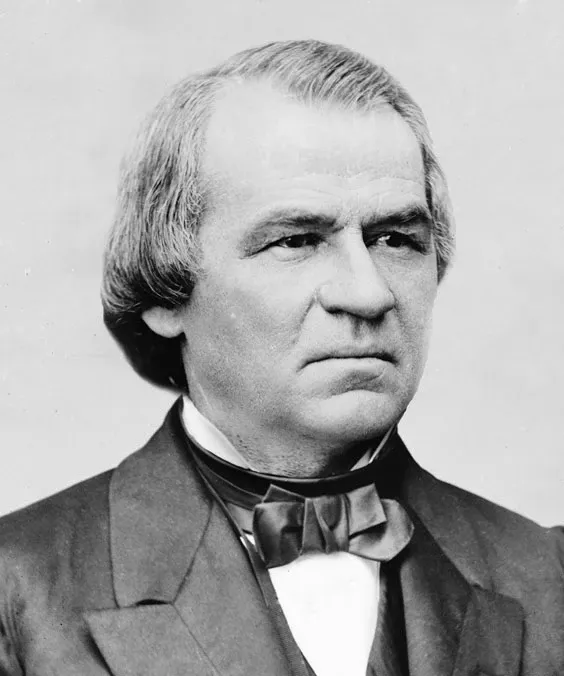
Andrew Jackson
The Public Record
Andrew Jackson was the seventh President of the United States, serving from 1829 to 1837. A member of the Democratic Party, he is known for his populist style of politics and for being a founding figure of the party. Jackson's presidency was marked by significant events such as the Indian Removal Act and the Nullification Crisis, which highlighted his strong stance on federal authority. Before his presidency, he served as a military governor of Florida and held positions in both the U.S. House of Representatives and the Senate.
gutenberg.org
Without some general and well-defined principles ascertaining those objects of internal improvement to which the means of the nation may be constitutionally applied, it is obvious that the exercise of the power can never be satisfactory.
The influence of a great sectional interest, when brought into full action, will be found more dangerous to the harmony and union of the States than any other cause of discontent, and it is the part of wisdom and sound policy to foresee…
Independent farmers are every where the basis of society and true friends of liberty.
The wealth and strength of a country are its population, and the best part of that population are cultivators of the soil.
It can not be doubted that the speedy settlement of these lands constitutes the true interest of the Republic.
In examining this question all local and sectional feelings should be discarded and the whole United States regarded as one people, interested alike in the prosperity of their common country.
As the lands may now be considered as relieved from this pledge, it is in the discretion of Congress to dispose of them in such way as best to conduce to the quiet, harmony, and general interest of the American people.
Among the interests which merit the consideration of Congress after the payment of the public debt, one of the most important, in my view, is that of the public lands.
The whole principle on which they are based is deemed by many unconstitutional, and to persist in the policy which they indicate is considered wholly inexpedient.
It is my painful duty to state that in one quarter of the United States opposition to the revenue laws has arisen to a height which threatens to thwart their execution, if not to endanger the integrity of the Union.
A large portion of the people in one section of the Republic declares it not only inexpedient on these grounds, but as disturbing the equal relations of property by legislation, and therefore unconstitutional and unjust.
In some sections of the Republic its influence is deprecated as tending to concentrate wealth into a few hands, and as creating those germs of dependence and vice which in other countries have characterized the existence of monopolies and…
Those who take an enlarged view of the condition of our country must be satisfied that the policy of protection must be ultimately limited to those articles of domestic manufacture which are indispensable to our safety in time of war.
But those who have vested their capital in manufacturing establishments can not expect that the people will continue permanently to pay high taxes for their benefit, when the money is not required for any legitimate purpose in the…
Nothing could justify it but the public safety, which is the supreme law.
Large interests have grown up under the implied pledge of our national legislation, which it would seem a violation of public faith suddenly to abandon.
That manufactures adequate to the supply of our domestic consumption would in the abstract be beneficial to our country there is no reason to doubt, and to effect their establishment there is perhaps no American citizen who would not for a…
Further than this it is neither our policy nor our right to interfere.
This last was done, and the effect has been an increased respect for our flag in those distant seas and additional security for our commerce.
Our commerce with the neighboring State of Peru, owing to the onerous duties levied on our principal articles of export, has been on the decline, and all endeavors to procure an alteration have hitherto proved fruitless.
That Government seems to be established, and at peace with its neighbors; and its ports being the resorts of our ships which are employed in the highly important trade of the fisheries, this commercial convention can not but be of great…
A proper consideration for calamities and difficulties of this nature has made us less urgent and peremptory in our demands for justice than duty to our fellow citizens would under other circumstances have required.
New markets are opening for our commodities and a more extensive range for the employment of our ships.
A strict adherence to this policy has kept us aloof from the perplexing questions that now agitate the European world and have more than once deluged those countries with blood.
Politicians like Andrew Jackson