The national debt, which has so long been a burden on the Treasury, will be finally discharged in the course of the ensuing year.
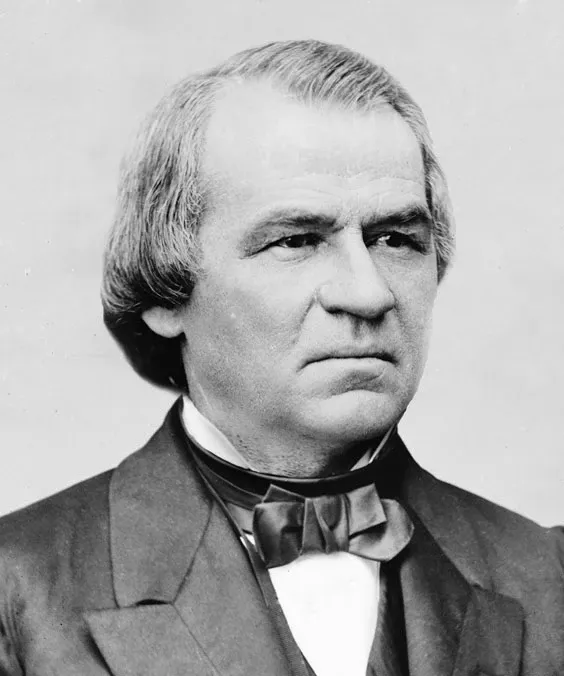
Andrew Jackson
The Public Record
Andrew Jackson was the seventh President of the United States, serving from 1829 to 1837. A member of the Democratic Party, he is known for his populist style of politics and for being a founding figure of the party. Jackson's presidency was marked by significant events such as the Indian Removal Act and the Nullification Crisis, which highlighted his strong stance on federal authority. Before his presidency, he served as a military governor of Florida and held positions in both the U.S. House of Representatives and the Senate.
gutenberg.org
We are beginning a new era in our Government.
The short period of time within which the public debt will have been discharged is strong evidence of the abundant resources of the country and of the prudence and economy with which the Government has heretofore been administered.
From this view of the state of the finances and the public engagements yet to be fulfilled you will perceive that if Providence permits me to meet you at another session I shall have the high gratification of announcing to you that the…
It will be my endeavor to encourage those sentiments of amity and that liberal commerce which belong to the relations in which all the independent States of this continent stand toward each other.
The system we have pursued of aiming at no exclusive advantages, of dealing with all on terms of fair and equal reciprocity, and of adhering scrupulously to all our engagements is well calculated to give success to efforts intended to be…
This change can not fail to prove beneficial to the trade between the United States and that colony, and the advantages likely to flow from it may lead to greater relaxations in the colonial systems of other nations.
It could not fail to strengthen the sentiments of amity and good will between the two nations which it is so much the wish of the United States to cherish and so truly the interest of both to maintain.
It affords me peculiar satisfaction to state that the Government of Spain has at length yielded to the justice of the claims which have been so long urged in behalf of our citizens, and has expressed a willingness to provide an…
By the favor of Divine Providence health is again restored to us, peace reigns within our borders, abundance crowns the labors of our fields, commerce and domestic industry flourish and increase, and individual happiness rewards the…
That the Almighty Ruler of the Universe may so direct our deliberations and over-rule our acts as to make us instrumental in securing a result so dear to mankind is my most earnest and sincere prayer.
Nothing can be more obvious than the obligation of the General Government to place all the States on the same footing in relation to the administration of justice, and I trust this duty will be neglected no longer.
The new States were promised equal rights and privileges when they came into the Union, and such are the guaranties of the Constitution.
What ever difference of opinion may have prevailed respecting the just claims of these people, there will probably be none respecting the liberality of the propositions, and very little respecting the expediency of their immediate…
An ample indemnity was offered for their present possessions, a liberal provision for their future support and improvement, and full security for their private and political rights.
Little useful knowledge is gained by the musters and drills as now established, and the whole subject evidently requires a thorough examination.
Those by whom and for whom the Government was instituted and is supported will constitute its protection in the hour of danger as they do its check in the hour of safety.
If in asserting rights or in repelling wrongs war should come upon us, our regular force should be increased to an extent proportional to the emergency, and our present small Army is a nucleus around which such force could be formed and…
The expense which attends it, the obvious tendency to employ it because it exists and thus to engage in unnecessary wars, and its ultimate danger to public liberty will lead us, I trust, to place our principal dependence for protection…
History offers too many lessons of the fatal result of such a measure not to warn us against its adoption here.
Neither our situation nor our institutions require or permit the maintenance of a large regular force.
But a more efficient organization of our militia system is essential to that security which is one of the principal objects of all governments.
But if the people of the several States think otherwise they will amend the Constitution, and in their decision all ought cheerfully to acquiesce.
All must admit that there is nothing so worthy of the constant solicitude of this Government as the harmony and union of the people.
If a system compatible with the Constitution can not be devised which is free from such tendencies, we should recollect that that instrument provides within itself the mode of its amendment, and that there is, therefore, no excuse for the…
Politicians like Andrew Jackson