Frequent legislation in regard to any branch of industry, affecting its value, and by which its capital may be transferred to new channels, must always be productive of hazardous speculation and loss.
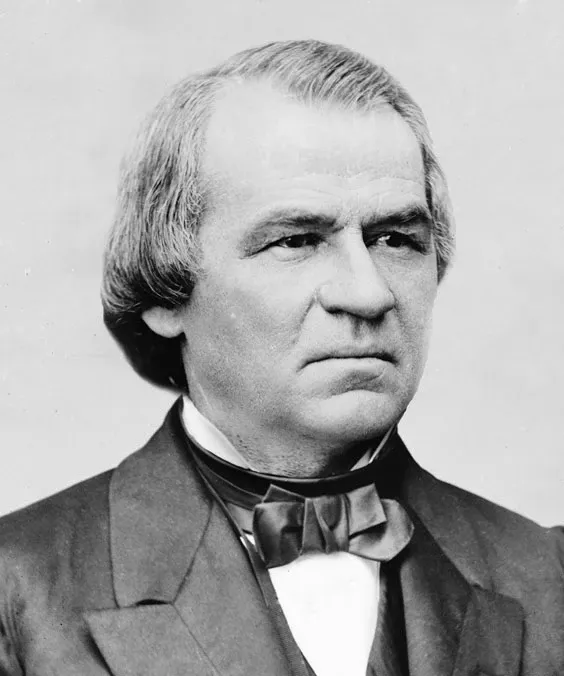
Andrew Jackson
The Public Record
Andrew Jackson was the seventh President of the United States, serving from 1829 to 1837. A member of the Democratic Party, he is known for his populist style of politics and for being a founding figure of the party. Jackson's presidency was marked by significant events such as the Indian Removal Act and the Nullification Crisis, which highlighted his strong stance on federal authority. Before his presidency, he served as a military governor of Florida and held positions in both the U.S. House of Representatives and the Senate.
gutenberg.org
But we must ever expect selfish legislation in other nations, and are therefore compelled to adapt our own to their regulations in the manner best calculated to avoid serious injury and to harmonize the conflicting interests of our…
That such of our manufacturing establishments as are based upon capital and are prudently managed will survive the shock and be ultimately profitable there is no good reason to doubt.
The proposed limitation would destroy the idea of property now so generally connected with official station, and although individual distress may be some times produced, it would, by promoting that rotation which constitutes a leading…
He who is removed has the same means of obtaining a living that are enjoyed by the millions who never held office.
It is the people, and they alone, who have a right to complain when a bad officer is substituted for a good one.
The incumbent became an officer with a view to public benefits, and when these require his removal they are not to be sacrificed to private interests.
Offices were not established to give support to particular men at the public expense.
In a country where offices are created solely for the benefit of the people no one man has any more intrinsic right to official station than another.
I submit, therefore, to your consideration whether the efficiency of the Government would not be promoted and official industry and integrity better secured by a general extension of the law which limits appointments to four years.
The duties of all public officers are, or at least admit of being made, so plain and simple that men of intelligence may readily qualify themselves for their performance; and I can not but believe that more is lost by the long continuance…
Corruption in some and in others a perversion of correct feelings and principles divert government from its legitimate ends and make it an engine for the support of the few at the expense of the many.
Office is considered as a species of property, and government rather as a means of promoting individual interests than as an instrument created solely for the service of the people.
There are, perhaps, few men who can for any great length of time enjoy office and power without being more or less under the influence of feelings unfavorable to the faithful discharge of their public duties.
I would therefore recommend such an amendment of the Constitution as may remove all intermediate agency in the election of the President and Vice-President.
Let us, then, endeavor so to amend our system that the office of Chief Magistrate may not be conferred upon any citizen but in pursuance of a fair expression of the will of the majority.
In this as in all other matters of public concern policy requires that as few impediments as possible should exist to the free operation of the public will.
But although no evil of this character should result from such a perversion of the first principle of our system--that the majority is to govern--it must be very certain that a President elected by a minority can not enjoy the confidence…
But even without corruption, supposing the probity of the Representative to be proof against the powerful motives by which it may be assailed, the will of the people is still constantly liable to be misrepresented.
So far, therefore, as the people can with convenience speak, it is safer for them to express their own will.
Experience proves that in proportion as agents to execute the will of the people are multiplied there is danger of their wishes being frustrated.
Our system of government was by its framers deemed an experiment, and they therefore consistently provided a mode of remedying its defects.
I consider it one of the most urgent of my duties to bring to your attention the propriety of amending that part of the Constitution which relates to the election of President and Vice-President.
From France, our ancient ally, we have a right to expect that justice which becomes the sovereign of a powerful, intelligent, and magnanimous people.
With full confidence in the justice of our cause and in the probity, intelligence, and uncompromising independence of the illustrious arbitrator, we can have nothing to apprehend from the result.
Politicians like Andrew Jackson