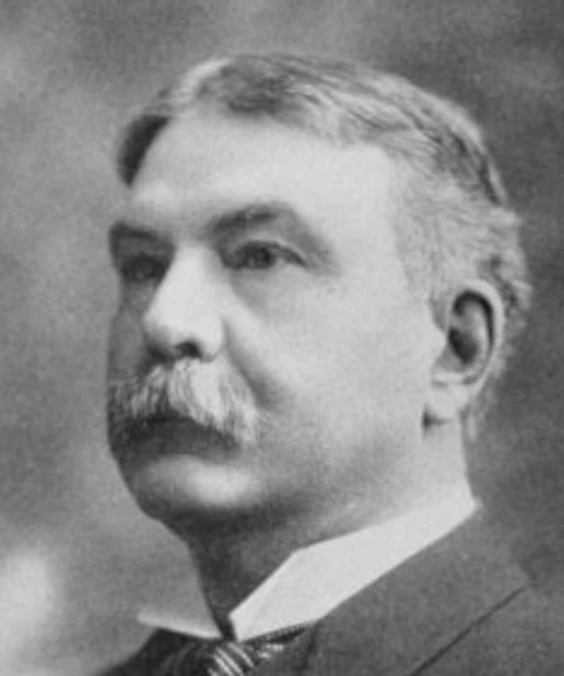
Teddy Roosevelt
The Public Record
Theodore Roosevelt was the 26th President of the United States, serving from 1901 to 1909. A member of the Republican Party, he was born on October 27, 1858, in New York. Roosevelt was a prominent leader of the Progressive Movement, advocating for domestic policies that included trust-busting, regulation of corporations, and conservation of natural resources. His administration is noted for significant reforms and the establishment of national parks and forests.
Feb 4, 1909
I do not believe in the doctrine that to the victor belong the spoils; but I think even less of the doctrine that the spoils shall be divided without a fight by the professional politicians on both sides.
Feb 4, 1909
Outside of these matters, I believe that the bill is, on the whole, satisfactory and represents an improvement upon previous legislation on the subject.
Jan 21, 1909
It is one of the most fundamentally important documents ever laid before the American people.
Jan 21, 1909
The facts set forth in this report constitute an imperative call to action.
Jan 21, 1909
As it stands it is an irrefutable proof that the conservation of our resources is the fundamental question before this nation.
Jan 21, 1909
It deserves, and should have, the widest possible distribution among the people.
Jan 21, 1909
With the statements and conclusions of this report I heartily concur, and I commend it to the thoughtful consideration both of the Congress and of our people generally.
Jan 21, 1909
We know now that our rivers can and should be made to serve our people effectively in transportation.
Jan 21, 1909
It is essential that it should correctly describe the general situation; and that the present inventory does.
Jan 21, 1909
We know now that our mineral resources once exhausted are gone forever.
Jan 21, 1909
The first of all considerations is the permanent welfare of our people.
Jan 21, 1909
The policy of conservation is perhaps the most typical example of the general policies which this Government has made peculiarly its own during the opening years of the present century.
Jan 3, 1909
I have always not only deprecated but vigorously resented the practice of indiscriminate attack upon Congress.
Jan 3, 1909
It would be far better to do this than to do what actually was done, and strive to prevent or at least to hamper effective action against criminals by the executive branch of the Government.
Jan 3, 1909
I am wholly at a loss to understand the concluding portion of the resolution.
Jan 3, 1909
It is not too much to say that this amendment has been of benefit only, and could be of benefit only, to the criminal classes.
Jan 3, 1909
No one realizes more than I the importance of cooperation between the Executive and Congress, and no one holds the authority and dignity of the Congress of the United States in higher respect than I do.
Jan 3, 1909
The chief argument in favor of the provision was that the Congressmen did not themselves wish to be investigated by Secret Service men.
Jan 3, 1909
In the prosecution of criminals and the enforcement of the laws the President must resort to the courts of the United States.
Dec 29, 1908
It is hereby ordered that the unallotted lands in Tps. 17, 18, 19, 20, and 21 N., Rs. 5, 6, 7, and 8 W., and Tps. 22 and 23 N., Rs. 6, 7, and 8 W. of the New Mexico principal meridian, withdrawn from sale and settlement and set apart for…
Dec 16, 1908
A single executive head would increase efficiency, determine responsibility, and eliminate delays and uncertainties inevitable under the present system.
Politicians like Teddy Roosevelt