So far as they are available for agriculture, and to whatever extent they may be reclaimed under the national irrigation law, the remaining public lands should be held rigidly for the home builder, the settler who lives on his land, and…
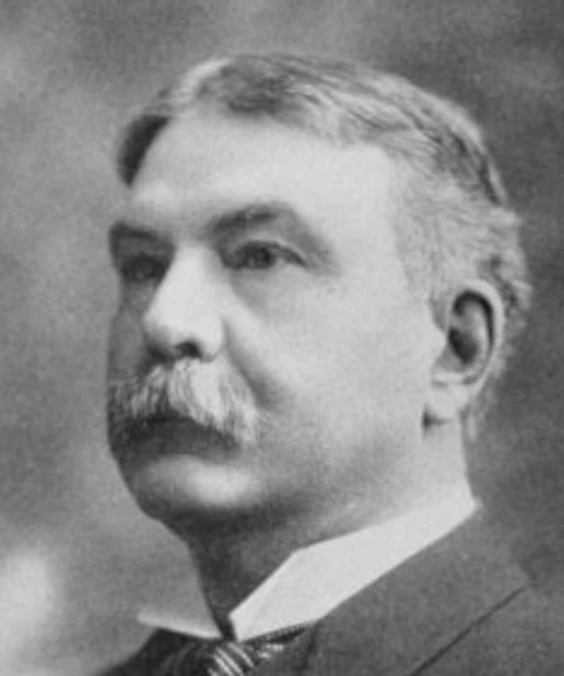
Teddy Roosevelt
The Public Record
Theodore Roosevelt was the 26th President of the United States, serving from 1901 to 1909. A member of the Republican Party, he was born on October 27, 1858, in New York. Roosevelt was a prominent leader of the Progressive Movement, advocating for domestic policies that included trust-busting, regulation of corporations, and conservation of natural resources. His administration is noted for significant reforms and the establishment of national parks and forests.
gutenberg.org
It is, for instance, a serious count against our national good sense to permit the present practice of butchering off such a stately and beautiful creature as the elk for its antlers or tusks.
The senseless slaughter of game, which can by judicious protection be permanently preserved on our national reserves for the people as a whole, should be stopped at once.
Legislation should be provided for the protection of the game, and the wild creatures generally, on the forest reserves.
Now that this policy of national irrigation has been adopted, the need of thorough and scientific forest protection will grow more rapidly than ever throughout the public-land States.
This shows conclusively the want which the establishment of the service has met and the need of further extending it as rapidly as possible.
We are now able, by actual results, to show that where rural free-delivery service has been established to such an extent as to enable us to make comparisons the yearly increase has been upward of ten per cent.
The refusal to maintain such a navy would invite trouble, and if trouble came would insure disaster.
Neither ships nor men can be improvised when war has begun.
To build the finest ship, with the deadliest battery, and to send it afloat with a raw crew, no matter how brave they were individually, would be to insure disaster if a foe of average capacity were encountered.
It is no more possible to improvise a crew than it is possible to improvise a war ship.
The veteran seamen of our war ships are of as high a type as can be found in any navy which rides the waters of the world; they are unsurpassed in daring, in resolution, in readiness, in thorough knowledge of their profession.
Each individual unit of our Navy should be the most efficient of its kind as regards both material and personnel that is to be found in the world.
In battle the only shots that count are the shots that hit.
Every effort should be made, by training, by reward of merit, by scrutiny into their careers and capacity, to keep them of the same high relative excellence throughout their careers.
Every effort must be made to develop every workmanlike and soldierly quality in both the officer and the enlisted man.
Formerly this unit was the regiment; it is now not the regiment, not even the troop or company; it is the individual soldier.
In the circumstances of modern warfare the man must act far more on his own individual responsibility than ever before, and the high individual efficiency of the unit is of the utmost importance.
After making all allowance for these misdeeds, it remains true that few indeed have been the instances in which war has been waged by a civilized power against semicivilized or barbarous forces where there has been so little wrongdoing by…
The triumph of our arms, above all the triumph of our laws and principles, has come sooner than we had any right to expect.
No policy ever entered into by the American people has vindicated itself in more signal manner than the policy of holding the Philippines.
We have not gone too far in granting these rights of liberty and self-government; but we have certainly gone to the limit that in the interests of the Philippine people themselves it was wise or just to go.
More and more the increasing interdependence and complexity of international political and economic relations render it incumbent on all civilized and orderly powers to insist on the proper policing of the world.
When this is done, they can rest assured that, be they strong or weak, they have nothing to dread from outside interference.
It behoves each one to maintain order within its own borders and to discharge its just obligations to foreigners.
Politicians like Teddy Roosevelt