The exposure and punishment of public corruption is an honor to a nation, not a disgrace.
Teddy Roosevelt
The Public Record
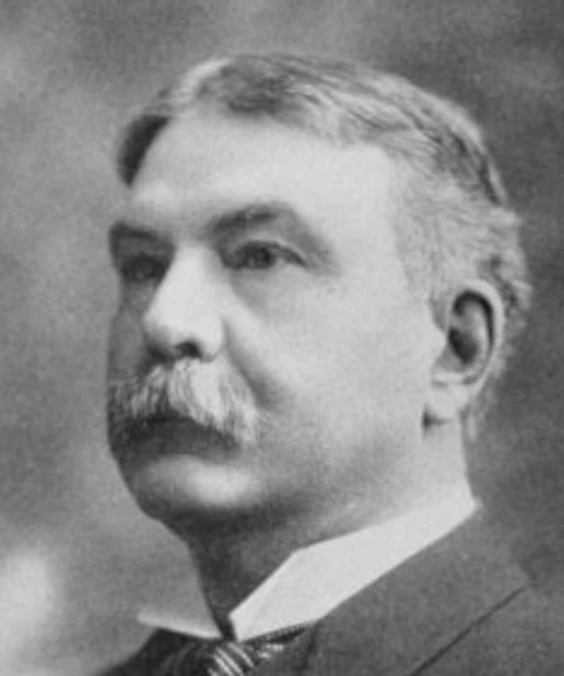
Theodore Roosevelt was the 26th President of the United States, serving from 1901 to 1909. A member of the Republican Party, he was born on October 27, 1858, in New York. Roosevelt was a prominent leader of the Progressive Movement, advocating for domestic policies that included trust-busting, regulation of corporations, and conservation of natural resources. His administration is noted for significant reforms and the establishment of national parks and forests.
gutenberg.org
The givers and takers of bribes stand on an evil pre-eminence of infamy.
Government of the people, by the people, for the people will perish from the face of the earth if bribery is tolerated.
He is as wicked as the murderer, for the murderer may only take one life against the law, while the corrupt official and the man who corrupts the official alike aim at the assassination of the commonwealth itself.
He is worse than the thief, for the thief robs the individual, while the corrupt official plunders an entire city or State.
There can be no offense heavier than that of him in whom such a sacred trust has been reposed, who sells it for his own gain and enrichment; and no less heavy is the offense of the bribe giver.
Other offenses violate one law while corruption strikes at the foundation of all law.
The recent amended treaty with Mexico, whereby this crime was put in the list of extraditable offenses, has established a salutary precedent in this regard.
There is no reason why bribery should not be included in all treaties as extraditable.
It should be the policy of the United States to leave no place on earth where a corrupt man fleeing from this country can rest in peace.
It is hardly necessary to urge the importance of recovering these dishonest acquisitions, stolen from the people, and of promptly and duly punishing the offenders.
All good citizens, whether naturalized or native born, are equally interested in protecting our citizenship against fraud in any form, and, on the other hand, in affording every facility for naturalization to those who in good faith desire…
The desire for naturalization is heartily to be commended where it springs from a sincere and permanent intention to become citizens, and a real appreciation of the privilege.
It should mean something to become a citizen of the United States; and in the process no loophole whatever should be left open to fraud.
The body politic can not be sound and healthy if many of its constituent members claim their standing through the prostitution of the high right and calling of citizenship.
The need is to devise some system by which undesirable immigrants shall be kept out entirely, while desirable immigrants are properly distributed throughout the country.
If we are to stay in the business it ought to be with a full understanding of the advantages to the country on one hand, and on the other with exact knowledge of the cost and proper methods of carrying it on.
Careful economy wherever possible will alone prevent our income from falling below the point required in order to meet our genuine needs.
The need of strict economy in our expenditures is emphasized by the fact that we can not afford to be parsimonious in providing for what is essential to our national well-being.
The progress has been by evolution, not by revolution.
Obedience to the law is demanded as a right; not asked as a favor.
Every man must be guaranteed his liberty and his right to do as he likes with his property or his labor, so long as he does not infringe the rights of others.
We recognize that this is an era of federation and combination, in which great capitalistic corporations and labor unions have become factors of tremendous importance in all industrial centers.
The only corporation that has cause to dread it is the corporation which shrinks from the light, and about the welfare of such corporations we need not be oversensitive.
Nothing revolutionary was attempted; but a common-sense and successful effort was made in the direction of seeing that corporations are so handled as to subserve the public good.
Politicians like Teddy Roosevelt