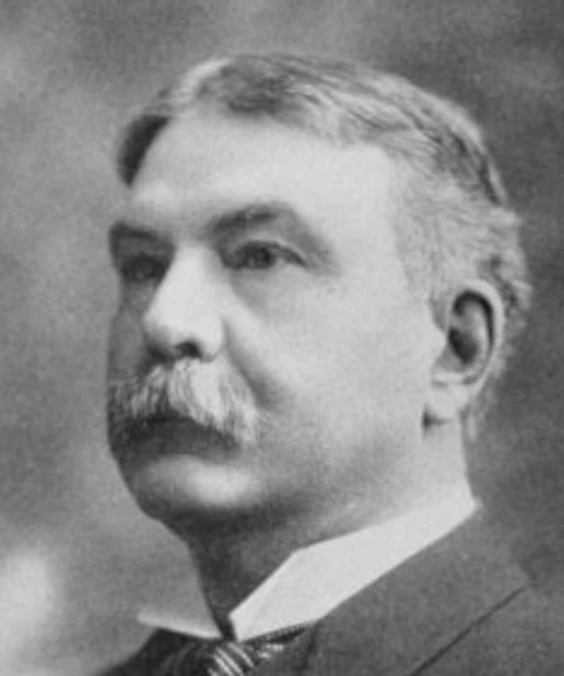
The purpose of this Bureau is not to embarrass or assail legitimate business, but to aid in bringing about a better industrial condition--a condition under which there shall be obedience to law and recognition of public obligation by all…
Teddy Roosevelt
The Public Record
Theodore Roosevelt was the 26th President of the United States, serving from 1901 to 1909. A member of the Republican Party, he was born on October 27, 1858, in New York. Roosevelt was a prominent leader of the Progressive Movement, advocating for domestic policies that included trust-busting, regulation of corporations, and conservation of natural resources. His administration is noted for significant reforms and the establishment of national parks and forests.
gutenberg.org
The corporation which is honestly and fairly organized, whose managers in the conduct of its business recognize their obligation to deal squarely with their stockholders, their competitors, and the public, has nothing to fear from such…
Systematic, intelligent investigation is already developing facts the knowledge of which is essential to a right understanding of the needs and duties of the business world.
Publicity in corporate affairs will tend to do away with ignorance, and will afford facts upon which intelligent action may be taken.
It is a good thing to preserve such buildings as historic monuments which keep alive our sense of continuity with the Nation's past.
The White House is the property of the Nation, and so far as is compatible with living therein it should be kept as it originally was, for the same reasons that we keep Mount Vernon as it originally was.
The city should be a model in every respect for all the cities of the country.
The evils of slum dwellings, whether in the shape of crowded and congested tenement-house districts or of the back-alley type, should never be permitted to grow up in Washington.
There is no need of insisting upon its importance, for the welfare of the farmer is fundamentally necessary to the welfare of the Republic as a whole.
In no department of governmental work in recent years has there been greater success than in that of giving scientific aid to the farming population, thereby showing them how most efficiently to help themselves.
Consequently they should be amply paid on the one hand, and on the other hand a particularly high standard of conduct should be demanded from them, and where misconduct can be proved the punishment should be exemplary.
Above all, the Indian boys and girls should be given confident command of colloquial English, and should ordinarily be prepared for a vigorous struggle with the conditions under which their people live, rather than for immediate absorption…
Their industries may properly be diversified, and those who show special desire or adaptability for industrial or even commercial pursuits should be encouraged so far as practicable to follow out each his own bent.
The first and most important step toward the absorption of the Indian is to teach him to earn his living; yet it is not necessarily to be assumed that in each community all Indians must become either tillers of the soil or stock raisers.
But, excellent though these are, an immense amount of additional work must be done on the reservations themselves among the old, and above all among the young, Indians.
On the arid prairie lands the effort should be to induce the Indians to lead pastoral rather than agricultural lives, and to permit them to settle in villages rather than to force them into isolation.
Where a tribe has made considerable advance and lives on fertile farming soil it is possible to allot the members lands in severalty much as is the case with white settlers.
To try to force such tribes too fast is to prevent their going forward at all.
Laws should be enacted to protect the Alaskan salmon fisheries against the greed which would destroy them.
The forests of Alaska should be protected, and, as a secondary but still important matter, the game also, and at the same time it is imperative that the settlers should be allowed to cut timber, under proper regulations, for their own use.
The land laws should be liberal in type, so as to hold out inducements to the actual settler whom we most desire to see take possession of the country.
We should shape legislation with a view not to the exploiting and abandoning of the territory, but to the building up of homes therein.
It is not to our credit as a nation that Alaska, which has been ours for thirty-five years, should still have as poor a system Of laws as is the case.
Much of our prosperity as a nation has been due to the operation of the homestead law.
The sound and steady development of the West depends upon the building up of homes therein.
Politicians like Teddy Roosevelt