But disarmament can never be of prime importance; there is more need to get rid of the causes of war than of the implements of war.
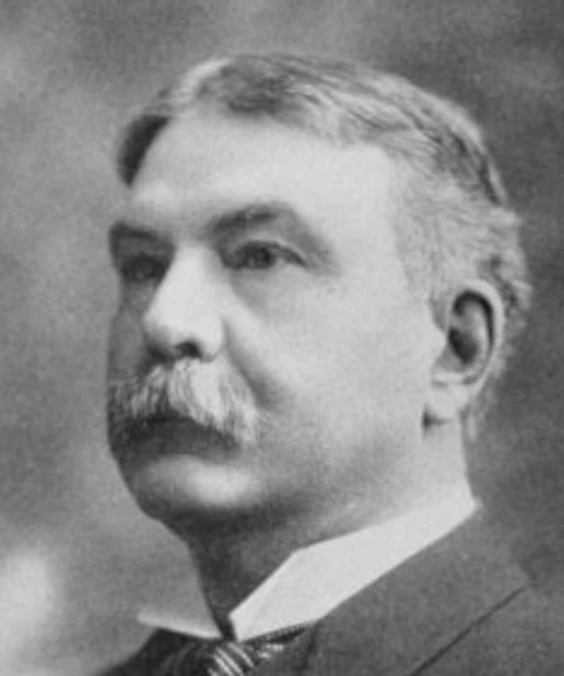
Teddy Roosevelt
The Public Record
Theodore Roosevelt was the 26th President of the United States, serving from 1901 to 1909. A member of the Republican Party, he was born on October 27, 1858, in New York. Roosevelt was a prominent leader of the Progressive Movement, advocating for domestic policies that included trust-busting, regulation of corporations, and conservation of natural resources. His administration is noted for significant reforms and the establishment of national parks and forests.
gutenberg.org
Our aim should be from time to time to take such steps as may be possible toward creating something like an organization of the civilized nations, because as the world becomes more highly organized the need for navies and armies will…
International relations have become closer and the development of The Hague tribunal is not only a symptom of this growing closeness of relationship, but is a means by which the growth can be furthered.
During the last century there has been a distinct diminution in the number of wars between the most civilized nations.
At present the practical thing to do is to try to minimize the number of cases in which it must be the arbiter, and to offer, at least to all civilized powers, some substitute for war which will be available in at least a considerable…
But, while recognizing most clearly all above set forth, it remains our clear duty to strive in every practicable way to bring nearer the time when the sword shall not be the arbiter among nations.
As the world is now, only that nation is equipped for peace that knows how to fight, and that will not shrink from fighting if ever the conditions become such that war is demanded in the name of the highest morality.
So long as the world is as unorganized as now the armies and navies of those peoples who on the whole stand for justice, offer not only the best, but the only possible, security for a just peace.
At present there could be no greater calamity than for the free peoples, the enlightened, independent, and peace-loving peoples, to disarm while yet leaving it open to any barbarism or despotism to remain armed.
We have scant sympathy with the sentimentalist who dreads oppression less than physical suffering, who would prefer a shameful peace to the pain and toil sometimes lamentably necessary in order to secure a righteous peace.
Whenever it is possible for a nation or an individual to work for real peace, assuredly it is failure of duty not so to strive, but if war is necessary and righteous then either the man or the nation shrinking from it forfeits all title to…
But there are demagogues of peace just as there are demagogues of war, and in any such movement as this for The Hague conference it is essential not to be misled by one set of extremists any more than by the other.
These persons would do irreparable harm to any nation that adopted their principles, and even as it is they seriously hamper the cause which they advocate by tending to render it absurd in the eyes of sensible and patriotic men.
There are persons who advocate peace at any price; there are others who, following a false analogy, think that because it is no longer necessary in civilized countries for individuals to protect their rights with a strong hand, it is…
Peace is normally the hand-maiden of rightousness; but when peace and righteousness conflict then a great and upright people can never for a moment hesitate to follow the path which leads toward righteousness, even though that path also…
We can, however, do nothing of permanent value for peace unless we keep ever clearly in mind the ethical element which lies at the root of the problem.
A wanton or useless war, or a war of mere aggression--in short, any war begun or carried on in a conscienceless spirit, is to be condemned as a peculiarly atrocious crime against all humanity.
More and more war is coming to be looked upon as in itself a lamentable and evil thing.
This Government will do everything in its power to secure the success of the conference, to the end that substantial progress may be made in the cause of international peace, justice, and good will.
If they are extorted by any kind of pressure or promise, express or implied, direct or indirect, in the way of favor or immunity, then the giving or receiving becomes not only improper but criminal.
It is entirely proper both to give and receive them, unless there is an improper motive connected with either gift or reception.
This, of course, means that many contributions, and some of them of large size, must be made, and, as a matter of fact, in any big political contest such contributions are always made to both sides.
To make it so is a task of complex detail and essentially executive in its nature; probably no legislative body, no matter how wise and able, could undertake it with reasonable prospect of success.
There is every reason why our executive governmental machinery should be at least as well planned, economical, and efficient as the best machinery of the great business organizations, which at present is not the case.
At present the Treasury Department is at irregularly recurring intervals obliged, in the interest of the business world--that is, in the interests of the American public--to try to avert financial crises by providing a remedy which should…
Politicians like Teddy Roosevelt