But the underlying principles, the root principles, in accordance with which the problem must be solved are entirely simple.
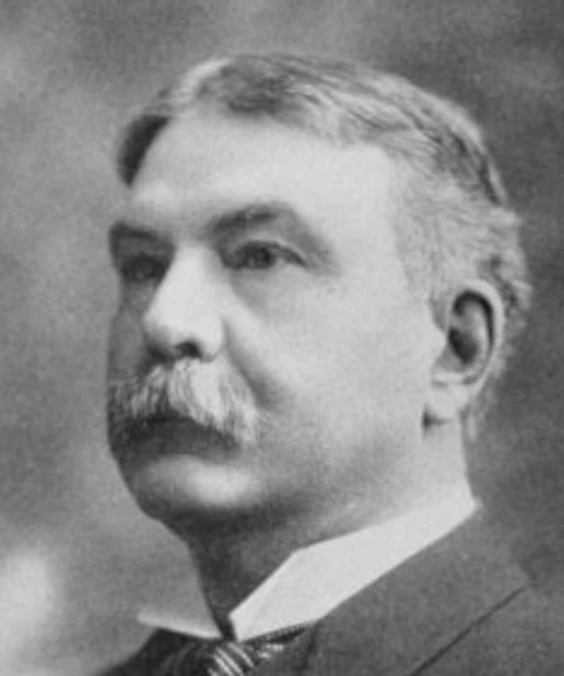
Teddy Roosevelt
The Public Record
Theodore Roosevelt was the 26th President of the United States, serving from 1901 to 1909. A member of the Republican Party, he was born on October 27, 1858, in New York. Roosevelt was a prominent leader of the Progressive Movement, advocating for domestic policies that included trust-busting, regulation of corporations, and conservation of natural resources. His administration is noted for significant reforms and the establishment of national parks and forests.
gutenberg.org
The question of securing a healthy, self-respecting, and mutually sympathetic attitude as between employer and employe, capitalist and wage-worker, is a difficult one.
Every considerable labor difficulty in which interstate commerce is involved should be investigated by the Government and the facts officially reported to the public.
We must face accomplished facts, and the adjustment of factory conditions must be made, but surely it can be made with less friction and less harmful effects on family life than is now the case.
The future of the Nation depends upon the citizenship of the generations to come; the children of today are those who tomorrow will shape the destiny of our land, and we cannot afford to neglect them.
In such a Republic as ours the one thing that we cannot afford to neglect is the problem of turning out decent citizens.
I renew the recommendation I made in my last annual message for an investigation by the Department of Commerce and Labor of general labor conditions, especial attention to be paid to the conditions of child labor and child-labor…
It is true that some judges have misused this power; but this does not justify a denial of the power any more than an improper exercise of the power to call a strike by a labor leader would justify the denial of the right to strike.
What we need to do is to develop an orderly system, and such a system can only come through the gradually increased exercise of the right of efficient Government control.
At present we face such utter lack of supervision, such freedom from the restraints of law, that excellent men have often been literally forced into doing what they deplored because otherwise they were left at the mercy of unscrupulous…
But the fact that it is a great problem does not warrant us in shrinking from the attempt to solve it.
They should have no other effect than to spur us on to the exercise of the resolution, the even-handed justice, and the fertility of resource, which we like to think of as typically American, and which will in the end achieve good results…
But while I fully admit the difficulties in the way, I do not for a moment admit that these difficulties warrant us in stopping in our effort to secure a wise and just system.
They must be well paid, for otherwise able men cannot in the long run be secured; and they must possess a lofty probity which will revolt as quickly at the thought of pandering to any gust of popular prejudice against rich men as at the…
Finally, we must clearly understand that the public servants who are to do this peculiarly responsible and delicate work must themselves be of the highest type both as regards integrity and efficiency.
It is because, in my judgment, public ownership of railroads is highly undesirable and would probably in this country entail far-reaching disaster, but I wish to see such supervision and regulation of them in the interest of the public as…
At present the railway is this highway, and we must do our best to see that it is kept open to all on equal terms.
We wish to insure as fair treatment for the small town as for the big city; for the small shipper as for the big shipper.
Still less do we wish to see him penalized but we do desire to see the system of railroad transportation so handled that the strong man shall be given no advantage over the weak man.
Most emphatically we do not wish to see the man of great talents refused the reward for his talents.
This Government stands for manhood first and for business only as an adjunct of manhood.
The kind of business prosperity that blunts the standard of honor, that puts an inordinate value on mere wealth, that makes a man ruthless and conscienceless in trade, and weak and cowardly in citizenship, is not a good thing at all, but a…
Business success, whether for the individual or for the Nation, is a good thing only so far as it is accompanied by and develops a high standard of conduct--honor, integrity, civic courage.
There can be no delusion more fatal to the Nation than the delusion that the standard of profits, of business prosperity, is sufficient in judging any business or political question--from rate legislation to municipal government.
All such legislation frees the corporation that wishes to do well from being driven into doing ill, in order to compete with its rival, which prefers to do ill.
Politicians like Teddy Roosevelt