Between antagonists of approximately equal prowess the comparative perfection of the instruments of war will ordinarily determine the fight.
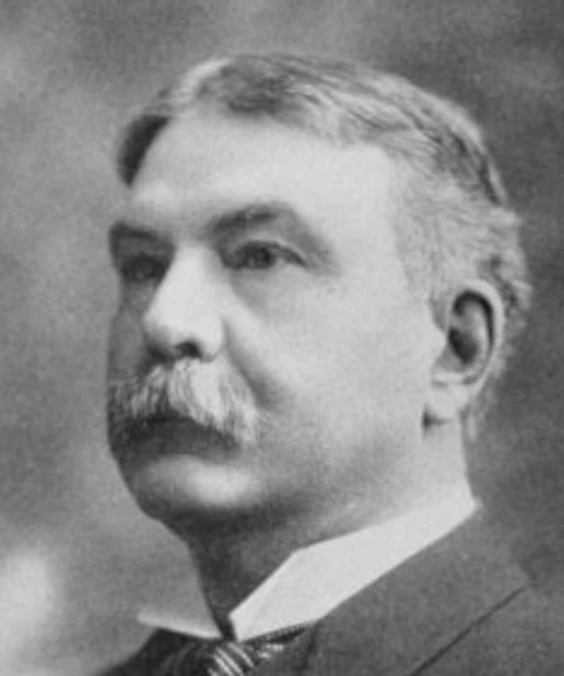
Teddy Roosevelt
The Public Record
Theodore Roosevelt was the 26th President of the United States, serving from 1901 to 1909. A member of the Republican Party, he was born on October 27, 1858, in New York. Roosevelt was a prominent leader of the Progressive Movement, advocating for domestic policies that included trust-busting, regulation of corporations, and conservation of natural resources. His administration is noted for significant reforms and the establishment of national parks and forests.
gutenberg.org
The main strength of the navy, however, lies, and can only lie, in the great battleships, the heavily armored, heavily gunned vessels which decide the mastery of the seas.
Seagoing torpedo boats or destroyers are indispensable, not only for making night attacks by surprise upon an enemy, but even in battle for finishing already crippled ships.
There is urgent need of providing a large increase in the number of officers, and especially in the number of enlisted men.
Most of the smaller cruisers and gunboats, though they serve a useful purpose so far as they are needed for international police work, would not add to the strength of our navy in a conflict with a serious foe.
I do not believe that any army in the world has a better average of enlisted men or a better type of junior officer; but the army should be trained to act effectively in a mass.
It will be doubly to our discredit as a Nation if we fail to take advantage of this chance; for it will be of damage to ourselves, and it will be of incalculable damage to Santo Domingo.
The proposed method will give the people of Santo Domingo the same chance to move onward and upward which we have already given to the people of Cuba.
The important point is to give the needed aid, and the case is certainly sufficiently peculiar to deserve to be judged purely on its own merits.
Santo Domingo, in her turn, has now made an appeal to us to help her, and not only every principle of wisdom but every generous instinct within us bids us respond to the appeal.
Just as there has been a gradual growth of the ethical element in the relations of one individual to another, so we are, even though slowly, more and more coming to recognize the duty of bearing one another's burdens, not only as among…
We must ourselves in good faith try to help upward toward peace and order those of our sister republics which need such help.
If a republic to the south of us commits a tort against a foreign nation, such as an outrage against a citizen of that nation, then the Monroe Doctrine does not force us to interfere to prevent punishment of the tort, save to see that the…
Moreover, we must make it evident that we do not intend to permit the Monroe Doctrine to be used by any nation on this Continent as a shield to protect it from the consequences of its own misdeeds against foreign nations.
There are, of course, limits to the wrongs which any self-respecting nation can endure.
We desire peace with all the world, but perhaps most of all with the other peoples of the American Continent.
It must be understood that under no circumstances will the United States use the Monroe Doctrine as a cloak for territorial aggression.
If all of the republics to the south of us will only grow as those to which I allude have already grown, all need for us to be the especial champions of the doctrine will disappear, for no stable and growing American Republic wishes to see…
These republics we now meet not only on a basis of entire equality, but in a spirit of frank and respectful friendship, which we hope is mutual.
In the first place we must as a Nation make it evident that we do not intend to treat it in any shape or way as an excuse for aggrandizement on our part at the expense of the republics to the south.
No other policy could have been as efficient in promoting peace in the Western Hemisphere and in giving to each nation thereon the chance to develop along its own lines.
This mighty and free Republic should ever deal with all other States, great or small, on a basis of high honor, respecting their rights as jealously as it safeguards its own.
The Golden Rule should be, and as the world grows in morality it will be, the guiding rule of conduct among nations as among individuals; though the Golden Rule must not be construed, in fantastic manner, as forbidding the exercise of the…
To this aim we should endeavor not only to avert bloodshed, but, above all, effectively to strengthen the forces of right.
No object is better worthy the attention of enlightened statesmanship than the establishment of a surer method than now exists of securing justice as between nations, both for the protection of the little nations and for the prevention of…
Politicians like Teddy Roosevelt