The real owners of a corporation should be compelled to do business in their own name.
Teddy Roosevelt
The Public Record
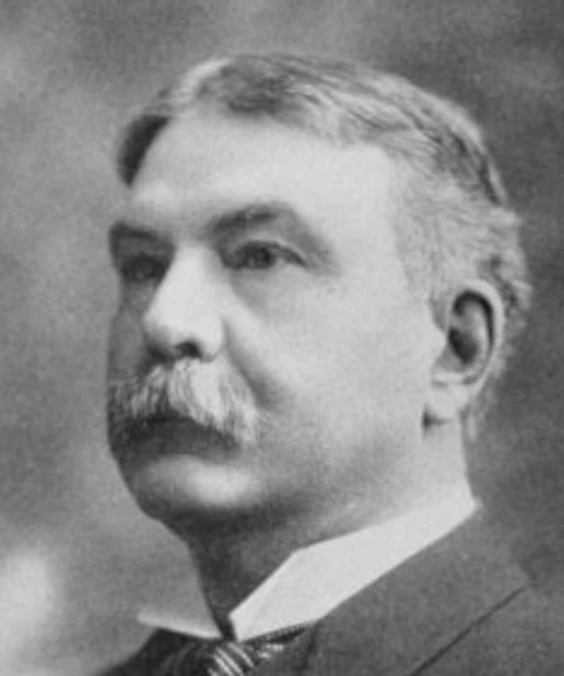
Theodore Roosevelt was the 26th President of the United States, serving from 1901 to 1909. A member of the Republican Party, he was born on October 27, 1858, in New York. Roosevelt was a prominent leader of the Progressive Movement, advocating for domestic policies that included trust-busting, regulation of corporations, and conservation of natural resources. His administration is noted for significant reforms and the establishment of national parks and forests.
gutenberg.org
Provision should also be made for complete publicity in all matters affecting the public and complete protection to the investing public and the shareholders in the matter of issuing corporate securities.
Reasonable agreements between, or combinations of, corporations should be permitted, provided they are submitted to and approved by some appropriate Government body.
The law should make its prohibitions and permissions as clear and definite as possible, leaving the least possible room for arbitrary action, or allegation of such action, on the part of the Executive, or of divergent interpretations by…
Such combinations are against public policy; they violate the common law; the doors of the courts are closed to those who are parties to them, and I believe the Congress can close the channels of interstate commerce against them for its…
A combination should not be tolerated if it abuse the power acquired by combination to the public detriment.
The design should be to prevent the abuses incident to the creation of unhealthy and improper combinations, instead of waiting until they are in existence and then attempting to destroy them by civil or criminal proceedings.
Such a law to be really effective must of course be administered by an executive body, and not merely by means of lawsuits.
Moreover, to attempt to control these corporations by lawsuits means to impose upon both the Department of Justice and the courts an impossible burden; it is not feasible to carry on more than a limited number of such suits.
The Government must now submit to irksome and repeated delay before obtaining a final decision of the courts upon proceedings instituted, and even a favorable decree may mean an empty victory.
But even if this feature of the law were abolished, there would remain as an equally objectionable feature the difficulty and delay now incident to its enforcement.
The antitrust law should not prohibit combinations that do no injustice to the public, still less those the existence of which is on the whole of benefit to the public.
It should be so amended as to forbid only the kind of combination which does harm to the general public, such amendment to be accompanied by, or to be an incident of, a grant of supervisory power to the Government over these big concerns…
The antitrust law should not be repealed; but it should be made both more efficient and more in harmony with actual conditions.
Out of any such wild movement good will not come, can not come, and never has come.
In the natural indignation the people feel over the dishonesty, it is essential that they should not lose their heads and get drawn into an indiscriminate raid upon all corporations, all people of wealth, whether they do well or ill.
There will not be the slightest let-up in the effort to hunt down and punish every dishonest man.
From the standpoint of the public I can not too earnestly say that as soon as the natural and proper resentment aroused by these abuses becomes indiscriminate and unthinking, it also becomes not merely unwise and unfair, but calculated to…
I ask for full power to be given the Federal Government, because no single State can by legislation effectually cope with these powerful corporations engaged in interstate commerce, and, while doing them full justice, exact from them in…
The Administration is responsible for turning on the light, but it is not responsible for what the light showed.
There has been complaint of some of the investigations recently carried on, but those who complain should put the blame where it belongs--upon the misdeeds which are done in darkness and not upon the investigations which brought them to…
To confer upon the National Government the power for which I ask would be a check upon overcapitalization and upon the clever gamblers who benefit by overcapitalization.
But any such move as this is in the interest of honest railway operators, of honest corporations, and of those who, when they invest their small savings in stocks and bonds, wish to be assured that these will represent money honestly…
Most certainly there will be no relaxation by the Government authorities in the effort to get at any great railroad wrecker--any man who by clever swindling devices robs investors, oppresses wage-workers, and does injustice to the general…
The aim of the National Government is quite as much to favor and protect honest corporations, honest business men of wealth, as to bring to justice those individuals and corporations representing dishonest methods.
Politicians like Teddy Roosevelt