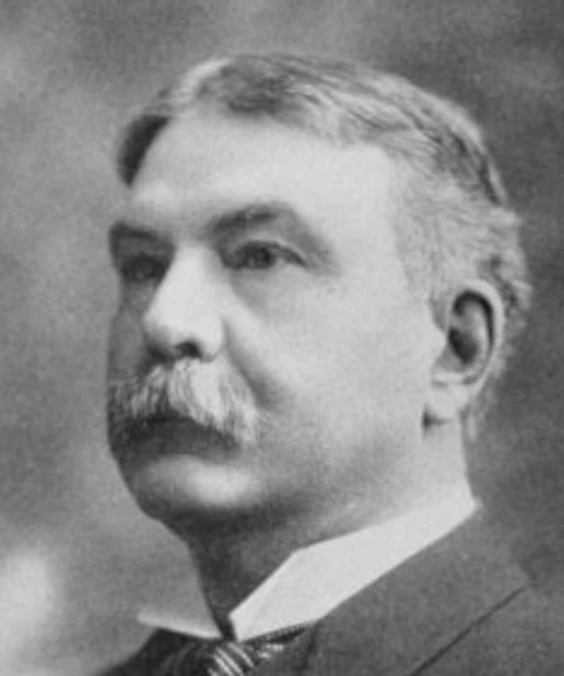
The readiness and efficiency of both the Army and Navy in dealing with the recent sudden crisis in Cuba illustrate afresh their value to the Nation.
Teddy Roosevelt
The Public Record
Theodore Roosevelt was the 26th President of the United States, serving from 1901 to 1909. A member of the Republican Party, he was born on October 27, 1858, in New York. Roosevelt was a prominent leader of the Progressive Movement, advocating for domestic policies that included trust-busting, regulation of corporations, and conservation of natural resources. His administration is noted for significant reforms and the establishment of national parks and forests.
gutenberg.org
Neglect to provide for all of this means to incur the risk of future disaster and disgrace.
It is a real misfortune to have scores of small company or regimental posts scattered throughout the country; the Army should be gathered in a few brigade or division posts; and the generals should be practised in handling the men in…
If on these practise marches and in these maneuvers elderly officers prove unable to bear the strain, they should be retired at once, for the fact is conclusive as to their unfitness for war; that is, for the only purpose because of which…
This is not true of the army officers, who rarely have corresponding chances to exercise command over troops under service conditions.
The Navy has one great advantage over the Army in the fact that the officers of high rank are actually trained in the continual performance of their duties; that is, in the management of the battle ships and armored cruisers gathered into…
Probably in both schools the best part of the education is the high standard of character and of professional morale which it confers.
On the contrary we should never lose sight of the fact that the aim of each school is to turn out a man who shall be above everything else a fighting man.
All possible encouragement to the enlisted men should be given, in pay and otherwise, and everything practicable done to render the service attractive to men of the right type.
I do not believe that in any service there is a finer body of enlisted men and of junior officer than we have in both the Army and the Navy, including the Marine Corps.
In both the Army and the Navy there is urgent need that everything possible should be done to maintain the highest standard for the personnel, alike as regards the officers and the enlisted men.
The marksmanship of our men has so improved during the last five years that I deem it within bounds to say that the Navy is more than twice as efficient, ship for ship, as half a decade ago.
Equally of course, the ships will be absolutely useless if the men aboard them are not so trained that they can get the best possible service out of the formidable but delicate and complicated mechanisms intrusted to their care.
To stop building ships for one year means that for that year the Navy goes back instead of forward.
I ask merely that it be maintained at its present strength; and this can be done only if we replace the obsolete and outworn ships by new and good ones, the equals of any afloat in any navy.
A strong and wise people will study its own failures no less than its triumphs, for there is wisdom to be learned from the study of both, of the mistake as well as of the success.
The United States Navy is the surest guarantor of peace which this country possesses.
The chance for the settlement of disputes peacefully, by arbitration, now depends mainly upon the possession by the nations that mean to do right of sufficient armed strength to make their purpose effective.
We should do all in our power to hasten the day when there shall be peace among the nations--a peace based upon justice and not upon cowardly submission to wrong.
It is morally as indefensible for a nation to commit a wrong upon another nation, strong or weak, as for an individual thus to wrong his fellows.
As has been well and finely said, a beaten nation is not necessarily a disgraced nation; but the nation or man is disgraced if the obligation to defend right is shirked.
Moreover, though it is criminal for a nation not to prepare for war, so that it may escape the dreadful consequences of being defeated in war, yet it must always be remembered that even to be defeated in war may be far better than not to…
A just war is in the long run far better for a nation's soul than the most prosperous peace obtained by acquiescence in wrong or injustice.
Peace is normally a great good, and normally it coincides with righteousness; but it is righteousness and not peace which should bind the conscience of a nation as it should bind the conscience of an individual; and neither a nation nor an…
It must ever be kept in mind that war is not merely justifiable, but imperative, upon honorable men, upon an honorable nation, where peace can only be obtained by the sacrifice of conscientious conviction or of national welfare.
Politicians like Teddy Roosevelt