But proposals for legislation such as this herein advocated are directly opposed to this class of socialistic theories.
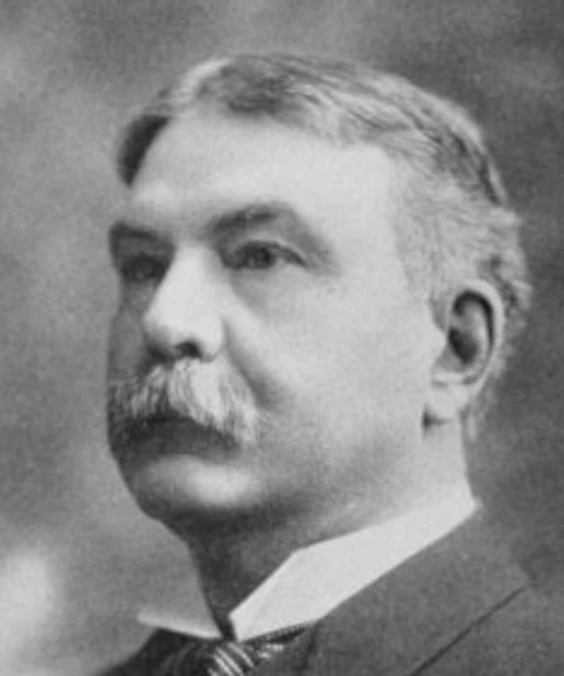
Teddy Roosevelt
The Public Record
Theodore Roosevelt was the 26th President of the United States, serving from 1901 to 1909. A member of the Republican Party, he was born on October 27, 1858, in New York. Roosevelt was a prominent leader of the Progressive Movement, advocating for domestic policies that included trust-busting, regulation of corporations, and conservation of natural resources. His administration is noted for significant reforms and the establishment of national parks and forests.
gutenberg.org
Such a theory, if ever adopted, would mean the ruin of the entire country--a ruin which would bear heaviest upon the weakest, upon those least able to shift for themselves.
A heavy progressive tax upon a very large fortune is in no way such a tax upon thrift or industry as a like would be on a small fortune.
The Government has the absolute right to decide as to the terms upon which a man shall receive a bequest or devise from another, and this point in the devolution of property is especially appropriate for the imposition of a tax.
The inheritance tax, however, is both a far better method of taxation, and far more important for the purpose of having the fortunes of the country bear in proportion to their increase in size a corresponding increase and burden of…
Nevertheless, a graduated income tax of the proper type would be a desirable feature of Federal taxation, and it is to be hoped that one may be devised which the Supreme Court will declare constitutional.
In my judgment both of these taxes should be part of our system of Federal taxation.
When our tax laws are revised the question of an income tax and an inheritance tax should receive the careful attention of our legislators.
This means that the subject can not with wisdom be dealt with in the year preceding a Presidential election, because as a matter of fact experience has conclusively shown that at such a time it is impossible to get men to treat it from the…
The sole consideration should be to see that the sum total of changes represents the public good.
The question should be approached purely from a business standpoint; both the time and the manner of the change being such as to arouse the minimum of agitation and disturbance in the business world, and to give the least play for selfish…
But in a country of such phenomenal growth as ours it is probably well that every dozen years or so the tariff laws should be carefully scrutinized so as to see that no excessive or improper benefits are conferred thereby, that proper…
This country is definitely committed to the protective system and any effort to uproot it could not but cause widespread industrial disaster.
No legislation can by any possibility guarantee the business community against the results of speculative folly any more than it can guarantee an individual against the results of his extravagance.
Trust companies should be subject to the same supervision as banks; legislation to this effect should be enacted for the District of Columbia and the Territories.
It is worth investigating to determine whether officers and directors of national banks should ever be allowed to loan to themselves.
We need a greater elasticity in our currency; provided, of course, that we recognize the even greater need of a safe and secure currency.
The mere statement of these facts shows that our present system is seriously defective.
The pure-food law was opposed so violently that its passage was delayed for a decade; yet it has worked unmixed and immediate good.
Those who fear, from any reason, the extension of Federal activity will do well to study the history not only of the national banking act but of the pure-food law, and notably the meat inspection law recently enacted.
Therefore, while there must be just and reasonable regulation of rates, we should be the first to protest against any arbitrary and unthinking movement to cut them down without the fullest and most careful consideration of all interests…
Ample, safe, and speedy transportation facilities are even more necessary than cheap transportation.
National control of the kind above advocated would be to the benefit of every well-managed railway.
Those which were under National control stood the test.
In the recent business crisis it is noteworthy that the institutions which failed were institutions which were not under the supervision and control of the National Government.
Politicians like Teddy Roosevelt