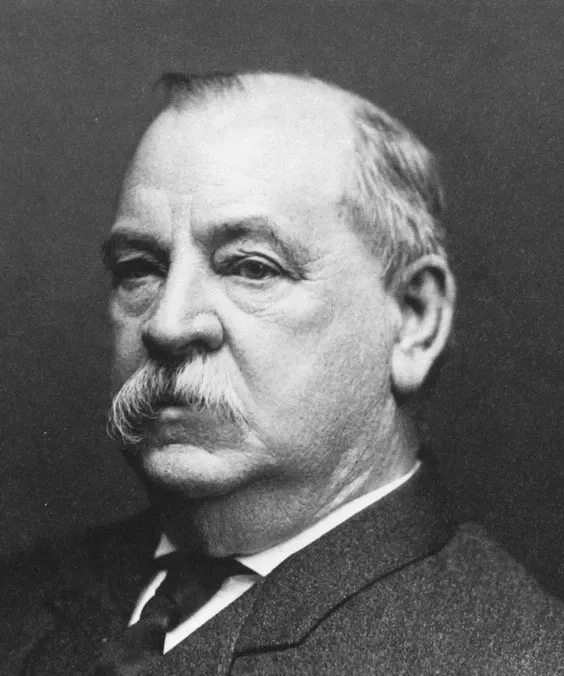
Bob Menendez
The Public Record
Robert Menendez is a prominent Democratic politician currently serving as a member of the United States Senate, representing New Jersey. He was first elected to the Senate in 2006 and has since been re-elected multiple times. Menendez has played a significant role in various policy areas, including foreign relations, immigration reform, and healthcare. He has served on several Senate committees, including the Senate Foreign Relations Committee, where he has been an advocate for human rights and democracy abroad.
Oct 28, 2009
I know that Chairman Dodd has a unique opportunity here, not only as the Chairman of the full Committee, but as a senior member of the Health, Education, and Labor Committee, to help us meld this together.
Oct 28, 2009
I think it is a terrific idea and I commend you, Mr. Chairman and Senator Johanns and others for championing this.
Oct 27, 2009
I believe the SEC's rules have effectively placed 'increased liquidity' as a value above fair execution of trades for all investors.
Oct 27, 2009
Rapid advances in technology... are moving us from an investor's market to a trader's market.
Oct 27, 2009
Transitioning our vehicles to natural gas would, of course, offer the dual accomplishment of mitigating emissions and reducing dependency on foreign oil.
Oct 27, 2009
Many of my colleagues continue to promote the view that if we drill for more oil on the Outer Continental Shelf, we will soon drill our way into energy independence and low oil prices.
Oct 27, 2009
That's why, along with my colleague, Senator Hatch and the majority leader, Senator Reid, and Senator Murkowski, we introduced the Nat Gas Act.
Oct 27, 2009
When the economy fully rebounds, there are few, I think, who do not believe we'll see, again, a spike in oil prices.
Oct 14, 2009
If you go by the adage of don't let the perfect be the enemy of the good, then I think, well, we have got to make the sausage.
Oct 14, 2009
Do you feel like the end justifies the means and if it takes us buying off every organization and every interest group in the country to get it passed, it makes sense?
Oct 14, 2009
That would be something for negotiation and clearly something that if we come in with a significant threshold, we will be in a better position to negotiate on.
Oct 14, 2009
I think while the position is pretty well understood in the United States that we do not think that China and India should be recipients of these funds, internationally I do not believe that is the case.
Oct 14, 2009
No one is seriously arguing that India and China, for example, should have access to such funding.
Oct 14, 2009
A robust climate adaptation could save us money in the long run if we are proactive.
Oct 14, 2009
Unchecked climate change can result in an increased number of U.S. military humanitarian missions.
Oct 14, 2009
You know, I want to get a better sense for the record of what the terms 'adaptation' and 'climate resiliency' mean.
Oct 14, 2009
Having a strong fund for international climate change adaptation is fundamentally important because it is in the national interest.
Oct 14, 2009
Developed nations have created a planetary problem and we have a duty to help those who are being impacted.
Politicians like Bob Menendez