Well, it seems to me that if you can have the very guts of the system be in a State that can actually make billions of rider trips, particularly in places like the northeast, but other places in the country, then you can achieve the type…
Bob Menendez
The Public Record
Robert Menendez is a prominent Democratic politician currently serving as a member of the United States Senate, representing New Jersey. He was first elected to the Senate in 2006 and has since been re-elected multiple times. Menendez has played a significant role in various policy areas, including foreign relations, immigration reform, and healthcare. He has served on several Senate committees, including the Senate Foreign Relations Committee, where he has been an advocate for human rights and democracy abroad.
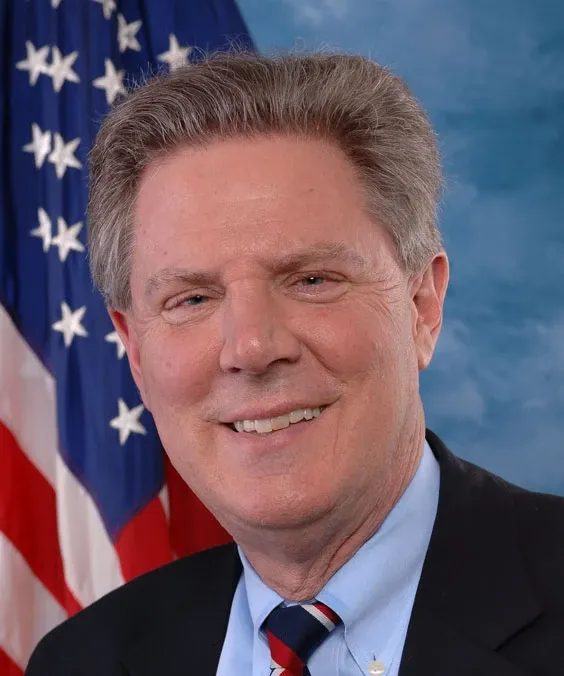
I agree with my colleague, Senator Warren, that, you know, the patch-up system that we have of trying to fund this process makes for poor public policy.
I think it was a transformational bill that created a new safety and reliability framework for our Nation's transit riders.
Budgets are also about values, from my perspective. It reflects what we believe as a country.
That is a proposal that would impose a significant and, from my perspective, unfair tax increase on millions of families in my home State of New Jersey and across a number of high-cost States in the country.
There is a difference between high wealth individuals who may have acceptable limitations and regular middle-class families that this would be an economic body blow to.
Long-term unemployment could have serious consequences for individuals and their families and can permanently impair the growth prospects for our economy.
I think the next step should be the United States working more closely with development organizations such as USAID, the World Bank, the African Development Bank to put structures in place that would facilitate the use of DRC's mineral…
I think the creative use of partnerships--the public-private partnership alliance is an example of this--could achieve a lot in this regard.
I think there are three things I believe the United States can do to enhance prospects for sustainable peace, shared prosperity, and effective democratic governance in the DRC.
I think episodic interventions tend to be wasteful and could be counterproductive.
What would be the consequences of having no Federal backstop in terms of insurance to regions like that in our country, that are drivers and a great part of our economy?
We have a two-mile stretch that contains the largest container port, the mega-port of the East Coast, one of the busiest set of airports in the country.
What would be the consequences of letting TRIA expire for communities in this country that build or operate critical infrastructure such as rail lines, power plants, highways, airports, pipelines?
If these investments become more costly, doesn't that have a nationally adverse impact?
If terrorists attack the country, the United States has a national interest in minimizing the economic harm they inflict.
The Rohingya are possibly the most persecuted people in the world, and yet few people are aware of their plight.
Improving the safety of Bangladesh's garment industry must be our No. 1 priority.
What is it we can do to convince the Prime Minister that this is wrong--wrong for her nation, unfair to this man, and inconsistent with a good relationship between the United States and Bangladesh?
It strikes me that it is a crass political move to punish him in some way, but, sadly, to punish millions of innocent people who depend on that bank to survive.
The United States has not taken sides or played favorites in who should lead the country.
Bangladesh is clearly a country of strategic importance to the United States.