Feb 25, 1887
Upon the whole it does not appear, as a business proposition, that the building proposed should be undertaken.
The Public Record
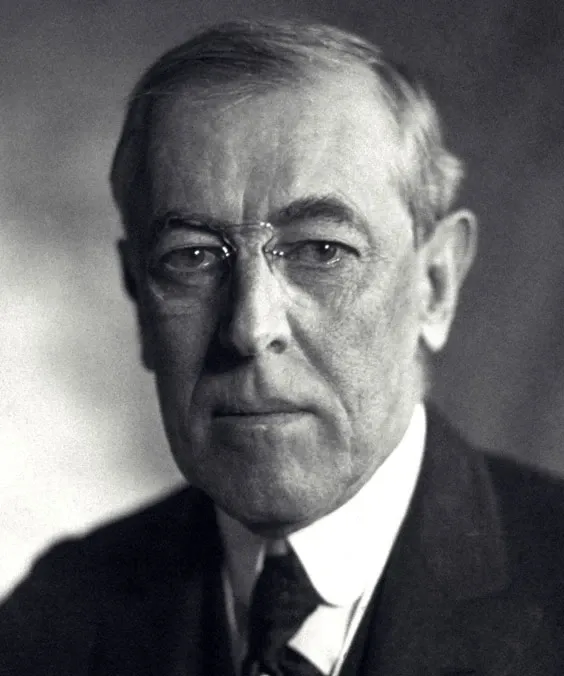
Grover Cleveland was the 22nd and 24th President of the United States, serving two non-consecutive terms from 1885 to 1889 and again from 1893 to 1897. A member of the Democratic Party, he was born in New Jersey and is known for his commitment to honesty and integrity in government. Cleveland's presidency was marked by his opposition to high tariffs and his efforts to reform the civil service system, which earned him a reputation as a champion of the common man.
Upon the whole it does not appear, as a business proposition, that the building proposed should be undertaken.
I should consider myself, in favor of his widow, bound by the act of the Pension Bureau in allowing him a pension.
The beneficiary named in this bill was granted a pension on the 17th day of November, 1886.
It is further stated in a communication from the promoter of this bill that--There is not a Federal public building in the State of Ohio east of the line drawn on the accompanying map from Cleveland through Columbus to Cincinnati.
The Government is not an almoner of gifts among the people, but an instrumentality by which the people's affairs should be conducted upon business principles, regulated by the public needs.
She is now under the general law receiving precisely the pension which she would receive under the bill herewith returned if the same should be approved.
I return herewith the bill (H. R. 367) to amend section 536 of the Revised Statutes of the United States.
It seems to be the opinion of all the officers of the Government who have examined the matter at all that a debt exists in favor of the Government upon this bond.
I think it will hardly be claimed that the patient investigation of the accounting officers should be lightly discredited in this case.
I do not suppose that it was intended by the Congress to entirely relieve these sureties if a condition exists such as is above set out, which results in an indebtedness to the Government.
His widow's pension should be increased beyond that furnished others in her situation.
All the information which is available to me fails to furnish any reason why this pension should be specially increased.
I can not put out of mind the soldiers in this condition who were privates in the ranks.
To the Senate: In answer to the resolution of the Senate of the 14th instant, relating to the arrest, trial, and discharge of A. K. Cutting, a citizen of the United States, by the authorities of Mexico, I transmit herewith a letter from…
It could not, therefore, by any possibility be of the least benefit to him, but, on the other hand, might jeopardize his advantages already gained.
I am certain that exact equality and fairness in the treatment of our veterans is, after all, more just, beneficent, and useful than unfair discrimination in favor of officers.
He is now receiving the highest rate allowed under the general law for cases such as his, and he would be entitled to no more under the special act.
The beneficiary mentioned in this bill is now receiving the highest rate of pension allowed in cases such as hers under the general law.
I find no reason why this beneficiary should be singled out from his class.
I return herewith without approval Senate bill No. 2111, entitled 'An act granting a pension to Jacob Smith.'
I suppose his certificate has already been issued, and I am unwilling to jeopardize the advantages he has gained thereunder.
But the pension under the general laws dates from the time of filing the application in 1879, while under a special act it would date only from the time of its passage.
Politicians like Grover Cleveland