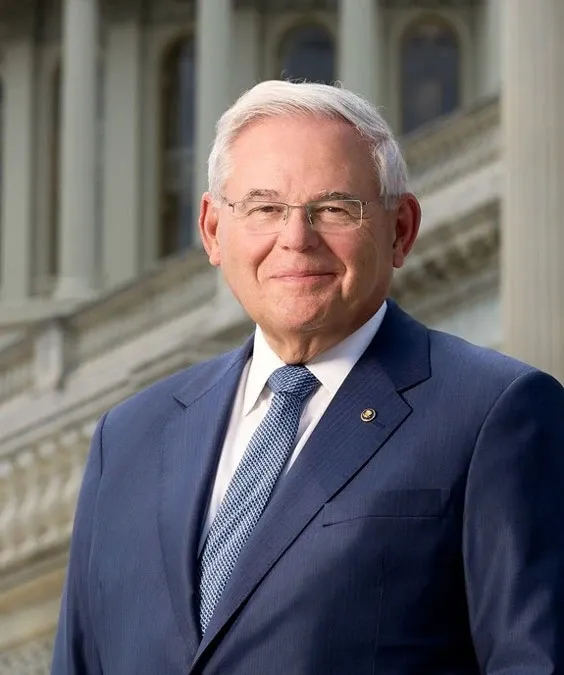
Grover Cleveland
The Public Record
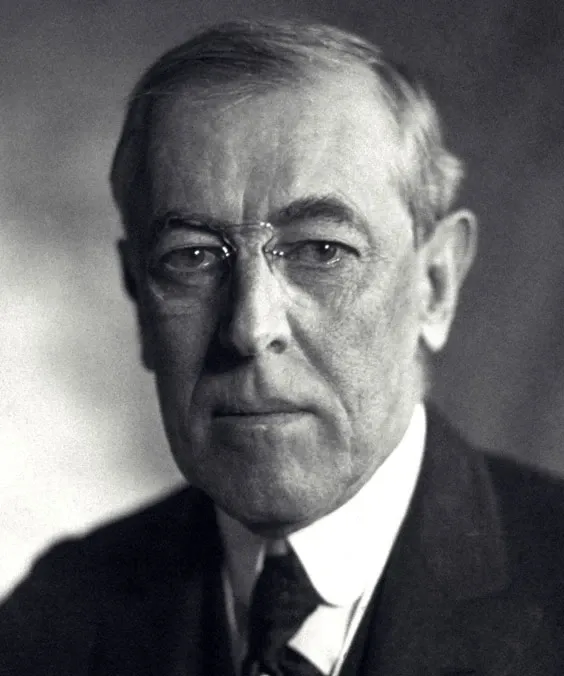
Grover Cleveland was the 22nd and 24th President of the United States, serving two non-consecutive terms from 1885 to 1889 and again from 1893 to 1897. A member of the Democratic Party, he was born in New Jersey and is known for his commitment to honesty and integrity in government. Cleveland's presidency was marked by his opposition to high tariffs and his efforts to reform the civil service system, which earned him a reputation as a champion of the common man.
Jan 17, 1889
I can not believe that such a departure as is proposed should be made from the just principles upon which pension legislation ought to be predicated.
Jan 17, 1889
It seemed to me at that time that the soldier's death could not be held to be the result of his wound or any other cause chargeable to his military service.
Jan 17, 1889
He died June 7, 1881, and there does not appear to have been any evidence produced as to the cause of his death.
Jan 17, 1889
To hold that a man engaged on a vessel transporting recruits to a rendezvous should be allowed the same advantages as those actually engaged in military operations is establishing a bad precedent.
Jan 17, 1889
The records do not show that he suffered from any disability during his term of service.
Jan 17, 1889
I was constrained to return without approval a bill identical with the one herewith returned.
Jan 16, 1889
I am decidedly of the opinion that the relations, the duties, and the obligations of subordinates in public employment should be clearly defined and strictly limited.
Jan 15, 1889
The proof of disability, such as it is, is as consistent with its incurrence during desertion as it is with the theory that the beneficiary suffered, therefrom as the result of honorable military service.
Jan 15, 1889
The multitude of claims of the same kind which the legislation proposed would breed and encourage.
Jan 15, 1889
I have the honor to lay before you a report from the Secretary of State, with accompanying correspondence, in relation to the possible disturbances on the Isthmus of Panama in the event of the stoppage of work on the proposed interoceanic…
Jan 15, 1889
I can not avoid the conviction upon the facts presented that whatever disability has existed since the discharge of the beneficiary arose from causes which were present before enlistment, and that the same is not chargeable to his military…
Jan 15, 1889
The absolute necessity, in the interest of good administration, of limiting all public officers to authorized expenditures, constrain me to withhold my approval from this bill.
Jan 13, 1889
I do herewith transmit to Congress a copy of Mr. Denby's dispatch No. 754, of November 5, 1888, containing the regulations so decreed.
Jan 13, 1889
I transmit herewith, for the consideration of Congress and such legislation in respect of the matters therein presented as may seem necessary and proper, a report of the Secretary of State.
Jan 6, 1889
I transmit, with a view to its ratification, an agreement signed by the plenipotentiaries of the United States and Denmark.
Jan 3, 1889
No person may be transferred as herein authorized until the Commission shall have certified to the officer making the transfer requisition that the person whom it is proposed to transfer has passed an examination to test fitness for the…
Jan 3, 1889
Transfers may be made from one classified post-office to another, from any classified post-office to the classified railway mail service, and from the classified railway mail service to any classified post-office.
Jan 3, 1889
Superintendents of mails shall be selected from among the employees of the railway mail service.
Jan 3, 1889
Amendments to General Rules II, III, IV, Departmental Rules V, VIII, Customs Rule III, and Postal Rules II, VI, are hereby made and promulgated as follows:
Jan 3, 1889
There shall be four branches of the classified civil service, as follows: 1. The classified departmental service. 2. The classified customs service. 3. The classified postal service. 4. The classified railway mail service.
Jan 3, 1889
The Commission may refuse to certify an eligible who is so defective in sight, speech, or hearing, or who is otherwise so defective physically as to be apparently unfit to perform the duties of the position to which he is seeking…
Jan 3, 1889
A false statement made by an applicant, or procured by his connivance, or any deception or fraud practiced by an applicant, shall be good cause for refusal to examine such applicant.
Jan 2, 1889
I transmit herewith for the consideration of the Congress a report of the Secretary of State, with accompanying papers, recommending an appropriation for the relief of Japanese subjects injured and of the families of Japanese subjects…
Jan 2, 1889
Public feeling on the Pacific Coast excited in favor of it, and situation is critical.
Politicians like Grover Cleveland