Jul 25, 2023
I want to thank Senator Welch--we have had several different discussions about how we go about attacking and creating a sustainable change in the trajectory of drug pricing in this country.
The Public Record
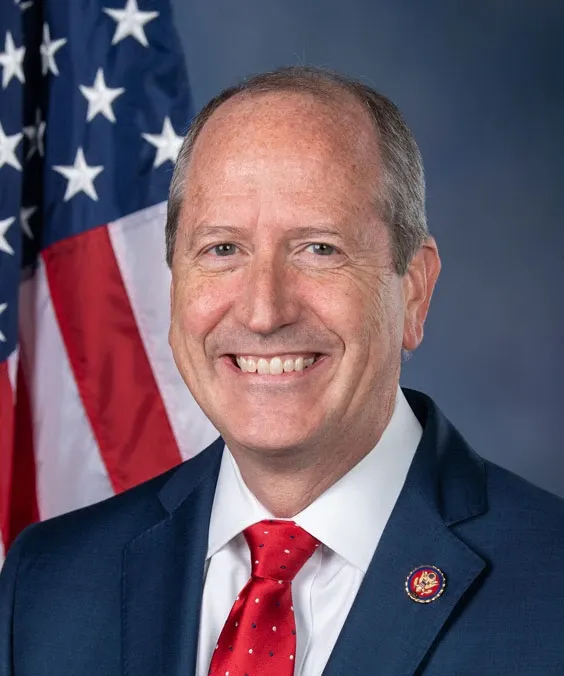
Thom Tillis is an American politician and businessman currently serving as the junior United States senator from North Carolina, a position he has held since January 6, 2015. A member of the Republican Party, Tillis has focused on issues such as tax reform, healthcare, and national security during his tenure in the Senate. He previously served as the Speaker of the North Carolina House of Representatives from 2011 to 2012, where he played a significant role in shaping state legislation.
I want to thank Senator Welch--we have had several different discussions about how we go about attacking and creating a sustainable change in the trajectory of drug pricing in this country.
To me, it is one of the critical areas that we need more clarity in to really have a more robust economy and to incentivize innovation.
I think the patent system works best when there are clear rules of the road to guide inventors and businesses.
This bill, I believe, restores patent eligibility to important inventions across many fields.
A legislative solution is necessary to provide an appropriate patent eligibility framework to ensure the future of American innovation.
Strong, reliable, predictable IP rights are paramount to incenting U.S. innovation.
And so I think in your testimony you said currently VBA is 51 percent below tracked backlog projections and peak backlog is supposed to be estimated between 450,000 and 730,000 by October 2023 and April 2024, respectively.
Well, that is good feedback. We will make sure our office catches up with the decision process, but that sounds rational.
I worked a lot on the PACT Act. The TEAM Act was in there, Camp Lejeune toxics, and then I voted against it.
At some point you only have so much money, and it is going to create stressors.
I think this Committee has demonstrated that we are very thoughtful, and we are very diligent.
Strong, reliable, predictable IP rights are paramount to incentivizing U.S. innovation and creativity.
I think this Committee has demonstrated that we are very thoughtful, and we are very diligent.
I think there is a natural cultural bias for rewarding the human beings who are truly the creators and the lifeblood of our creative community.
To me, trying to figure out what may or may not be in the language model is a lot like taking roll in a dark classroom.
We know that generative AI models need to be fed large datasets to learn how to generate images based on user prompts.
I was actually inspired by one of the opening statements, so I went out and generated a cat driving a 1960 Corvette with a surfboard in it.
Strong, reliable, predictable IP rights are paramount to incentivizing U.S. innovation and creativity.
If you are outside of the work group process and you are just taking shots at it, you may find yourself on the table, from my perspective.
We must not only consider how our current IP laws apply to the field of generative AI, but also what changes, if any, may be necessary to incentivize future AI innovators and creators.
I hope people understand that we are very thorough and we are very persistent in our approach, and we are inclusive.
Politicians like Thom Tillis