Jul 9, 2013
We have to make sure every dime we spend there is appropriate and actually meeting the objective.
The Public Record
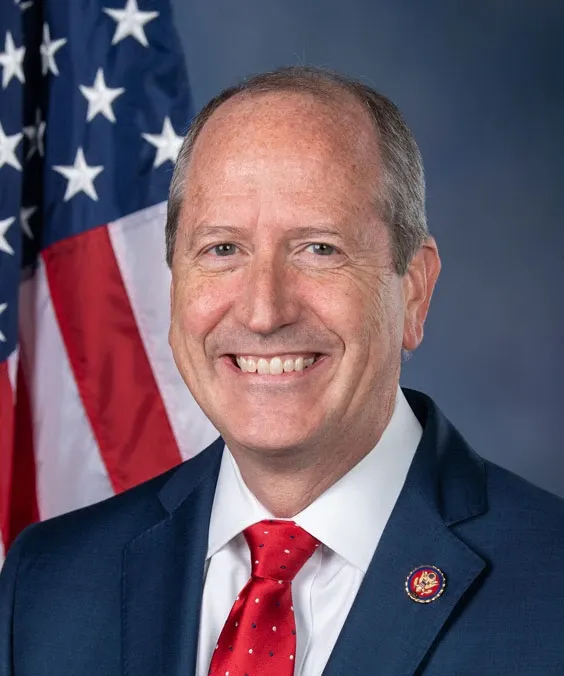
Patrick Timothy McHenry is a Republican member of the United States House of Representatives, representing North Carolina's 10th congressional district since 2005. Throughout his tenure, he has held various leadership roles, including serving as the ranking member of the House Financial Services Committee. McHenry is known for his focus on financial services and technology issues, advocating for policies that promote innovation and economic growth.
We have to make sure every dime we spend there is appropriate and actually meeting the objective.
Not surprisingly, this impressive and unprecedented power, designed to protect the largest and most interconnected financial institutions, is also being criticized as being unconstitutional.
Dodd-Frank's designation and resolution processes protect 'too-big-to-fail' banks, quite to the disadvantage of their small bank competition.
Dodd-Frank granted an incredible amount of power and discretion to the Federal Reserve, the FDIC, and the newly created Financial Stability Oversight Council (FSOC).
So this sounds to me like personally identifiable financial information. And this is a great concern at a time when people are worried about their privacy.
Two-and-a-half years ago, President Obama, when he signed the Dodd-Frank Act, said that this would end too-big-to-fail.
Dodd-Frank law simply granted an incredible amount of power and discretion to Federal regulators to enshrine future taxpayer bailouts.
The shocking inability of the Financial Stability Oversight Council to perform one of its core functions: identifying new risks to the economy.
Dodd-Frank does not end too-big-to-fail, and systemically we went through those section by sections of Dodd-Frank.
Such a politically imbalanced organization as the CFPB truly is at risk of acting with similar political biases as the IRS.
So while you were Chief of Staff, did anyone at the White House or in the Executive Office of the President ever suggest the IRS or Treasury--that the IRS should focus additional scrutiny on the application of conservative groups?
Just to be clear, you wouldn't have picked up the phone and called Chicago to say, 'By the way, just to put it out there, we are in a Presidential election year.'
We hope that, at the end of the day, the groups that said no will not be targeted for retribution by either Secretary Sebelius or the Health and Human Services Department.
It would be great if we had some folks on the other side of the Senate comply with that and actually do what is reasonable and right, and address these concerns.
The JOBS Act was a bipartisan bill passed over a year ago and signed, one of the rare bipartisan bills that Congress was able to get through both the House and the Senate.
I have very high hopes for your tenure at a very troubled agency, a troubled agency on the enforcement front.
We want to make it clear that we have statutory and legislative directives for the Securities and Exchange Commission to get on with the job of implementing the JOBS Act.
This bill that I introduced on data center consolidation is an entire title of what is known as the FITARA bill
Not after hearing what President Magariaf said, especially considering the fact that he had gone to Benghazi himself at great personal and political risk and for him to appear on world television and say, this was a planned attack by…
Was there any evidence when you were there in Libya on that day that this was a protest?
The subject matter of today's hearing is to get at the root cause and the root facts of an awful tragedy
Politicians like Pat McHenry