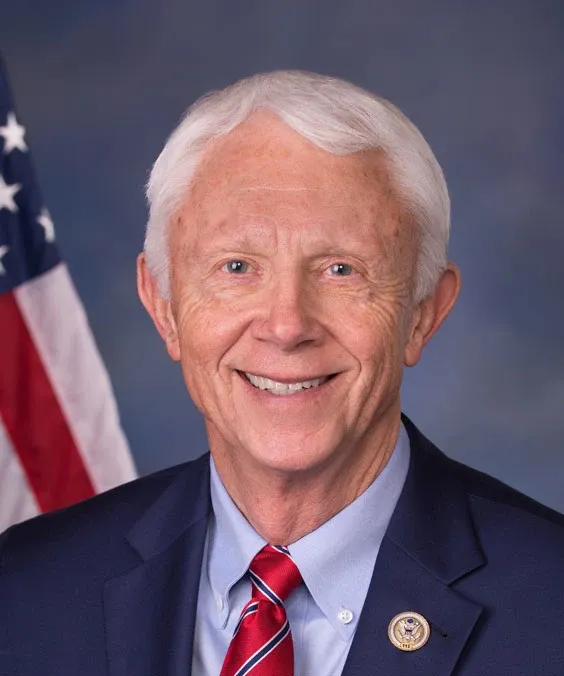
Fred Upton
The Public Record
Fred Upton is a former U.S. Representative from Michigan, serving in the House of Representatives from 1987 to 2021. A member of the Republican Party, Upton represented Michigan's 6th congressional district. During his tenure, he was known for his work on issues related to healthcare, energy, and technology. He played a significant role in the passage of the Affordable Care Act's repeal and was involved in various bipartisan efforts, particularly in the areas of public health and environmental policy.
Jun 22, 2020
I comment the work of my colleagues, Anna Eshoo and Susan Brooks, to modernize the Pandemic and All-Hazards Preparedness Act.
Jun 16, 2020
It is so critical that diverse populations, especially those with vulnerable populations, be adequately represented in the clinical studies.
Jun 16, 2020
Early reports, of course, of deaths from COVID have found a startlingly high rate of mortality among the African American community.
Jun 15, 2020
Thank you so much for your leadership--your sponsorship of the NUKE Act and just your long-time support for this most vital and important industry
Jun 15, 2020
Thank you so much, Representative Latta, for your long leadership, especially on nuclear issues.
Jun 15, 2020
So I think in the Congress, there also has to be kind of a comprehensive look at how we maintain service to all of those unemployed workers.
Jun 15, 2020
COVID pandemic really does underscore the need for affordable and reliable electricity.
Jun 15, 2020
We need to hear about them. We need to build on the CARES Act program and make changes.
Jun 15, 2020
The last three months have been a real challenge for all Americans as COVID has taken its toll.
Jun 15, 2020
Thank you, Mr. Chairman. It's good to be back to work in DC with my colleagues.
Mar 27, 2020
Let's face it: Coronavirus has totally disrupted our lives across the country, in every community and certainly around the globe. To all of us, it is frightening. It is a nightmare. This bill is a partial response to end that disruption…
Mar 2, 2020
As Congress considers what policies to pursue to address climate change risks, nuclear technology should be at the center of the discussion.
Mar 2, 2020
In Michigan, two of our major utilities have announced goals to reduce carbon emissions by eighty and ninety percent by 2040.
Mar 2, 2020
I commend the Trump administration for their attention to this issue, including how important it is for the United States to increase nuclear fuel production.
Mar 2, 2020
If we are serious about reducing emissions and paving the way for new advanced technologies, then we must maintain a robust, existing fleet as well as the intellectual, technological, and regulatory infrastructure that supports it.
Mar 2, 2020
If we are going to maintain our energy security into the future, we need to invest in our existing nuclear fleet and streamline the deployment in advanced nuclear power.
Mar 2, 2020
I think the bill we passed in the House was stronger than existing HIPAA requirements.
Mar 2, 2020
One of the things that--great joys of serving in the Congress people from different districts and different issues and I will never forget the moment Bobby Rush from Chicago made it clear to me it is more than just opioids.
Mar 2, 2020
Unfortunately, I have to confess, my dear friend, the chairman of the committee now was the lead opposition to this.
Mar 2, 2020
We had instances where there had been loss of life because that information had not been shared.
Feb 25, 2020
I would like to think that what we did in this committee and then passed on the House floor will be a direct result of that.
Politicians like Fred Upton