Such antagonisms can be prevented by wise foresight more easily than they can be cured after their development is either intentionally or carelessly permitted.
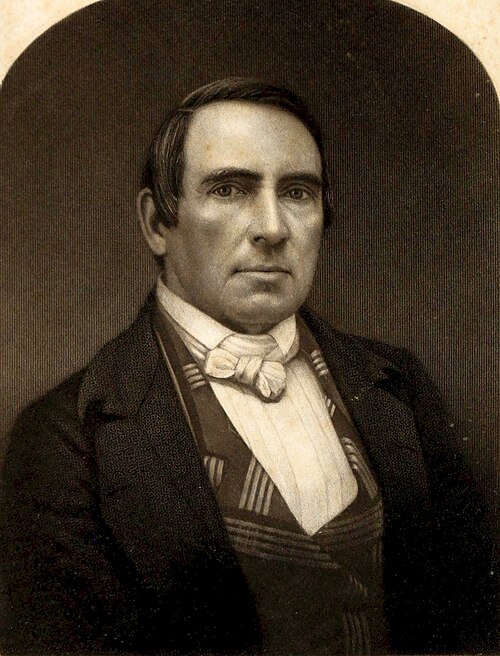
James Blaine
The Public Record
James Gillespie Blaine was an American statesman and Republican politician who represented Maine in the United States House of Representatives from 1863 to 1876, served as Speaker of the House from 1869 to 1875, and was a United States senator from 1876 to 1881. He served twice as Secretary of State, under presidents James A. Garfield and Chester A. Arthur in 1881, and under Benjamin Harrison from 1889 to 1892. He sought the Republican presidential nomination in 1876 and 1880, and received the nomination in 1884, narrowly losing the general election to Democratic nominee Grover Cleveland. Blaine was a prominent figure in the moderate faction of the Republican Party, known as the "Half-Breeds".
gutenberg.org
The bitterest of all antagonisms are those which spring from race.
The allegation that the exclusion of the Chinese is inhuman and unchristian need not be considered in presence of the fact that their admission to the country already provokes conflicts which the laws are unable to restrain.
That system would indeed receive a fatal blow if it should be demonstrated that it does not secure to the American laborer a better remuneration than the same amount of toil brings in Europe.
Protective duties should help both labor and capital, and the capitalist who is not willing to share the advantage with the laborer is doing much to break down the protective system.
Where the labor is contracted for in Europe at a low price and brought to the United States to produce fabrics that are protected by customs duties, a grave injustice is done to the American laborer, and an illegitimate advantage is sought…
Patriotic instinct, the American sentiment dominant on the borders and outposts of the Republic, all demanded that the Pacific coast should be preserved as a field for the American laborer.
The question stripped of all disguises and exaggerations on both sides, was simply whether the labor element of the vast territory on the Pacific should be Mongolian or American.
To encourage or even to permit such an immigration, would be to dedicate the rich Pacific slope to them alone and to their employers--in short, to create a worse evil in the remote West than that which led to bloody war in the South.
A non-political service will be secured when Congress shall be left to its legitimate functions, when the President shall not interfere therewith by the use of patronage, and when the responsibility of appointments shall rest solely with…
To separate the two great Departments of the Government, to keep each within its own sphere, will be an immeasurable advantage and will enhance the character and dignity of both.
On the other hand the evil of which President Harrison spoke--the employment of the patronage by the Executive to influence legislation--is far the greatest abuse to which the civil service has ever been perverted.
If lack of zeal is found in many sections of the country on this subject, it is because the people are never brought in contact with the evils, the abuses, and the corruptions which are well known to exist at points where the patronage is…
A correct apprehension of an evil is the first step towards its remedy, and it is a serious mistake to apply to the interior States and the rural districts the imputations and accusations which justly lie against the service where of…
They hold that a subordinate officer is stripped of his manhood by the consciousness that he may at any moment be removed at the whim or caprice of some one superior in station.
The matured opinion of others is that a tenure of office definitely fixed for a term of years, during which the incumbent cannot be disturbed except upon substantial written charges, will secure a better class of officials.
Another point of difference is in regard to the power of instant removal, many of the most pronounced reformers of the civil service holding that power to be essential, and believing that it will not be abused so long as the removing power…
Nothing is vouched for more frequently by chiefs of Government bureaus, than that certain clerks who upon competitive examination would stand at the head do in point of efficiency and usefulness stand at the foot.
So decided is this opinion among the great majority of Republicans and among a very considerable number of Democrats, that the former method of appointment will always meet with protest and cannot be permanently re-established.
They believe that it impairs the efficiency of the public service, lowers the standard of political contests, and brings reproach upon the Government and the people.
The settled judgment of discreet men in both political parties is adverse to the custom of changing non-political officers on merely political grounds.
From that time onward, although there was much condemnation of the evil practice of removing good officers for opinion's sake, each party as it came into power practiced it; and prior to 1860 no movement was made with the distinct purpose…
When the Whigs came into power by the election of 1840, President Harrison discussed the question of patronage and its abuse, not merely as tending to strengthen one political party against the other, but as building up the power of the…
The peace which followed was the peace of forced submission and not the peace of contentment.
The majority of Republicans seemed to prefer that voters by the thousand should be deprived by violence of the right of suffrage, rather than that their rights should be protected by even the semblance of National authority present in the…
Politicians like James Blaine