To recognize an insurgent as a belligerent is not to recognize him as fully the equal of the government from which he secedes.
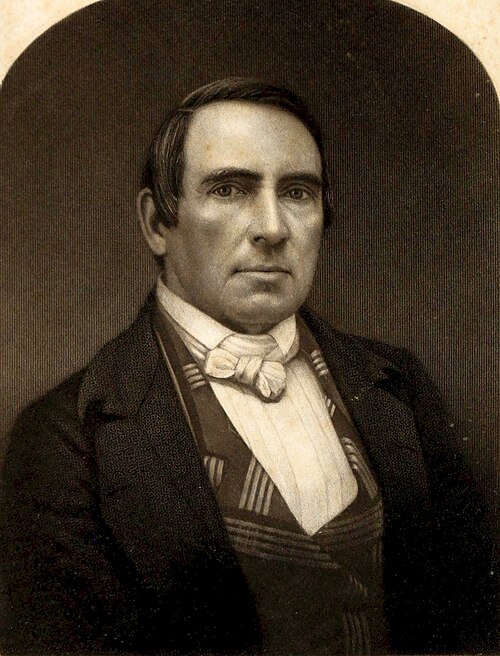
James Blaine
The Public Record
James Gillespie Blaine was an American statesman and Republican politician who represented Maine in the United States House of Representatives from 1863 to 1876, served as Speaker of the House from 1869 to 1875, and was a United States senator from 1876 to 1881. He served twice as Secretary of State, under presidents James A. Garfield and Chester A. Arthur in 1881, and under Benjamin Harrison from 1889 to 1892. He sought the Republican presidential nomination in 1876 and 1880, and received the nomination in 1884, narrowly losing the general election to Democratic nominee Grover Cleveland. Blaine was a prominent figure in the moderate faction of the Republican Party, known as the "Half-Breeds".
gutenberg.org
Its application to the case of insurgents against an established and recognized government is later, involves other and in some respects different considerations, and cannot even now be regarded as settled.
In its primary and simple application, the law of belligerency referred to two or more belligerents, equally independent.
Manned by foreign seamen, armed by foreign guns, entering no home port, and waiting no judicial condemnation of prizes, they have already devastated and destroyed our commerce to an extent, as compared with their number, beyond any thing…
If vessels of war even, they would by this conduct have justly forfeited all courtesies in ports of neutral nations.
Whatever flag may fly from their mast-head, or whatever power may claim to own them, their conduct stamps them as piratical.
Thus encouraged by foreign powers they began to build and fit out in neutral ports a class of vessels constructed mainly for speed, and whose acknowledged mission is not to fight, but to rob, to burn, and to fly.
The Georgia, like the Florida, the Alabama, and other scourges of peaceful commerce, was born of that unhappy decree which gave the rebels who did not own a ship-of-war or command a single port the right of an ocean belligerent.
The effects of this thoroughly organized system of so-called neutrality that supplied ports, ships, arms, and men to a belligerent which had none, are not matters of conjecture or exaggeration; they have been proven and recorded.
The distinct defiance of the traditional policy of the United States by the invasion of the neighboring Republic of Mexico for the avowed purpose of establishing there a foreign and monarchical dynasty.
It was not long until the brave and deluded rebels of the South learned that there was no confidence to be placed in the cruel and selfish calculation which encouraged their desperate resistance with the show of sympathy, but would not…
She was wiser than her Ministers, and there can be little doubt but for her considerate interposition, softening the rigor of the British demand, the two nations would have been forced into war.
It would be ungracious to withhold an expression of the lasting appreciation entertained in this country of the course pursued by Her Majesty, the Queen of England, throughout this most painful ordeal.
His act cannot be justified by the canons of International Law as our own Government has interpreted and enforced them.
He had only removed from the hospitality and shelter of a British ship four men who were bent on an errand of destruction to the American Union.
Hundreds and thousands of American citizens had in time of peace been taken by British cruisers from the decks of American vessels and violently impressed into the naval service of that country.
Whatever wrong was inflicted on the British Flag by the action of Captain Wilkes, had been time and again inflicted on the American flag by officers of the English Navy,--without cause, without redress, without apology.
But it must not be forgotten that the sword of precedent cut both ways.
We could not have refused to surrender Mason and Slidell without trampling upon our own principles and disregarding the many precedents we had sought to establish.
At this time there was but one among the great nations of the world which adhered to an active and avowed friendship for us.
Not content with leaving us to settle this question with England, France and Prussia and Austria hastened to inform us in language professedly friendly, that England would be supported in her demand for reparation, cost what it might to us…
The principle of maritime law, which was so promptly and rigorously applied, was one for which the United States had contended in its weakness against the usages of the world and against the arms of Great Britain.
It would have prevented much angry controversy, much bitter feeling; it would have averted events and consequences which still shadow with distrust a national friendship that ought to be cordial and constant.
It is only to be regretted that the spirit and discretion exhibited by the eminent diplomatist who represented England here with such wisdom and good temper, had not been adopted at an earlier date and more steadily maintained by the…
The American people would more easily tolerate a spontaneous offer of reparation made by its government from a sense of justice than a compliance with a demand for satisfaction from a foreign minister.
Politicians like James Blaine