Oct 4, 2023
I do not want to dismiss the risk of greater Russia-North Korea interaction as a way of expanding the North Korea problem, but I also think that we should not allow it to be overblown.
The Public Record
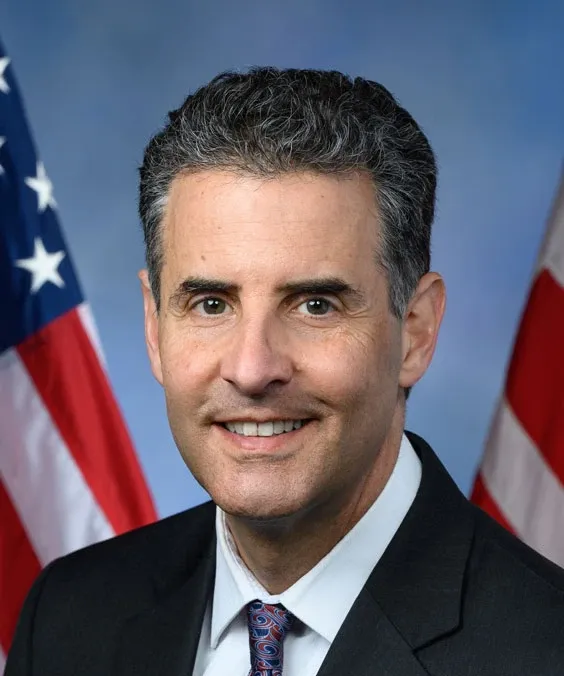
Chris Van Hollen is an American politician serving as the junior United States senator from Maryland since January 3, 2017. A member of the Democratic Party, he previously represented Maryland's 8th congressional district in the U.S. House of Representatives from January 3, 2003, to January 3, 2017. Throughout his career, Van Hollen has focused on issues such as economic policy, healthcare, and education reform.
I do not want to dismiss the risk of greater Russia-North Korea interaction as a way of expanding the North Korea problem, but I also think that we should not allow it to be overblown.
I think all of you have made the point that if you go back a number of years, China was willing to work much more closely with the United States with respect to restraining North Korea's nuclear program, nuclear testing, missiles.
What we have been doing, clearly, is not successful, at least in achieving the goal as we have stated it, which is denuclearization of the Korean Peninsula.
I think this was an important step that the Administration took and all for the better of the alliance.
This was meant to be a high level that provided more insight into U.S. nuclear planning.
The U.S. leadership on Ukraine is such--is especially important when we are talking about allied relations.
If the United States were to stop funding the defense of Ukraine, it would have a major impact on the way allies think about our credibility.
There is bipartisan support in the United States Senate and House to continue to provide that assistance.
I appreciate that. I was here for the discussions over transforming OPIC into DFC, and I think I can speak, at least for most members, that the idea was to expand the authorities of DFC compared to OPIC, not constrain them in any way from…
Let me also just second what Senator Shaheen and I am sure others have said about the importance of fix--making the equity fix.
It would be a step backwards if folks are essentially saying that DFC does not have the tools when it comes to political risk insurance that OPIC had.
Thank you for much food for thought as we move forward on all the issues that we covered.
I agree. I think, with the gist of my colleagues' comments, that this is something that we should really investigate with China and try to engage in a dialogue with them because it is clearly in both of our interest to see this stopped.
I think all of you have made the point that if you go back a number of years, China was willing to work much more closely with the United States with respect to restraining North Korea's nuclear program, nuclear testing, missiles.
I do not want to dismiss the risk of greater Russia-North Korea interaction as a way of expanding the North Korea problem, but I also think that we should not allow it to be overblown.
What we have been doing, clearly, is not successful, at least in achieving the goal as we have stated it, which is denuclearization of the Korean Peninsula.
If the United States were to stop funding the defense of Ukraine, it would have a major impact on the way allies think about our credibility.
President Biden has committed to making sure that we meet our commitments and there is bipartisan support in the United States Senate and House to continue to provide that assistance.
For the last several years the United States has expanded our approach to security on the Korean Peninsula, for example, deploying strategic assets to South Korea like nuclear-armed submarines.
The U.S. leadership on Ukraine is such--is especially important when we are talking about allied relations.
The question of maintaining our security assistance and commitment to the people of Ukraine as they continue to battle Putin's aggression.
The fact that they want to turn back the resources for the IRS would actually make the situation worse.
I think in your testimony you acknowledged that in order to address the Medicare shortfall, there needs to be a revenue component.
Politicians like Chris Van Hollen