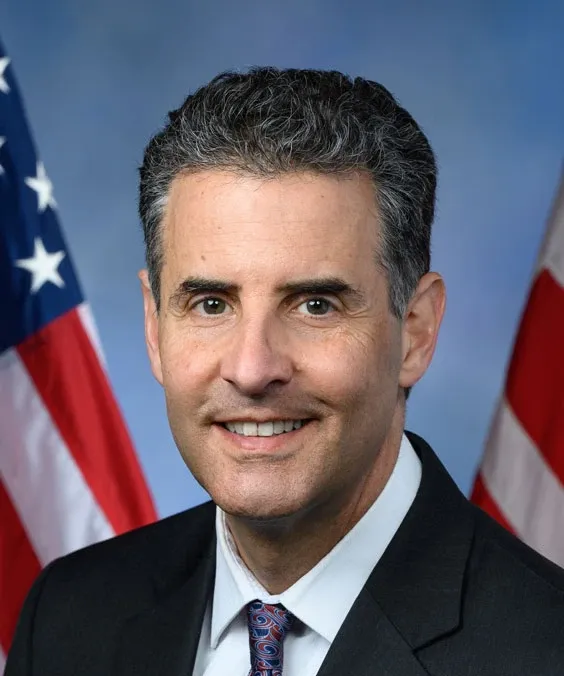
Ben Cardin
The Public Record
Ben Cardin is a United States Senator from Maryland, serving since January 4, 2007. A member of the Democratic Party, he has focused on issues such as healthcare, education, and civil rights throughout his political career. Prior to his tenure in the Senate, Cardin served in the U.S. House of Representatives from January 3, 1987, to January 3, 2007, where he was known for his work on tax policy and social security reform.
Jul 7, 2009
We need to do more to empower regional approaches to dealing with these issues.
Jul 7, 2009
I know that Senator Levin is working on a reauthorization under the Clean Water Act of the Great Lakes.
Jul 7, 2009
the Congress, in a bipartisan manner, has added funds to these accounts over the President's budget because of the importance that we place on moving forward and modernizing our infrastructure.
Jul 6, 2009
If the United States were to act alone, and no other country in the world were to take action, I personally believe it would be good for our economy, it would create more jobs here in America and keep jobs here in America.
Jul 6, 2009
They believe America's leadership will play a critical role in getting other nations to move and to set the bar high enough so we really can make an impact on global environment.
Jul 6, 2009
It is about keeping jobs here in America. It is about we have developed the technology, now let us use that technology, let us create the green jobs here in America that will not only help our economy, but will help our national security…
Jul 6, 2009
I think the bill that we marked up last year, the Lieberman-Warner Bill, and I think much of the provisions included in the Waxman-Markey Bill, encourages the type of activities that Senator Alexander was talking about, including the…
Jun 24, 2009
We need to look at the cumulative impact. I do not think that we have been doing a good job of doing that at all levels.
Jun 24, 2009
President Obama has issued an Executive Order concerning trying to base our decisions on good science.
Jun 24, 2009
The message when we pass this--and I certainly hope that we will pass this--is that America has made a priority protecting people from violence because of diversity.
Jun 24, 2009
The Commission is supposed to be evenly divided politically, but instead, two of the independents, one was a former Republican, one turned Republican, that joined in the opinion.
Jun 24, 2009
I think we do need the presence of the Federal Government, and I thank you for your leadership on this issue.
Jun 24, 2009
Unfortunately, the name of the U.S. Commission on Civil Rights, once renowned for its bipartisanship, scholarship, and presentation of hard facts, should be misused to oppose this critical legislation.
Jun 24, 2009
If the legislation is not passed, what the message will be will depend upon what members of the Senate make the message.
Jun 24, 2009
Passage of this vaguely worded prohibition would be a giant step toward the Federalization of all crime.
Jun 24, 2009
I couldn't disagree more with Professor Heriot's observations of what's happening in the real world.
Jun 24, 2009
It seems to me that some of the environmental risks and public health risks are counter to the economic opportunities of this region.
Jun 24, 2009
I do not believe we know the answers to those questions, and I think we need to do a better job.
Politicians like Ben Cardin